Key facts
- President Donald Trump announced at the UP Summit in Cape Canaveral, Florida, that NASA will send its first nuclear-powered craft to Mars within two years, targeting 2028.
- According to Trump, the mission represents progress toward the eventual goal of sending American astronauts to Mars.
- Isaacman said NASA will travel deeper into the solar system and approach the next major milestone in exploration.
- Isaacman identified the long-term objective as the moment U.S. astronauts place the American flag on Mars.
President Donald Trump announced on Nov. 6, 2026, at the UP Summit at Kennedy Space Center in Cape Canaveral, Florida, that NASA will send its first nuclear-powered craft to Mars within two years, targeting 2028. Fox News reported the announcement.
“Within the next two years, NASA will launch the first-ever nuclear-powered spacecraft to Mars,” Trump said. He delivered the remarks at the summit while promoting his administration’s broader goals for American expansion beyond Earth. The president tied the two-year Mars timeline to the long-term objective of sending astronauts to the red planet.
According to Trump, the mission represents progress toward the eventual goal of sending American astronauts to Mars. The same speech connected the nuclear-powered mission directly to the future crewed landing on Mars. Trump said it would pave the way for astronauts to plant the U.S. flag on the planet.
Isaacman spoke at the same UP Summit event before Trump took the stage, discussing NASA’s Mars ambitions and long-term goals for solar system exploration. Isaacman said NASA will travel deeper into the solar system and approach the next major milestone in exploration.
The NASA administrator identified the long-term objective as the moment U.S. astronauts place the American flag on Mars. The NASA administrator’s remarks aligned with the president’s broader vision for human exploration and settlement beyond Earth that was also featured in the speech.
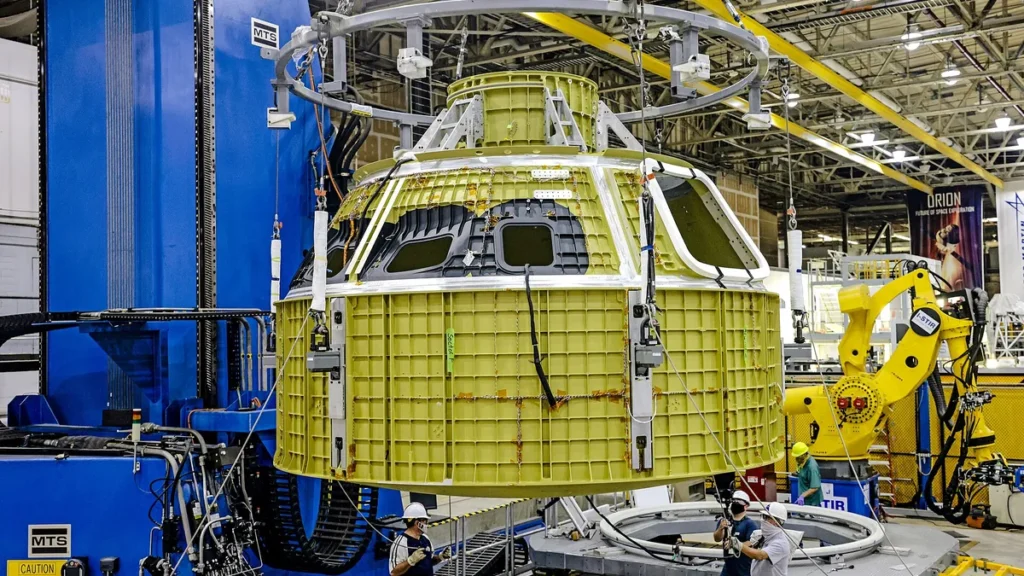
The announcement referenced NASA’s Artemis program, which seeks a sustained lunar presence before crewed Mars missions. Fox News placed the Mars announcement within the existing Artemis framework rather than as a replacement for the moon-focused program.
Astronauts flew past the moon on Artemis II earlier in 2026, a completed precursor mission. According to the report, Artemis II preceded the scheduled Artemis III test and the later Artemis IV landing attempt.
Artemis III will test vehicles and landing hardware in Earth orbit during 2027. The source described it as an orbital test of spacecraft and landing systems serving as a precursor to later lunar surface operations. NASA plans an Artemis IV lunar landing attempt in early 2028, a period that falls before Trump’s current presidential term concludes and matches the timeframe for the nuclear-powered Mars spacecraft launch.
Trump stated that the United States will establish a permanent presence on the surface of the moon. The statement was part of his broader outline to advance space exploration and maintain a lasting American footprint beyond Earth.
The president cited the American Declaration of Freedom in Space this week as establishing Americans’ right to explore and settle beyond Earth under U.S. law. He presented the declaration as a policy statement opening space to American settlement, civilization and freedom under U.S. law.
Earlier in August, Trump announced a planned U.S. Space Academy intended to prepare students for jobs in the Space Force, NASA and the civilian spaceflight sector. The Space Academy is part of broader space ambitions supporting workforce development across military, civil and commercial space sectors.




Join the discussion