Key facts
- Satellite operators face a shortage of available launch options despite a record-breaking year for orbital launches (S1).
- Robert Sproles, the chief executive of Exolaunch, stated that demand for launches is growing faster than the available supply (S1).
- A lack of launch diversity is creating a constraint for the industry, making choice as significant as capacity (S1).
- The FAA licensed 187 launches during fiscal year 2026 (S1).
Satellite operators face a shortage of available launch options even though the FAA licensed 187 launches during fiscal year 2026. The figure is part of a record-breaking year for orbital launches, yet suitable capacity remains tight for customers. High launch volume has not eased the difficulty of booking a ride to orbit.
This number represents an increase from fewer than 100 licensed launches a decade ago. The FAA licensing total reflects growing launch activity across the United States. Even so, satellite operators say they cannot reliably secure the rides they need.
Robert Sproles, the chief executive of Exolaunch, stated that demand for launches is growing faster than the available supply. The imbalance means customers are competing for a limited number of launch opportunities. Operators are finding that more launches do not automatically mean more choices.
A lack of launch diversity is creating a constraint for the industry, making choice as significant as capacity. Operators cannot simply look for any available launch; they need a launch that fits their specific mission profile. The shortage affects access to particular orbits and schedules.
Sproles argues that customers need to optimize for cost, schedule, and destination, which requires multiple providers operating in different orbital regimes. Without that variety, operators cannot match their satellites to the right orbit at the right price. The chief executive says tailored solutions are necessary for different mission types.
Sproles highlights that the industry’s hunger for choice extends beyond capacity, requiring tailored solutions for different mission types and constraints. The Exolaunch chief executive says customers are looking for more than just a ride to orbit. They want control over when and where their spacecraft go.
Launch diversity has declined since 2016 because of technological, geopolitical, and supply chain changes after the COVID-19 pandemic. That decline concentrated capacity among a few providers. Fewer vehicle options mean fewer pathways to specific orbits.
This concentration has reduced the variety of launch vehicles available, limiting operators’ ability to optimize for mission-specific needs like orbit, schedule, and cost. The bottleneck persists even as launch totals rise.
A lack of diversity in orbital destinations and vehicle types drives the mismatch between high launch volume and available capacity. Operators face a market in which many launches are occurring, but few match the needs of individual satellite missions. The result is a squeeze on customers despite busy launch manifests.
The current market features two markedly different providers. SpaceX uses Falcon 9 for large constellations and heavy rideshares. Rocket Lab uses Electron for small satellites and custom orbital planes. The two companies represent different approaches to reaching orbit.
Exolaunch brokered 912 satellites into orbit across 51 launch events as of 2026. The figure illustrates the scale of demand for launch services in the current market.
Robert Sproles, the company’s chief executive, emphasized the sheer volume of satellites launched through its services. He said the numbers show growing demand for launch capacity that outpaces supply. The broker’s experience reflects the wider industry imbalance.
Exolaunch’s first eight launches in 2026 utilized four different launch vehicles from three continents. The company built that record by securing capacity across different vehicles and regions. Each vehicle offered a different path to orbit.
This approach provides customers with predictable access to orbit and flexibility in cost, schedule, and orbital destination. Exolaunch says it addresses the industry’s need for launch diversity by giving operators more than one path to space.
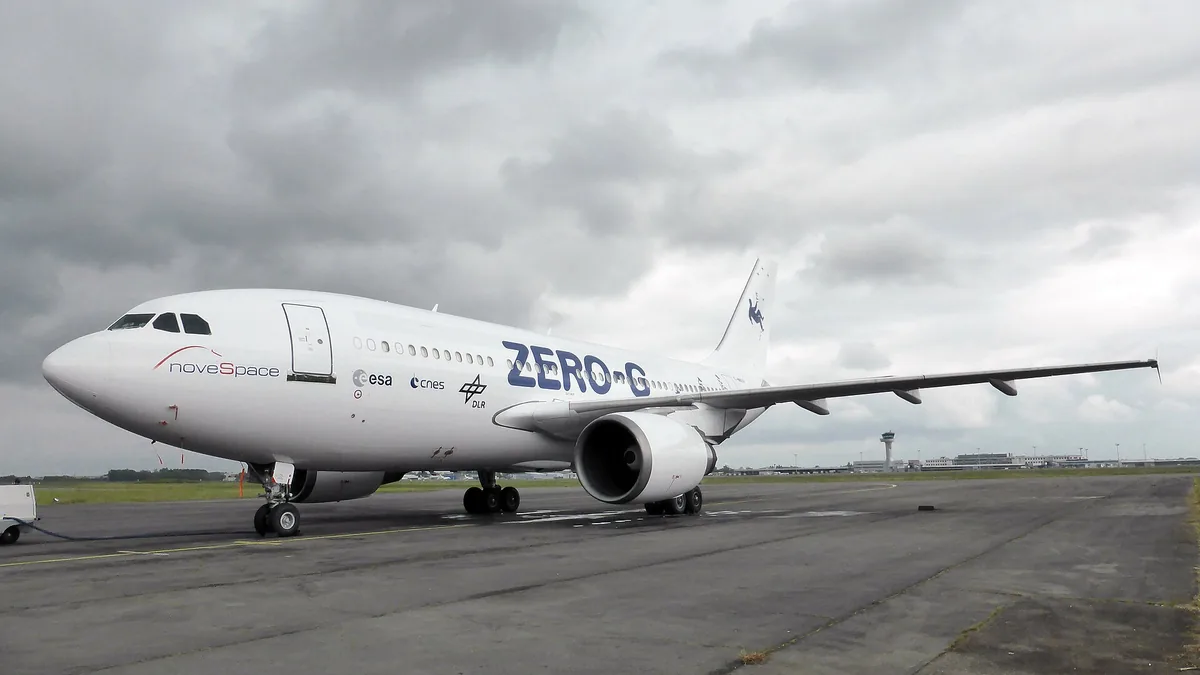
Novaspace estimates the global space economy at $626 billion in 2025. The firm forecasts annual growth of 5.5% through 2034, reaching over $1 trillion by that year. The forecast covers a decade of expansion in the space sector.
Consolidation, integration, and institutional alignment around security, resilience, and operational performance drive the expansion. Novaspace says the projection underscores the expanding market for space services.
Rideshare services are suitable only for missions with flexible schedules and orbital flexibility. They are not appropriate for complex or bespoke missions. Operators with fixed deployment dates cannot rely on rideshare availability. The constraint pushes complex missions toward dedicated alternatives.
This limitation underscores the need for alternatives like shared launches and dedicated launches to accommodate the evolving demands of satellite operators. Operators with rigid requirements need options beyond standard rideshares. Dedicated flights can serve missions that cannot wait for a shared opportunity.
Exolaunch plans to perform a mid-inclination rideshare mission in 2027 using a Mitsubishi Heavy Industries H3 rocket. The mission will mark the first time Exolaunch launches from Japan. Adding a Japanese rocket gives customers access to a different launch site and orbital regime. The flight represents an expansion of the company’s launch brokerage beyond its existing vehicle roster.
Exolaunch will execute the Exo-1 and Exo-2 missions on dedicated SpaceX Falcon 9 rockets during late 2027 and 2028. An anchor customer will use about 40% of the vehicle capacity, while Exolaunch will sell the remaining 60% as rideshares.
These missions show a hybrid model in which dedicated launches serve anchor customers while still accommodating additional payloads. The model addresses the need for flexible launch options in a tight market. It lets one rocket serve both a primary customer and smaller secondary payloads.
Exolaunch will act as launch co-integrator for the GRACE-C mission in late 2028. GRACE-C is a collaboration between the German Aerospace Center (DLR) and NASA. Exolaunch will provide a custom structure for the payload inside a Falcon 9 already secured by the agencies, in exchange for the ability to sell the unused capacity.
This arrangement exemplifies a collaborative approach to maximizing launch vehicle capacity; it meets mission-specific needs while also accommodating secondary payloads. The agencies keep their primary mission intact while unused space goes to other customers. The model turns excess capacity into an opportunity for additional satellite operators.
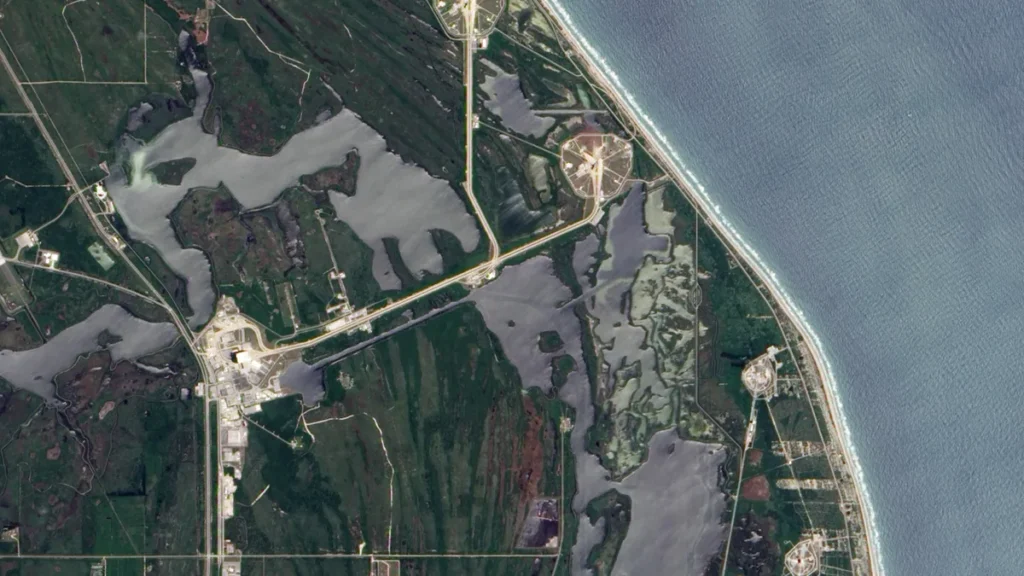
The Space Force released a document outlining requirements to increase launch activity and access from spaceports in Florida and California. One priority is enabling spaceports to support three simultaneous major operations by fiscal year 2031.
The Space Force aims to enable its Eastern and Western Spaceports and Test Ranges to support three major operations simultaneously by fiscal year 2031. The goal is part of broader efforts to increase assured access to space, ensuring operational flexibility and resilience for U.S. space missions.
The Space Force’s vision document emphasizes creating a common operating picture between the Eastern and Western Ranges, including common interfaces. This initiative aims to streamline coordination and improve efficiency in launch operations across U.S. spaceports.
The Trump administration wants U.S. spaceports to facilitate more than 1,000 annual launches and reentries by 2030. This goal comes amid government pressure for increased launch activity. The Trump administration aims to secure $350 billion in defense funds through the reconciliation process. The reconciliation push names Defense Secretary Pete Hegseth.



Join the discussion