Key facts
- Frank Postberg stated in September 2026 that Enceladus prepares samples for analysis naturally by separating and concentrating oceanic constituents into individual ice particles.
- Vanessa Helmbrecht said in September 2026 that archaea are among the oldest cellular organisms known from Earth and are quite ancient.
- Vanessa Helmbrecht stated in September 2026 that researchers now possess all necessary elements to support Earth-like life on Enceladus, including water as a liquid solvent and all required building blocks.
- William Orsi reported in September 2026 that during laboratory experiments at high pH levels, Methanothermococcus okinawensis exhibited signs of stress and did not grow as quickly as at lower pH.
Lead researcher Vanessa Helmbrecht and her team at Ludwig-Maximilians-Universität in Munich, Germany, reported in September 2026 that an Earth archaeon survived, reproduced and created methane in laboratory simulations of Saturn’s moon Enceladus’s ocean, which is highly alkaline and holds little dissolved carbon dioxide.
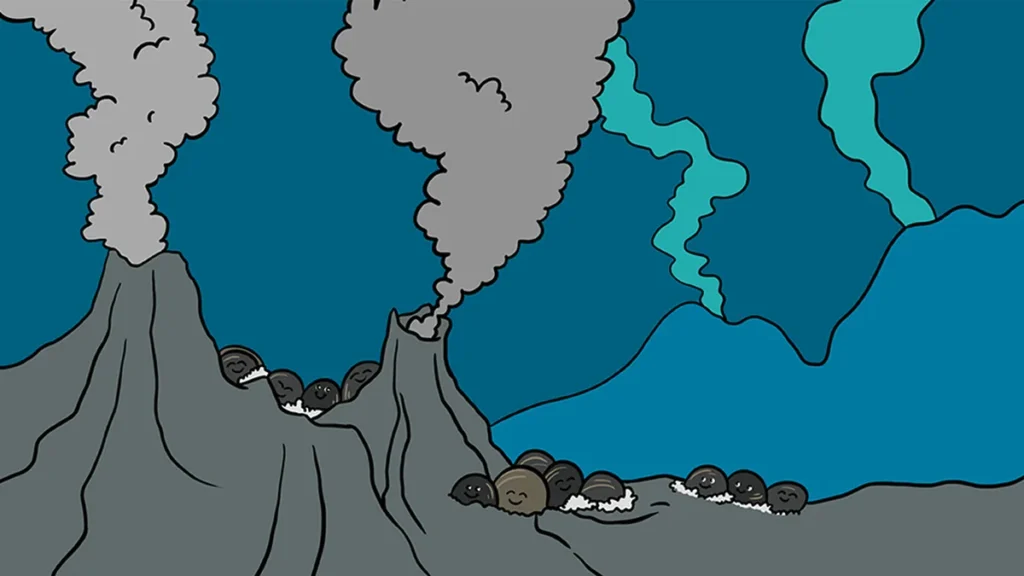
The scientists chose Methanothermococcus okinawensis, a methanogen archaeon — a methane-producing microbe — from a hydrothermal system in Japan’s Okinawa Trough, because it can grow under highly alkaline conditions, coauthor William Orsi said in September 2026. The organisms survived in Enceladus simulants but showed signs of stress and grew more slowly than at lower pH, though they managed to grow despite disliking the extreme conditions. In the same tests they reproduced and made methane even at pH levels that killed control groups, Helmbrecht said, highlighting the broader astrobiological implications.
The results extend the archaeon’s known pH tolerance by 2.5 units, Alexander Berne of the University of Arizona said in September 2026. Berne also said the team picked mixture details such as the amount of dissolved inorganic carbon to encourage biological growth, figures he called optimistic next to the conditions most likely found on the moon. He argued that habitability assessments should rely on combined pH, dissolved inorganic carbon and molecular hydrogen measures rather than pH alone, a framing that directly guides the chemical measurements planned for upcoming Enceladus missions.
Helmbrecht noted that any organisms on Enceladus could look nothing like terrestrial life and might rely on different chemical pathways, so researchers must assume some shared biological ground in their experiments. She also said researchers now have all the elements needed to support Earth-like life on the moon, including liquid water as a solvent plus the chemical building blocks life requires. Archaea, single-celled microbes among the oldest known from Earth, fit that ancient lineage:
Archaea are known to be among the oldest cellular organisms that we know from Earth. They are quite ancient,
Vanessa Helmbrecht, ZME Science
Helmbrecht said in September 2026.
Nozair Khawaja, who contributed to the research, said in September 2026 that seeing the organisms grow was a surprise because the experiment was not expected to succeed. He said he was astonished by results the team had not expected to succeed.
This was really a surprise to us,
Nozair Khawaja, Gizmodo
Khawaja said.
Figuring out what Enceladus’s hidden ocean contains is easier than scientists once assumed, Frank Postberg and international researchers wrote in a Science Advances study published in September 2026. A second Science Advances study from the same month, to which Postberg and Khawaja contributed, found that certain microorganisms tolerate conditions in Enceladus’s ocean better than thought; its laboratory experiments demonstrated that methane-producing archaea survived and grew in extreme alkalinity with little carbon dioxide, conditions resembling the moon’s seafloor.
Postberg said in September 2026 that Enceladus prepares samples for analysis naturally: slow freezing and fragmentation separate and concentrate oceanic constituents into individual ice particles, work that takes extensive laboratory effort on Earth. That concentration is good news for life detection, he said, because future spacecraft can identify concentrated microbial material in those particles with upcoming instruments.
During the Cassini mission between 2004 and 2017, the spacecraft’s Cosmic Dust Analyzer measured the composition of individual ice particles in Saturn’s E-ring and found chemically diverse, salt-rich Type 3 grains. Yasuhito Sekine and colleagues at the Earth-Life Science Institute studied how freezing speed changes chemical distribution in simulated ocean droplets, and Sekine said in September 2026:
What surprised us was that the diversity seen by Cassini could emerge from droplets originating from essentially the same ocean water,
Yasuhito Sekine, ScienceDaily
He said.
The research sits inside the Collaborative Research Center CRC 1759 on habitability as a fundamental planetary process at Freie Universität Berlin. The German Research Foundation established the center in July 2026, with Lena Noack as lead and Frank Postberg as deputy. Funded by the German Research Foundation, the center investigates processes that enable the emergence of life in space on celestial bodies such as Enceladus.
In October 2026 Orsi said the LMU study does not, by itself, prove life exists on Enceladus, though it shows that key geochemical features can support one of life’s oldest metabolisms, a result he said bolsters the case for future missions that return samples or study plumes. Helmbrecht said the same month that Enceladus’s unique geochemistry could create conditions even more favorable for microbial life than thought. The European Space Agency has studied future mission concepts, among them an L4 mission that would target Enceladus and look for biosignatures in plumes coming from its ocean.

Join the discussion