Key facts
- Vulnerabilities in space systems, ground systems, or business systems all matter, and Laughlin said the enterprise is the battleground when it comes to space.
- Laughlin said disrupting a space mission can sometimes be done most effectively by striking the ground station, data, or network.
- Laughlin said adversaries disrupted space-enabled services without an anti-satellite missile by targeting infrastructure and connections, with effects crossing organizational and national boundaries.
- Laughlin said the lack of publicly identified attacks against orbiting satellites does not mean those threats do not exist.
U.S. Space Force Deputy Chief of Space Operations for Cyber and Data Charleen Laughlin told a CyberSat audience in Reston, Va., on Monday that the service treats space as both a physical domain shaped by orbital mechanics and thermodynamics and as a digital domain where victory hinges on digital combat as much as, or possibly more than, physical dominance.
She framed digital superiority as a prerequisite rather than an option. “We cannot achieve or sustain space superiority without digital superiority,” Laughlin said. She presented the line as a foundational truth the service must embrace.
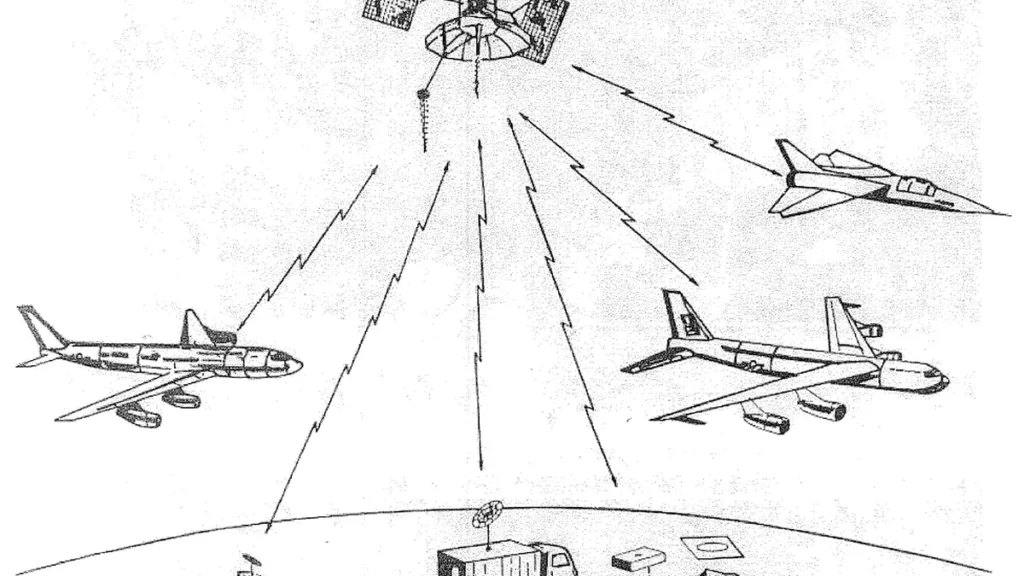
Most Americans picture the Space Force through rockets, launch complexes, and satellites already in orbit, Laughlin said, but she described operations as something broader. Space missions do not start at launch and do not end at a satellite, she explained. Instead, they run through an interconnected digital ecosystem that begins with terrestrial infrastructure and cloud environments, moves through ground systems and communications, and ends with orbital capability.
Every link in that chain offers both a way to deliver capability and a possible point of failure, according to Laughlin. She noted that adversaries understand modern military operations rely on networks, software, data, and space-enabled services, and that opponents do not assess those dependencies along the same organizational lines the Space Force uses. Because of that, weaknesses in space systems, ground systems, or business systems all matter, and she described the entire enterprise as the battleground for space.
Laughlin said that knocking out a space mission sometimes works best by hitting the ground station, the data, or the network instead of the spacecraft itself. She added that adversaries target infrastructure and connections to create effects that cross organizational and national boundaries. Laughlin said the service keeps space operations, cyber operations, electronic warfare, and information operations distinct, while enemies merely seek weaknesses they can exploit to produce operational effects.
A 2025 study from the Center for Security Studies at ETH Zurich counted 407 cyber incidents spanning 183 space-related organizations around the world, Laughlin said. None of the incidents directly targeted a satellite in orbit; instead, the strikes hit terrestrial infrastructure, corporate networks, ground systems, and user terminals. She cited the research to show that adversaries can disrupt space-enabled services without anti-satellite weapons, though she cautioned that the absence of publicly identified attacks on orbiting satellites does not mean such threats do not exist.
The Space Force’s answer, Laughlin said, involves moving away from singular, exquisite systems toward larger numbers of distributed and proliferated architectures. But she warned that adding satellites does not automatically create resilience when hundreds of spacecraft depend on the same vulnerable ground infrastructure or a single compromised software component, because that spreads platforms without spreading risk.
She called on industry to bake cybersecurity and resiliency into baseline system architecture rather than treating it as an afterthought. Designers, she said, should weigh how systems behave under attack, including critical dependencies, network failure, restoration speed, and defender visibility. Cyber operators protecting military networks also need to understand more than network geography or architecture; they must know which missions the networks support and what happens operationally if something breaks.
The objective, Laughlin said, is to deny adversaries the gains they seek from cyberattacks by building systems designed for quick restoration. She distinguished that approach from treating cybersecurity as a compliance exercise, describing cyber resilience as combat power instead. And she said she does not request invulnerable systems because that is unrealistic; she wants systems able to fight through disruption, recover from compromise, and keep the mission going.
The connection between space and cyberspace is not new in U.S. policy analysis. CSIS has said that Russia carried out a cyberattack in 2022 against Viasat, a company based in California that provides high-speed satellite broadband and secure networking, intending to cripple Ukrainian command and control before Russia’s ground invasion the next day. The incident shows, the group says, that conflicts can begin in space and cyberspace before ground fighting starts, and that blending the two domains can yield shared military outcomes.
CSIS states that cyberspace matters more to space operations than to any other operational domain. U.S. Space Force doctrine describes the space link segment as covering the information operations environment, including cyberspace, and identifies a symbiosis between space and cyberspace operations. General Stephen Whiting, commander of U.S. Space Command, has called cyberspace the soft underbelly of global space networks, urging space professionals to prioritize cyber defense and mutual support between the two domains. “Cyberspace is the soft underbelly of our global space networks,” Whiting said.
The two domains share strategic features such as lines of communication, the informational environment, the network dimension, and the link segment, CSIS says. They also share common traits, including unclear norms of behavior, attribution difficulties, and transnational equities. Because today’s network designs and information-sharing practices leave space capabilities reliant on cyberspace, the group argues that conflict in space may often amount to conflict in cyberspace. It describes cyberspace as encompassing open and closed computer networks, the computers themselves, financial transaction networks, and control-system networks that let machines interact.
CSIS notes that U.S. policy has addressed the intersection before. The 2020 White House National Space Policy directed that cybersecurity be woven into spacecraft design, development, acquisition, and deployment so operators can keep positive control of spacecraft and confirm the integrity of their missions and services. The policy also drew a connection between cyberspace and U.S. GPS capabilities and called for stronger cybersecurity covering GPS, its upgrades, and federally owned GPS-enabled devices. The 2023 White House cybersecurity strategy made a similar pledge to harden American space systems using cybersecurity principles built for space systems.
CSIS urges U.S. policymakers and Space Force guardians to craft unified space-cyberspace national policies and defense strategies that deliver a holistic and synchronized approach to integrated operations across the competition continuum. It urges that the National Security Strategy, National Military Strategy, and National Defense Strategy recognize that adversary actions in space and cyberspace may serve as precursors to terrestrial hostile actions and that response options be developed accordingly. The group also calls for upgraded space professional education and training that covers cyber warfare and the defense of national interests in cyberspace.
CSIS further says White House policy should be updated to require cybersecurity integration across spacecraft design, networks, operations, and GPS services. Policies should also cover the ground segment—end users, ground terminals, and computer networks—which the group describes as frequently forgotten but directly connecting space and cyberspace operations.’}, {‘type’: ‘paragraph’, ‘text’:





Join the discussion