
Key facts
- HIMERA and GomSpace began in-orbit operations of OBRIA NANO, a technology-demonstration satellite, on October 29, 2026, to validate the core architecture of a sovereign Ukrainian tactical communications network.
- OBRIA NANO launched on October 1, 2026, as part of SpaceX’s Transporter-18 rideshare mission and is now undergoing operational testing to validate its communications capabilities.
- Ukraine’s push for sovereign satellite communications follows mid-October restrictions on Starshield transceivers by the U.S. Department of Defense, which disrupted frontline military operations.
- Ukraine’s Ministry of Defence signed a letter of intent on October 22, 2026, with Finnish companies ICEYE and Nokia to expand sovereign LEO small-satellite and ground-network capabilities.
OBRIA NANO entered in-orbit operations on Oct. 29, 2026, under HIMERA and GomSpace, as the companies work to prove out the fundamental design of a Ukrainian-run tactical communications network.
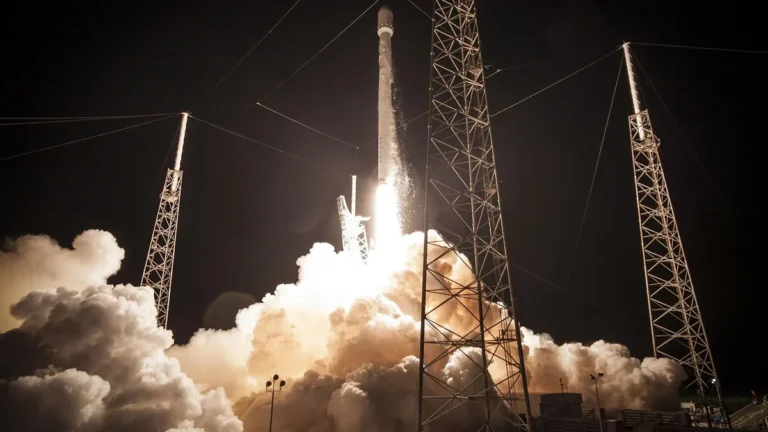
OBRIA NANO lifted off Oct. 1, 2026, on the SpaceX Transporter-18 rideshare flight. The spacecraft passed initial health checks under Ukrainian operational control after launch and is undergoing operational testing to validate its communications capabilities.
Ukrainian flight controllers manage orbital commands, radio-frequency checks, and cross-band link trials as the spacecraft passes over Ukrainian ground stations.
The companies intend to use information from OBRIA NANO’s tests to shape the operational OBRIA constellation, emphasizing domestic Ukrainian manufacture of satellites and ground terminals. The trials aim to give HIMERA hands-on experience in building the constellation and weaving it into Ukraine’s national infrastructure.
HIMERA Chief Executive Misha Rudominskyi called OBRIA NANO the initial move toward an independent Ukrainian communications network, stressing its part in strengthening strategic security and cutting reliance on outside providers. He presented the project as central to Ukraine’s lasting communications sovereignty, with intentions to localize satellite and ground-terminal production.
GomSpace Chief Executive Carsten Drachmann said working with HIMERA will boost Ukraine’s independent communications potential and aid its long-term security and economic growth. Drachmann’s comments frame the joint effort as a way to lower strategic risks through domestic satellite communications capabilities.
HIMERA began in 2022 to create secure tactical radio systems for military forces, including gear built for settings affected by electronic warfare. GomSpace, based in Aalborg, Denmark, builds small satellites, communications payloads, and spacecraft subsystems. The firm focuses on small-satellite development and has a track record in nanosatellite bus hardware and communications payloads.
OBRIA NANO combines GomSpace nanosatellite bus hardware with HIMERA tactical radio gear, allowing cross-band link evaluations and radio-frequency signal checks under Ukrainian control. Ukrainian flight controllers direct orbital commands and ground-station passes across Ukraine to check regional coverage capabilities.
In mid-October 2026, limits on Starshield transceivers from the U.S. Department of Defense disrupted frontline military operations. The limits cut satellite connectivity and interrupted Ukrainian drone operations. On Oct. 24, Ukraine said Starlink and Starshield services had returned to normal operating speeds.
Ukraine’s Ministry of Defence put its name to a letter of intent on Oct. 22, 2026, alongside Finnish firms ICEYE and Nokia, to grow sovereign LEO small-satellite and ground-network capabilities. Finland’s Prime Minister Petteri Orpo visited Kyiv on an official state trip on Oct. 22, 2026, and the deal was signed during his visit. The pact fits into Kyiv’s stepped-up work to widen its strategic data links and cut exposure to outside network interventions, together with the OBRIA effort and another European-backed initiative. The letter of intent rests on an existing ICEYE-Nokia defense satcom partnership that grants Ukraine sovereign control over low Earth orbit satellites, ground networks, and hardened user terminals.
The OBRIA constellation seeks to deliver communications coverage across Ukraine while working alongside European satellite networks. The effort seeks to broaden Ukraine’s communication channels and reinforce its strategic security by lowering dependence on external providers.
HIMERA and GomSpace flew OBRIA NANO under the OBRIA Initiative, which a Stockholm announcement on Oct. 27, 2026, called the opening move toward resilient, sovereign satellite communications capabilities for Ukraine. The announcement says the satellite will support technical trials intended to shape the operational system’s design and advance OBRIA toward Ukrainian national infrastructure. OBRIA NANO continues testing the OBRIA constellation’s capabilities on schedule to guide the design of the operational system.
A Ukrainian operator will control OBRIA NANO, and the spacecraft will support Ukraine’s strategic security. Depending on technology from other countries, including partners, creates strategic risks in wartime, whereas developing domestic capabilities would help Ukraine expand communications channels and strengthen strategic security.
HIMERA told Militarnyi on October 27 that its tests of the OBRIA constellation’s capabilities are going according to plan. HIMERA’s update to the Ukrainian outlet Militarnyi says the technical trials aim to give the company practical experience to develop the project and fold it into Ukraine’s national infrastructure.
No specifics have been released about OBRIA NANO’s specifications, communications capacity, project financing, or the planned number of network satellites. The companies have confirmed Obria Nano is working in orbit and undergoing tests to shape constellation design, while keeping these program details private. The Obria Nano effort counts among at least two European-backed initiatives meant to increase Ukraine’s control over satellite communications following disruptions to SpaceX’s Starlink and Starshield services. The announcement appears next to the ICEYE-Nokia letter of intent as part of Ukraine’s push to gain more control over satellite communications after disruptions to SpaceX’s Starlink and Starshield services.




Join the discussion