Key facts
- Dust on PIXL's Teflon target and on SHERLOC's Vectran swatch averaged around 2 micrometers. Particle sizes on PIXL's basaltic glass target and on SHERLOC's Teflon swatch extended down to roughly 100 to 300 nanometers.
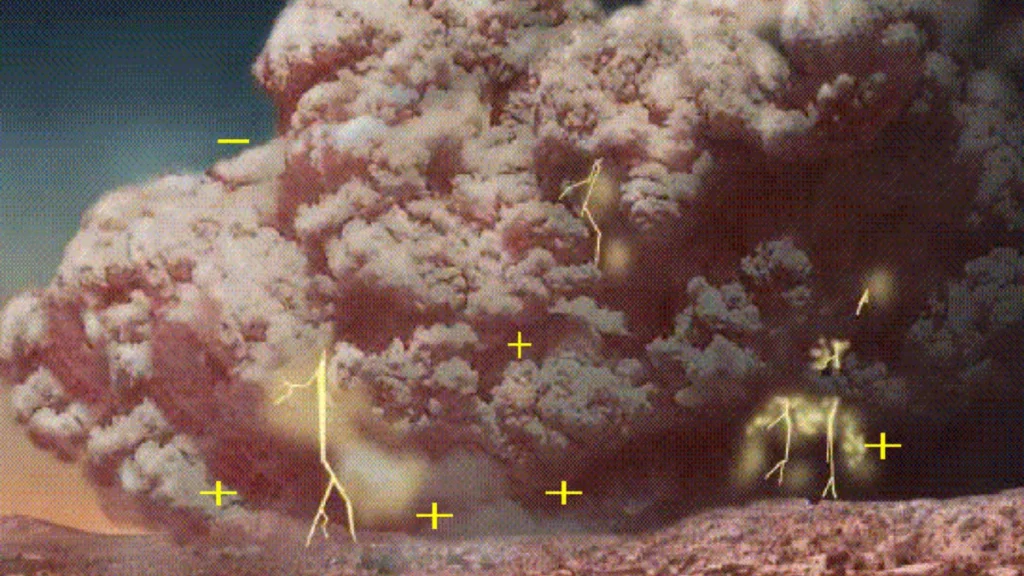
- Static electricity appears to control which dust sizes adhere to which surfaces, because grains charge through airborne collisions and different target materials attract different sizes.
- Organic polymers such as the Teflon spacesuit sample on SHERLOC are common in outer spacesuit layers and readily collect fine dust.
- Chemically, the Martian dust matches the iron- and sulfur-rich composition measured by earlier missions, and PIXL also found enrichment in phosphorus and signs of calcium sulfate.
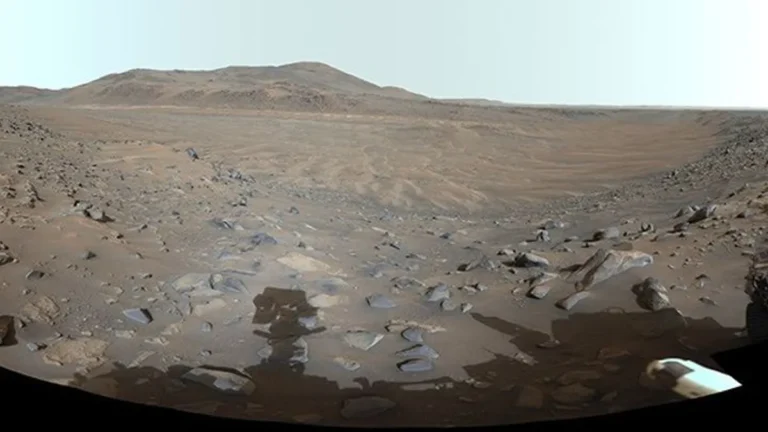
NASA announced Oct. 26, 2026 that the Perseverance rover had spent more than 1,645 Martian days, or sols, measuring fine and ultrafine dust on the spacesuit-material samples carried aboard the rover on Mars, including particles small enough to reach the lungs and bloodstream.
NASA said the findings are set for publication Tuesday, Oct. 27, 2026, in the Proceedings of the National Academy of Sciences. The findings could help shape spacesuit and habitat design, dust-removal procedures and health standards for crews on future Mars missions.
Perseverance was built by JPL and is managed for NASA’s Science Mission Directorate under Caltech management as part of the Mars Exploration Program; JPL also built both rover instruments, PIXL and SHERLOC. NASA said PIXL made the first on-site measurements of Martian dust particles, covering fine and ultrafine categories smaller than the roughly 3-micrometer limit that earlier Mars measurements reached.
NASA said PIXL detected fine particles below 2.5 micrometers and ultrafine particles around 100 nanometers; a human hair is about 70 micrometers wide, making the ultrafine particles roughly 700 times thinner. PIXL’s Teflon target and SHERLOC’s Vectran swatch held dust averaging around 2 micrometers. Particle sizes reached roughly 100 to 300 nanometers on PIXL’s basaltic glass target and SHERLOC’s Teflon swatch.
Perseverance carries five spacesuit-material swatches, each three-quarters of an inch on a side, equal to 20 millimeters, as part of a SHERLOC calibration target on the rover’s arm. The PIXL calibration target carries Teflon and basaltic glass; PIXL cannot directly detect elements in Teflon, so its signals come from dust resting on it. Researchers examined Teflon and Vectran swatches on SHERLOC’s calibration target to study spacesuit-material durability on Mars.
NASA said static electricity appears to control which dust sizes stick to which surfaces, since grains charge through airborne collisions and each target material attracts different sizes. The Teflon spacesuit sample on SHERLOC is an organic polymer, a class of materials common in outer spacesuit layers that readily collect fine dust.
NASA said some suit materials accumulate less dust than alternatives, which could guide future choices of materials and coatings for spacesuits and habitats. Suitports, which let astronauts enter a suit fixed to a habitat’s exterior, and dual-chamber airlocks could cut the dust reaching astronauts’ living quarters. The PIXL dust measurements could also feed wider efforts to set indoor dust-exposure limits, build safe habits and find ways to remove dust during Mars exploration.
NASA said that, on Earth, research links particles measuring below 2.5 micrometers to negative health effects because they lodge deep in the lungs and pass into the bloodstream. The agency also said research indicates that particles measuring no more than 100 nanometers can move from the nasal cavity into the brain through the olfactory nerve.
NASA said the dust chemically resembles the iron- and sulfur-rich material measured by earlier missions, and PIXL also found phosphorus enrichment and signs of calcium sulfate. The dust is mostly silicate minerals and carries reactive compounds such as perchlorates, which can disrupt thyroid function, and reactive iron, which causes cellular damage; scientists believe the risk depends on how much dust is present and how long exposure lasts.
NASA said lunar dust scratched visors and degraded outer spacesuit layers; it damaged seals and caused some Apollo crew members to report hay-fever-like symptoms. Wind-driven collisions round Mars dust grains, so they are less abrasive than lunar dust; they also carry more sulfur, chlorine and iron and more silica, and dust storms at the regional and global scale keep those grains recirculating in the atmosphere.
Scott VanBommel, the paper’s lead author and a Perseverance scientist at Washington University in St. Louis, said PIXL gave researchers the chance to measure directly on Mars the ultrafine dust sizes long predicted. “But the smallest particles stay behind, and those are the ones that pose the greatest challenge for human support systems.”
Lindsay Hays, NASA’s acting director of its Planetary Science Division, said dust has challenged surface exploration since Apollo, and Perseverance gives engineers and flight surgeons measurements to improve designs before astronauts reach Mars. Katie Stack Morgan, Perseverance’s project scientist at JPL, said the rover’s main job is to seek ancient microbial life, while the mission also helps prepare human explorers through demonstrations including MOXIE and Ingenuity plus the spacesuit samples.
NASA develops dust-hazard solutions with ground facilities and lunar missions serving as proving grounds. In March 2025, it tested an Electrodynamic Dust Shield that relied on electric fields to clear lunar regolith, or loose surface material, off glass and thermal radiator surfaces on the Moon. Engineers use vacuum chambers and lunar regolith simulant at the Lunar Development and Test Facility of the Johnson Space Center in Houston to test spacesuit components and mechanisms, plus a Handheld Lunar Electrostatic Dust Mitigation tool, ahead of Artemis missions.
The Electrodynamic Dust Shield was developed by NASA at Kennedy Space Center in Florida. It landed on the Moon as part of Firefly Aerospace’s Blue Ghost Mission 1.

Join the discussion