Key facts
- On September 28, 2026, Flight 14 became the first Starship mission to reach orbit and deploy 26 next-generation Starlink V3 satellites.
- Thirty-three Raptor 4 engines on Super Heavy would yield approximately 9,900 metric tons of combined thrust at liftoff.
- The projected total would be nearly three times the roughly 3,400 metric tons generated by the Saturn V's five F-1 engines.
- The first Raptor 1 produced about 185 metric tons of thrust while weighing roughly 2,080 kilograms.
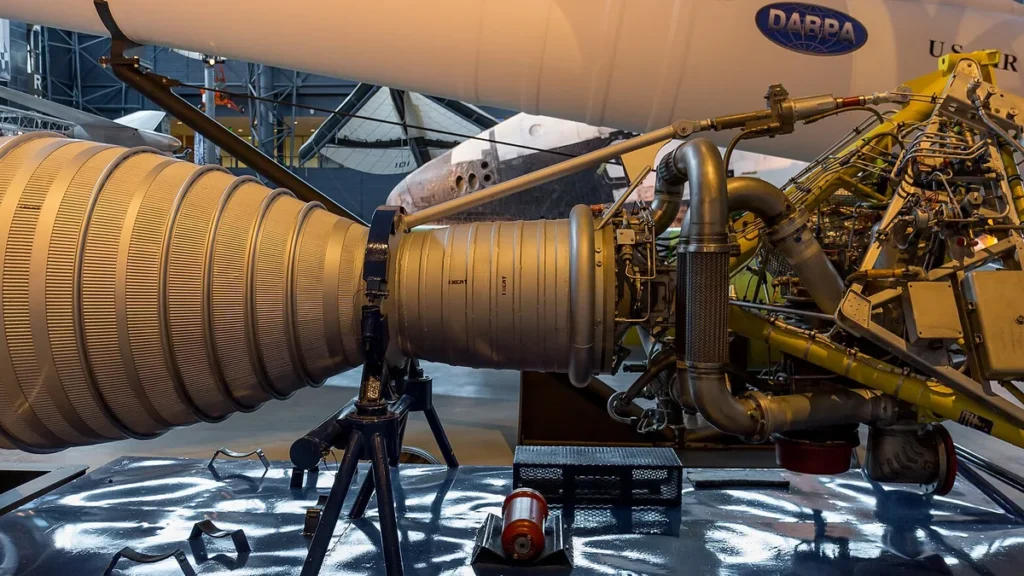
On October 26, 2026, Elon Musk announced that SpaceX anticipates the Raptor 4 engine will generate 300 tons of sea‑level thrust at roughly the same mass as the preceding Raptor 3. TESLARATI reported the statement and noted that the engine family has already achieved more than a 60 percent increase in thrust from the original units even as engine mass decreased.
TESLARATI provided the specifications for each version, noting that the first Raptor produced about 185 metric tons of thrust and weighed roughly 2,080 kilograms. The second version reached 230 tons of thrust and reduced mass to approximately 1,630 kilograms. SpaceX’s current Raptor 3 targets 280 tons at 1,525 kilograms, and operational flight ratings are near 250 tons.
With 33 Raptor 4 engines, the Super Heavy booster would produce approximately 9,900 metric tons of combined thrust at liftoff. That total would be nearly three times the roughly 3,400 metric tons generated by the five F‑1 engines of the Saturn V.
Increased sea‑level thrust boosts the full stack’s initial thrust‑to‑weight ratio, which creates quicker pad acceleration and cuts the duration spent overcoming gravity. TESLARATI explains that gravity losses in the initial one or two minutes represent a significant reduction in total available delta‑v, and cutting time from the initial ascent saves propellant energy for orbital velocity or additional payload.
Vehicle diameter and packing density limit the number of engines on Super Heavy, making per‑engine thrust growth the simplest path to higher liftoff performance without changing the booster structure. Keeping engine mass about the same while increasing thrust improves thrust‑to‑weight ratio and lowers the structural and propellant mass fraction needed solely to support the engines. Previous Raptor versions simplified or removed extensive vehicle‑side hardware including heat shields, and the compounding gains free up capacity for propellant, payload, or margins such as engine‑out capability.
More liftoff thrust enables heavier vehicles, bigger propellant loads, and increased payloads to low Earth orbit, with SpaceX targeting the 100‑plus‑ton reusable range. This capability underpins orbital refueling, lunar efforts, and eventual Mars cargo and crew flights.
Booster 22, the Super Heavy vehicle assigned to Flight Test 15, completed a static fire on Sunday, October 25, 2026, lighting all 33 Raptor 3 engines for roughly 15 seconds. Yahoo Tech reported that SpaceX plans to attempt catching the ship upper stage on the launch tower during the mission. Based on recent Starship campaigns, the launch is expected to occur in mid‑to‑late November. SpaceX has not officially confirmed the payload for Flight 15, though another batch of V3 Starlinks is possible.
On September 28, 2026, Flight 14 became the first Starship mission to reach orbit and deploy 26 next‑generation Starlink V3 satellites. Times of Oman reported that the launch had a 75‑minute window opening at 7:15 a.m. Central Time, and Yahoo Finance noted the craft lifted off from Starbase, Texas, at 7:49 a.m. local time. Times of Oman said the mission was expected to fly at an altitude of approximately 275 km and complete about six orbits over a nearly 10‑hour flight, with splashdown targeted in the Pacific Ocean west of Chile.
Altitude: 275 km – Satellites deployed: 26
During the ascent, an upper‑stage Raptor engine shut down prematurely, prompting SpaceX to shorten the planned 10‑hour mission. The vehicle nonetheless completed a controlled reentry and landed in the Pacific Ocean approximately three hours after liftoff.
According to Times of Oman, Starlink V3 provides 1 Tbps of downlink capacity and 160 Gbps of uplink capacity, which Starlink calls a 10x improvement in downlink and a 22x increase in uplink compared with Starlink V2. Yahoo Tech noted that upgrading the global network with these fast satellites is a major reason SpaceX wants to put Starship into regular service.
Three satellites on Flight 14 carried cameras to scan Starship’s heat shield and send imagery to operators. Operators will use the imagery to keep testing ways to check heat shield readiness before returning to the launch site on later flights.
Under the Artemis program, NASA has contracted SpaceX to develop a modified Ship upper stage that can land astronauts on the lunar surface. Yahoo Tech reported that the agency recently revised the timeline of milestones SpaceX must meet before a lunar lander version can carry crews, including a significant demonstration mission next summer on Artemis III. Orion will carry astronauts to Earth orbit for the next Artemis mission and dock with both lunar landers across roughly two weeks, including Starship and Blue Origin’s Blue Moon. SpaceX aims to perform an uncrewed lunar landing demonstration before NASA returns astronauts to the moon on Artemis IV, which targets 2028, but the choice of lander for that mission remains undetermined as SpaceX and Blue Origin still compete for the first crewed Artemis landing.
After Flight 15, SpaceX hopes to demonstrate more milestones before 2026 ends. These include the first Starship launch from Florida and possibly the first re‑flight of an upgraded V3 Super Heavy vehicle.
In July 2026, a Falcon 9 booster flew for the 36th time, a record, and the fastest Falcon 9 booster relaunch turnaround is nine days. AOL.com reported that a previously flown Raptor engine flew on Starship Flight 7, and that Raptor was designed to improve on Merlin turnaround significantly and eventually match commercial airline‑level reusability, with SpaceX aiming to immediately refuel and launch Raptor‑equipped Starships once they come back from space. SpaceX says Starship stands 407 feet tall as the largest and strongest rocket ever built, and both stages are meant for full and rapid reusability.
AOL.com compared the engines, noting that Merlin engines on Falcon 9 burn rocket‑grade kerosene and liquid oxygen through an open‑cycle gas generator design, with nine Merlins in the Falcon 9 booster and one Merlin vacuum engine on the upper stage. A sea‑level Merlin generates roughly 190,000 pounds of thrust, while the Merlin vacuum variant reaches up to 220,500 pounds. In contrast, Raptor uses full‑flow staged combustion with liquid methane and oxygen for the Starship program and delivers 617,000 pounds of thrust. The Super Heavy booster holds 33 Raptors, and the Starship orbiter carries three sea‑level Raptors plus three Raptor vacuum engines.
Musk said on X on September 27, 2026, that hourly flights are 2 to 3 years away for Starship. Yahoo Finance calculated that a once‑per‑hour launch rate would total 8,760 flights per year, calling it illustrative arithmetic rather than company guidance for annual volume.
"Starship is 2 to 3 years away from hourly flights,"
Musk, Yahoo! Finance


Join the discussion