
Key facts
- Lumina runs on more than 15,000 GPUs of the Frontier supercomputer at Oak Ridge National Laboratory, one of the world's fastest supercomputers, enabling unprecedented computational power for cosmological simulations.
- Lumina resolves half a trillion elements, including dark matter particles and gas cells, with a resolution 30 times higher than Illustris TNG, enabling detailed simulations across both large and small cosmic scales.
- Lumina includes ionizing sources such as stars, active galactic nuclei (AGNs), X-ray binaries, and shock-heated gas, allowing it to model the complex interactions that drove cosmic reionization.
- Lumina’s simulation required over 15,000 GPUs running on the Frontier supercomputer at Oak Ridge National Laboratory, which is one of the world’s fastest supercomputers, to achieve its unprecedented scale and resolution.
On Oct. 26, 2026, the Center for Astrophysics | Harvard & Smithsonian released Lumina, a large-volume cosmological radiation-hydrodynamic simulation run on the Frontier supercomputer at Oak Ridge National Laboratory designed to study the epochs of hydrogen and helium reionization down to redshift z = 3, which corresponds to a lookback time of about 11.7 billion years (about 2.1 billion years after the Big Bang). Cosmic reionization represents a pivotal transition in the history of the universe, marking the shift from a neutral state dominated by hydrogen and helium to an ionized one driven by early stars and galaxies. By modeling this transformation across a volume of 500 comoving megaparsecs (cMpc)—roughly 1.5 billion light-years—Lumina provides a statistically robust framework for interpreting observations from major space telescopes. This ambitious project bridges the gap between theoretical predictions and observational data, helping astronomers test whether current theories align with the surprises delivered by modern space observatories.
Cosmic reionization unfolded in two distinct phases during the first 2 billion years of the universe, marking the transition from a dark, neutral state to an ionized, transparent one. Hydrogen reionization was driven by ultraviolet photons from the earliest stars and galaxies, while the later helium reionization required more energetic, hard radiation from quasars and active galactic nuclei (AGNs). Understanding these phases is crucial for piecing together how the first cosmic structures formed and how the intergalactic medium (IGM) evolved, and Lumina is designed to capture both processes simultaneously. Providing a self-consistent framework that aligns with observations from the James Webb Space Telescope (JWST), the simulation models the universe during its Cosmic Noon, a period when star formation and quasar activity peaked, to help researchers understand the complex interplay between radiation, gas, and cosmic structures, which shapes the formation of galaxies and large-scale structures we observe today.
To achieve this level of detail, the Lumina project leveraged exascale computing on more than 15,000 graphics processing units (GPUs) of the Frontier supercomputer at Oak Ridge National Laboratory, one of the world’s fastest supercomputers. This immense computational power allowed the simulation to resolve nearly half a trillion elements, including dark matter particles and gas cells, with a resolution 30 times higher than previous efforts like Illustris TNG. By modeling an enormous volume of space at such fine detail, researchers can study rare cosmic objects, large-scale environments, and cosmic variance in ways that were computationally impossible. The exascale capabilities of the Frontier supercomputer were essential for capturing both the large-scale structure of the universe and the fine-grained processes of galaxy formation, marking a major leap forward in computational cosmology.
Lumina builds directly on the foundation laid by the Illustris TNG project, a series of large-scale cosmological magnetohydrodynamical simulations focused on galaxy formation that includes three primary runs—TNG50, TNG100, and TNG300—developed by a collaboration including MIT and the Max Planck Institute for Astrophysics. While Illustris TNG provided foundational models of galaxy evolution, Lumina incorporates its galaxy-formation physics but extends the simulated volume to a scale roughly 100 times larger. For context, Lumina’s 500 cMpc side length is vastly larger than Illustris TNG 300, which spans about 3.3 cMpc, and Thesan, which simulated a volume of 300 million light-years. This massive increase in scale allows the simulation to capture cosmic structures on a scale comparable to the observable reach of today’s most powerful telescopes, enabling more accurate forward modeling of observables like the Lyman-α forest and quasar absorption spectra.
Oliver Zier, the lead author of the project and an Institute for Theory and Computation Fellow at the Center for Astrophysics | Harvard & Smithsonian, emphasized that understanding cosmic reionization requires translating theories into detailed predictions to match observations from JWST. Zier noted that the telescope has transformed the early universe into a new frontier in astrophysics, and the simulation’s results aim to validate or challenge existing theories about cosmic evolution. Aaron Smith, an assistant professor of physics at the University of Texas at Dallas and co-author of the study, described the simulation as a unique tool to follow the transformation of hydrogen and helium across an enormous volume of the universe while resolving the galaxies and luminous objects driving these changes. Smith highlighted that capturing both hydrogen and helium reionization simultaneously allows researchers to study their interconnected effects on cosmic evolution, providing insights into how these processes shaped the early universe.
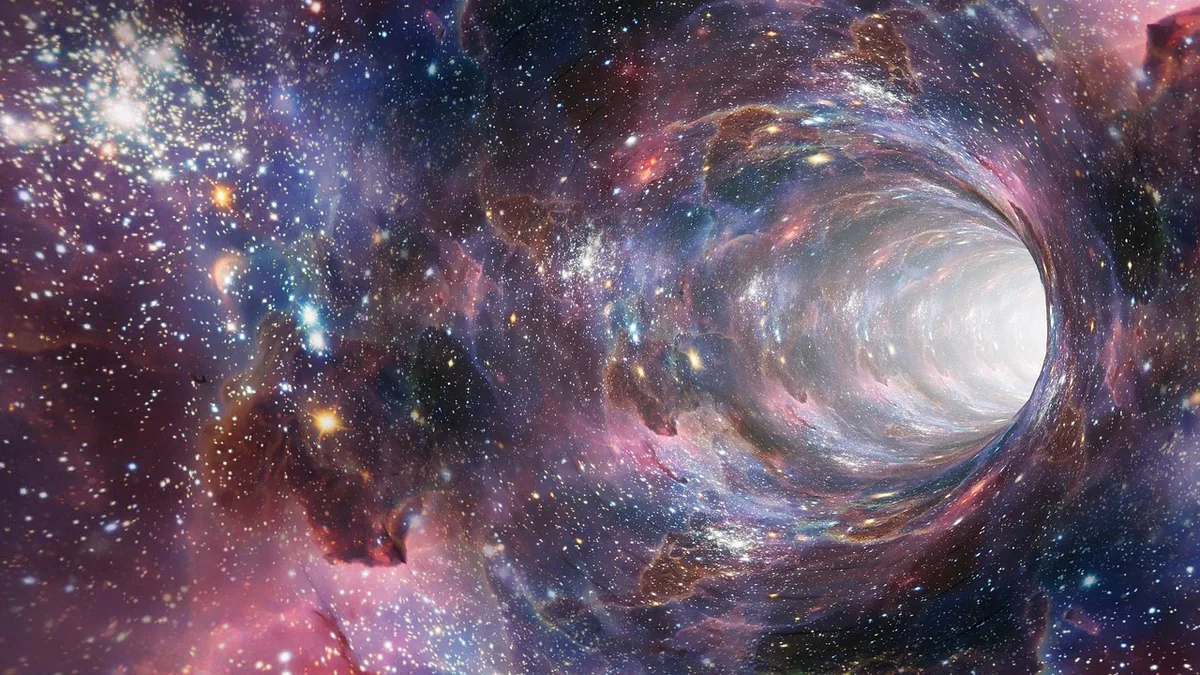
Lumina’s detailed resolution allows researchers to track the complex interactions of ionizing sources such as stars, active galactic nuclei (AGNs), X-ray binaries, and shock-heated gas. By incorporating these diverse drivers, the simulation helps scientists model how different cosmic phenomena contributed to the reionization of hydrogen and helium. The simulation begins at around 45 million years after the Big Bang, during the cosmic Dark Ages, when neutral hydrogen dominated the universe, which lacked visible structures, and tracks the formation of the first galaxies and stars, which marks the transition from the hot, dense plasma of the early universe to the formation of the first cosmic structures, leading to reionization. By resolving dark matter, gas, stars, and radiation interactions across scales ranging from individual galaxies to cosmic structures, the simulation provides a holistic view of cosmic evolution from the Dark Ages to the end of helium reionization, and it interprets key observables such as the Lyman-α forest, 21-cm cosmology, line-intensity mapping, galaxy surveys, and quasar absorption spectra, linking them directly to the evolving large-scale ionized structure of the intergalactic medium.
One of Lumina’s key predictions is the timeline of helium reionization, showing that it began at redshift z ≈ 6, driven by the hard radiation field from AGNs, and was nearly complete by redshift z = 3 with a residual helium II volume filling fraction below 1%. This prediction aligns well with current observational constraints, validating the simulation’s ability to capture complex cosmic phenomena and providing a self-consistent model of how this process unfolded. The simulation also highlights an intriguing discrepancy: it predicts fewer massive galaxies in the early universe than those actually observed by the James Webb Space Telescope. This divergence suggests that current theoretical models may need revision to reconcile with the surprising number of massive galaxies revealed by JWST, potentially prompting revisions to existing models of galaxy formation in the early universe.
To make these complex processes accessible, the project released 15 spectacular videos showcasing gas densities, temperatures, metallicity, and the locations of early galaxies and stars, as well as dark matter and dark energy distributions. These visualizations help researchers and the public visualize the complex processes simulated by Lumina, including the formation of cosmic structures and the evolution of the intergalactic medium. They are valuable tools for communicating scientific findings and making the early universe accessible to a wider audience, and as the team continues to analyze the data, Lumina serves as a powerful bridge between theoretical models and observational astronomy. By translating theories into detailed predictions, the simulation helps astronomers test whether existing theories of cosmic evolution align with the new observations pouring in from telescopes like JWST and the Nancy Grace Roman Space Telescope (NGRST), which is revealing the universe’s earliest chapters and is also designed to probe the early universe.


Join the discussion