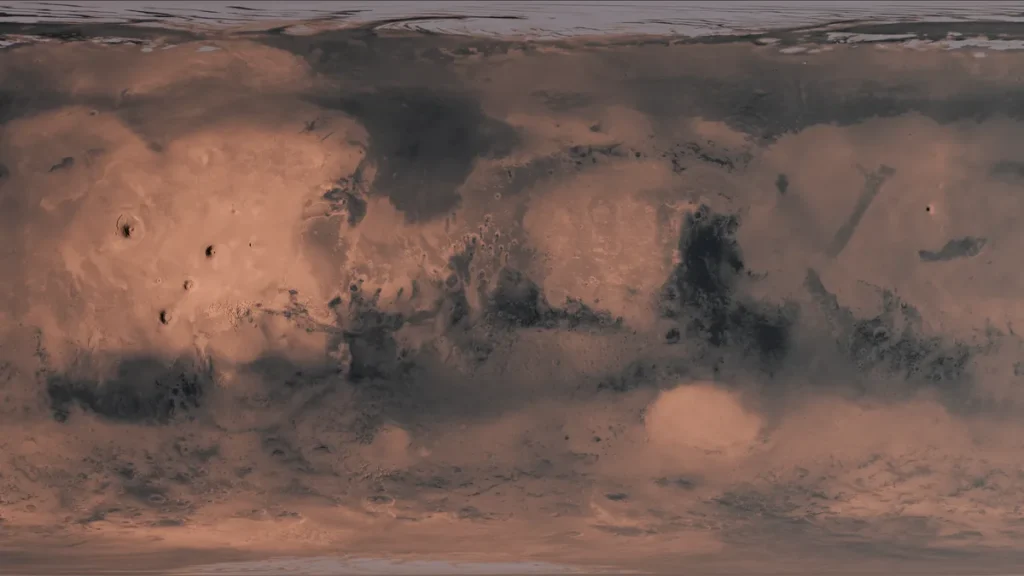
In October 2026, a team of Dutch, French, and U.S. planetary scientists and ethicists warned that terraforming Mars (the hypothetical process of making Mars more Earth‑like) could destroy evidence of its history and potential life, urging that an ethical debate precede any large‑scale environmental modification.
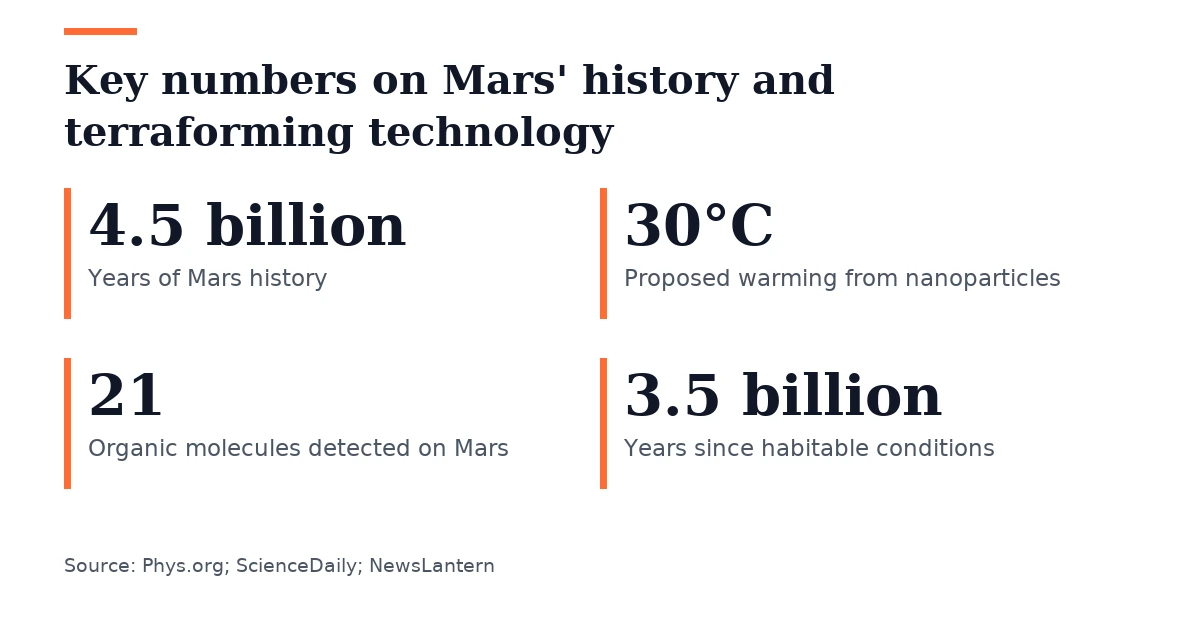
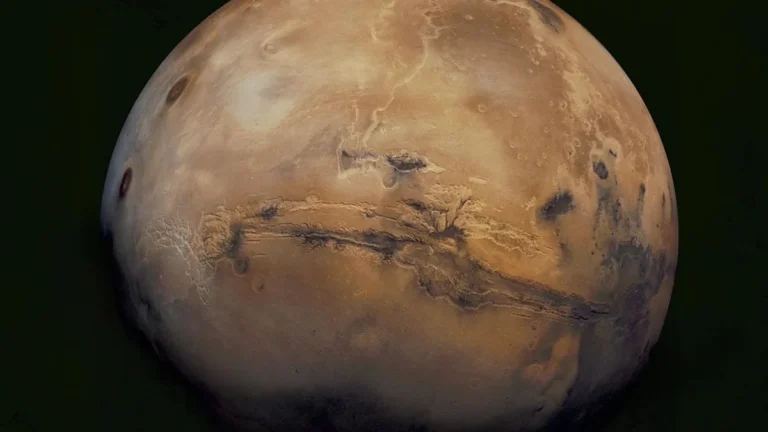
Lonneke Roelofs of Utrecht University likened Mars to an immense, largely unread library holding 4.5 billion years of solar‑system history, noting that decades of exploration have revealed ancient oceans, rivers, volcanic activity and complex organic molecules while fundamental questions about past habitability and possible life remain unanswered. “You could compare Mars to an immense, largely unread library containing 4.5 billion years of solar system history.” — Lonneke Roelofs Roelofs highlights that terraforming Mars before investigating these questions could permanently destroy crucial evidence, including potential traces of past or present life.
Mars lost its global magnetic field billions of years ago, leaving it vulnerable to solar wind stripping its atmosphere, which complicates efforts to thicken the atmosphere for terraforming.
Experts say that any terraforming effort on Mars should be subject to public review, ethical review and international oversight, much like the governance traditionally applied to planetary exploration, and they urge COSPAR (the Committee on Space Research) to form a working group of planetary scientists, ethicists and legal scholars. The 2025 Pioneer Labs workshop summary, authored by Dr. Erika DeBenedictis, says progress in heavy‑lift launch vehicles, synthetic biology and climate models has moved terraforming Mars from pure science fiction toward a credible research field, although putting it into practice remains far off. The authors emphasize that private funding for terraforming research raises governance and accountability concerns, as planetary‑scale interventions should not lack public oversight.
In 2024, researchers Samaneh Ansari and Edwin Kite proposed metallic nanoparticles that could increase Mars’ surface temperature by at least 30 °C over a century by trapping outgoing heat and scattering sunlight forward, making this warming approach more viable than earlier CO₂‑based schemes. Terraforming Mars would proceed in stages: first warming the planet to release water and CO₂, then thickening the atmosphere, adding engineered microbes to generate oxygen, and finally working toward a breathable environment, though achieving a fully habitable world could require centuries or even millennia. The nanoparticles, made from iron or aluminum, are designed to interact with thermal infrared radiation, warming Mars more efficiently than previous greenhouse gas proposals. Climate models suggest this method could be measurable within months if deployed continuously.
Technological advancements, such as engineered nanoparticles for warming and synthetic biology for creating extremophile microbes, have increased the feasibility of terraforming. These advances also highlight the massive industrial and energy requirements for such a project. Synthetic biology efforts aim to engineer microbes that can survive Martian conditions and produce oxygen.
Creating a habitable Mars would demand a planet‑scale industrial system able to continuously produce and deliver warming agents, microbial ecosystems and the necessary infrastructure, a capacity that today’s technology and industry do not provide. Mars lacked a global magnetic field for billions of years, making its atmosphere prone to loss from solar wind and hindering attempts to thicken it for terraforming. Researchers acknowledge that while regional habitability gains (paraterraforming) may be plausible, global terraforming would require industrial capabilities and timescales far beyond current plans. The lack of a magnetosphere means any thickened atmosphere would be continuously lost to space, requiring solutions like artificial magnetospheres to stabilize the environment.
Researchers propose that terraforming could be approached in stages, starting with localized warming and habitat creation before attempting global transformation, a process known as paraterraforming. They note that regional habitability gains may be plausible while addressing some of the technological hurdles involved in global transformation. Paraterraforming could involve constructing sealed habitats that modify local environments without altering the whole planet.
Ethical worries about terraforming Mars cover the risk of destroying any native life, the issue of claiming ownership of the planet, difficulties in governing such a project and the irreversible obligation placed on future generations for a venture with uncertain results. Supporters emphasize survival, scientific progress and human flourishing as justifications for the effort. The 1967 Outer Space Treaty bars nations from claiming celestial bodies, yet it offers no legal rules for changing them, leaving unresolved issues over governance, environmental duties and resource use for any terraforming effort. Critics warn that terraforming could destroy scientific opportunities and raise questions about who has authority to alter another planet, while the lack of a clear legal system for planetary transformation leaves unresolved issues over approval and distribution of benefits and risks.
Terraforming Mars has historically been a topic of science fiction, but recent advances in climate modeling, synthetic biology, and spaceflight technology have made it a subject of serious scientific research. The concept involves altering Mars’ atmosphere, temperature, and surface conditions to support Earth-like life. These advances include improved climate modeling and more powerful launch vehicles such as SpaceX’s Starship.
The debate over terraforming Mars involves ethical considerations such as environmental protection and the potential destruction of indigenous life. It also raises questions of planetary ownership, intergenerational responsibility, and unequal access to benefits. Intergenerational responsibility raises questions about who bears the risks of irreversible planetary change.
The cancellation of NASA’s Mars Sample Return program in 2026 has delayed efforts to definitively determine whether Mars hosts indigenous life. This delay is a critical question for ethical terraforming considerations. Without pristine samples, scientists must rely on indirect measurements and rover data to assess habitability.
The Outer Space Treaty of 1967 prohibits national appropriation of celestial bodies. It does not address the ethical or legal challenges of altering them, leaving governance and accountability questions unresolved. The treaty’s silence on alteration leaves open debates about who has the authority to approve planetary‑scale projects.


Join the discussion