Key facts
- Alex Innanen said the start of Mars year 39 at zero degrees solar longitude (Ls=0°) took place at the end of September 2026 on Earth.
- Alex Innanen said the new Mars year means it is now autumn in Gale Crater, just south of the equator.
- Alex Innanen said autumn brings back high-altitude twilight clouds, which are illuminated beautifully by the low sun angle at sunset.
- Alex Innanen said these twilight clouds can be seen in the raw Navcam images because they are bright enough.
Alex Innanen reported that, during the late afternoon of Wednesday, Oct. 7, 2026, Curiosity’s cloud movies captured the first high‑altitude clouds of the season in Gale Crater. The blog’s Earth planning date for the observations is Friday, Oct. 9, 2026. Alex Innanen added that, as autumn progresses, twilight cloud activity increases and the rover’s Wednesday movies recorded the initial high‑altitude clouds of this season, which appear at the top of the blog post. The blog’s Earth planning date line, placed shortly after the author’s byline, indicates when scientists formulated the plan on Earth and helps correlate the rover’s activities with a terrestrial calendar.
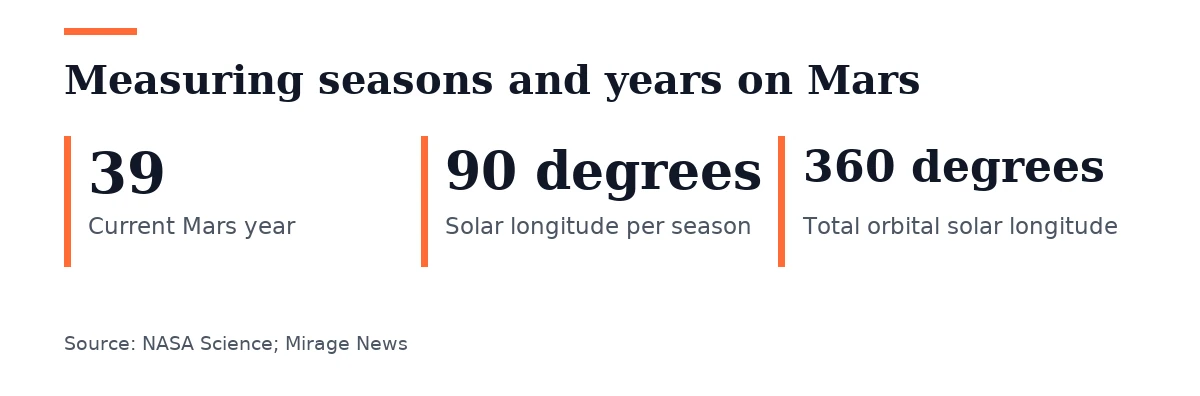
Alex Innanen said that the commencement of Mars year 39, defined by zero degrees solar longitude (Ls=0°), occurred at the end of September 2026 as measured on Earth, as he explained in the Curiosity blog. He pointed out that a new Mars year begins at the northern vernal equinox, which corresponds to Ls=0°, and that scientists track the seasons by solar longitude, with each season spanning ninety degrees of Mars’s orbit around the Sun. Alex Innanen explained that the start of the new Mars year means that Gale Crater, located just south of the Martian equator, is now experiencing autumn, as he noted in the blog.
He added that, after the vernal equinox that initiates the Mars year, the rover’s location in Gale Crater undergoes autumn, characterized by the return of high‑altitude twilight clouds. Alex Innanen stated that autumn brings back high‑altitude twilight clouds, which the low angle of the sun at sunset illuminates beautifully. He noted that, during autumn evenings, the low sun angle lights up thin, high‑altitude clouds, making them visible in raw Navcam images, while the majority of Martian clouds remain too faint to be seen.
Alex Innanen said that most of the clouds observed at Gale Crater are suboptical, meaning they are too thin for human eyes or the rover’s robotic cameras to detect. He clarified that ordinary Martian clouds are often optically thin, rendering them invisible to the naked eye and to the rover’s imaging systems, whereas only the brighter twilight clouds surpass the visibility threshold and appear in the captured images. Alex Innanen noted that these twilight clouds are visible in the raw Navcam images because they have enough brightness.
He added that the adequate brightness of the twilight clouds allows them to appear in unprocessed Navcam frames, thereby offering a clear visual record of the seasonal atmospheric changes occurring over Gale Crater. Michelle said that the team celebrated the arrival of the new Mars year by conducting a drill campaign at the site nicknamed Basque Lakes. She noted that the drill campaign at Basque Lakes marked the celebration of the new Mars year, after which the team turned its attention to completing any remaining drill tasks before departing the location.
Alex Innanen said that the weekly plan for the rover emphasized finishing all drill activities before the rover would drive off for the weekend. He explained that, following the drill campaign, the schedule set aside time to wrap up sample processing and to prepare the rover for a drive toward the next scientific target, the Chiu Chiu region. Alex Innanen said that, after reviewing the results from the previous week’s laboratory work, the SAM team decided to carry out another GCMS experiment.
He noted that the SAM team approved an extra run of the gas chromatograph/mass spectrometry instrument to analyze the drill tailings, taking advantage of the available power and time allocated in the Monday plan. Alex Innanen stated that operating the GCMS instrument is an energy‑intensive activity for the rover. He said that, although the GCMS consumes a considerable amount of power, the rover had reserved four full sols on Monday to accommodate the measurement while still leaving room for other observations.
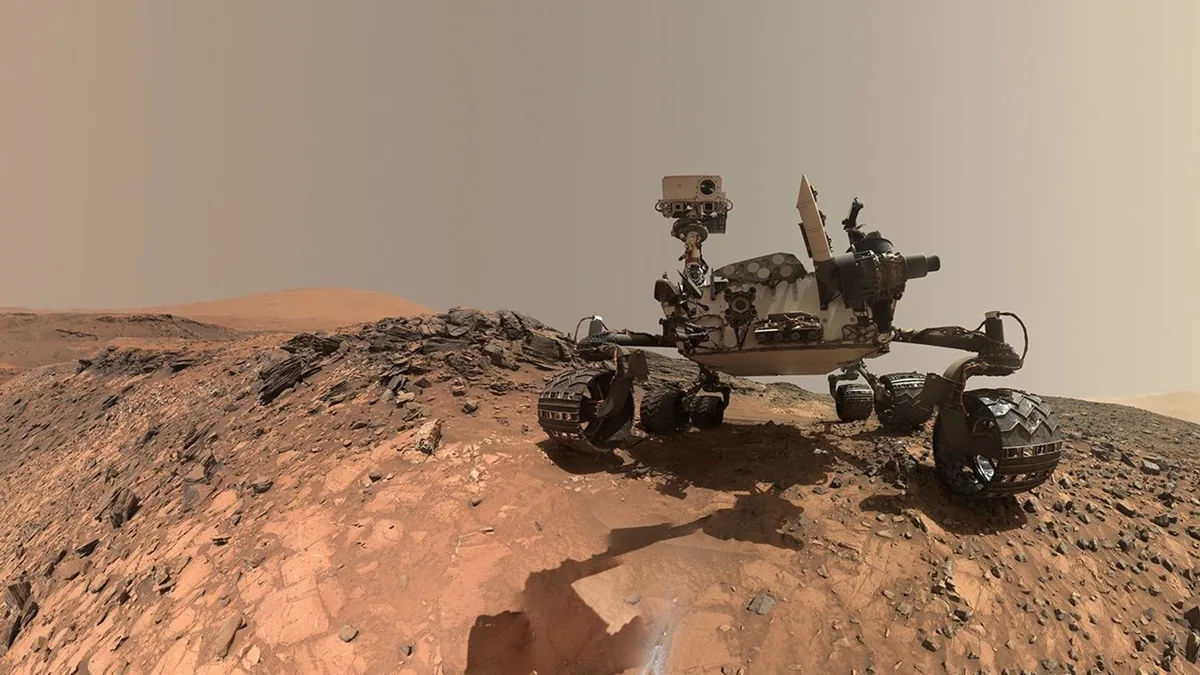
Alex Innanen said that Monday’s schedule allocated four whole sols for a variety of activities, leaving time for remote sensing with Mastcam and ChemCam as well as contact science of the drill tailings. He added that the four‑sol block on Monday provided enough time to carry out the power‑hungry GCMS test and to perform supplementary remote‑sensing and contact‑science measurements. Alex Innanen said that the plan for the sol period included remote sensing using Mastcam and ChemCam, together with contact science of the drill tailings left on the surface.
He clarified that Mastcam and ChemCam are used for distant imaging and laser spectroscopy, while contact science focused on examining the drill tailings that lay on the ground. Alex Innanen said that the weekend plan provides a couple more sols to finish the drill work at Basque Lakes and to gather any final contact‑ or remote‑science targets before the rover heads back toward the Chiu Chiu region. He said that, after completing the drill campaign, the rover will use the weekend sols to collect any remaining data before resuming its trek toward the Chiu Chiu area to study the crystal formations present there.
Alex Innanen said that he looks forward to another Martian autumn during which he will be able to observe the varied clouds drifting by over Gale Crater. He expressed enthusiasm for continuing to monitor Martian cloud behavior throughout the autumn season in order to improve understanding of the seasonal climate patterns on Mars. Alex Innanen explained that the length of each season on Mars is determined by solar longitude, with each season covering ninety degrees of the planet’s three‑hundred‑and‑sixty‑degree orbit.
He said that by tracking the solar longitude value (Ls), scientists are able to divide the Martian year into four equal seasons and to link atmospheric phenomena such as cloud cycles to the planet’s orbital position. Alex Innanen said that the northern hemisphere spring equinox defines the beginning of a Mars year on the planet. He noted that the blog opens with a New Mars Year greeting, defines the start of the year as the northern hemisphere spring equinox—which is also the vernal equinox on Mars—and states that this framing sets the stage for discussing seasonal cloud changes over the following sols.
Alex Innanen works as an atmospheric scientist at York University, according to the blog’s introduction. The blog introduction identifies him as the author before describing Curiosity’s cloud observations over sols 5036‑5042 and the seasonal changes that occur as the rover celebrates a new Mars year. Alex Innanen said that one pronounces Ls=0° as “ell‑sub‑ess‑zero”.
He added that, while explaining how scientists track Mars years by solar longitude, the blog points out that this pronunciation helps when discussing the vernal equinox that marks the start of Mars year 39. “We mark the start of a new year on Mars at the beginning of the northern hemisphere spring, or the vernal equinox.” (Alex Innanen)


Join the discussion