Key facts
- NASA issued its final Request for Proposals (RFP) on October 9, 2026, inviting U.S. industry to submit plans for next-generation commercial space stations in low Earth orbit.
- Industry proposals for commercial space stations are due to NASA on December 8, 2026.
- NASA intends to select at least two contractors in the initial development phase to preserve competition before narrowing the field for final design and certification.
- Starlab’s design requires a single launch in a Starship to reach orbit, contingent on SpaceX achieving high launch cadence and manifesting the mission.
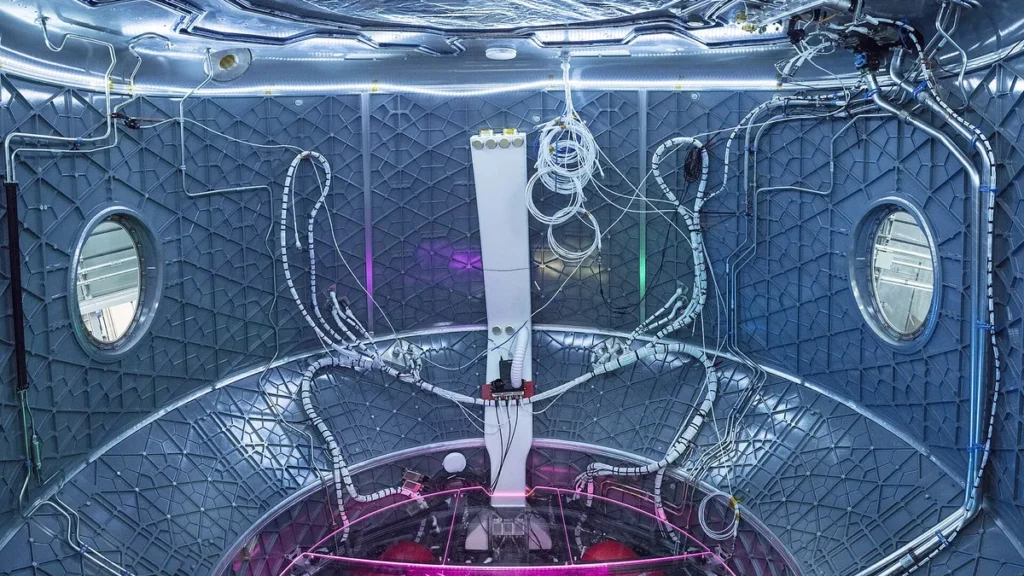
NASA issued its final Request for Proposals (RFP) on October 9, 2026, inviting U.S. companies to submit plans for commercial space stations capable of hosting astronauts by 2029. The RFP marks a critical step in transitioning low Earth orbit infrastructure from the International Space Station (ISS) to private operators, aiming to sustain human presence in orbit through research, technology development, and preparation for lunar and Mars missions. The deadline for proposals is December 8, 2026, with NASA planning to award contracts in early 2027.
Democratizing Orbit: NASA’s Plan to Preserve Competition
NASA’s Commercial Low Earth Orbit Destinations (CLD) program explicitly aims to maintain competition among contractors. The agency intends to select at least two firms in the initial development phase to ensure a diverse field before narrowing the selection for final design, testing, and certification. This approach contrasts with past programs, such as NASA’s Commercial Crew initiative, which awarded contracts to a single provider each. The goal is to mitigate risks associated with rapid hardware development and certification, a challenge highlighted by delays in programs like Boeing’s Commercial Crew program.
SpaceX is unlikely to bid for the RFP at this time, according to industry reports. While Starlab’s design depends on a single Starship launch by SpaceX, contingent on achieving high launch cadence, the company’s focus remains on its Starship program for lunar and Mars missions. This leaves Axiom Space, Voyager Space, and Vast Space as the most likely contenders among smaller firms, though Blue Origin’s Orbital Reef remains in contention.
End-to-End Services and Security: Challenges for the Future
Companies must design, build, test, certify, and operate stations capable of providing end-to-end services for human spaceflight, including transportation. NASA plans to award firm-fixed-price contracts in early 2027, with crewed flight tests required by 2029. The requirement for National Security Facility Clearances at Top Secret level adds another layer of complexity, potentially limiting participation to firms with established ties to national security. This dual focus on commercial innovation and national security underscores the program’s ambition to balance accessibility with security.
The tight timeline for certification and crewed flight tests by 2029 presents significant hurdles. Starlab’s design, for example, relies on a single Starship launch, contingent on SpaceX achieving a high launch cadence. Meanwhile, Vast Space’s Haven-1 module is slated for launch in early 2027, followed by Haven-2 in 2028, demonstrating a phased approach to reduce costs and risks. The success of smaller players like Vast Space could influence the diversity of commercial space stations, but the aggressive deadlines and technical demands may favor firms with existing infrastructure and resources.
What’s Next: A Race Against Time and Competition
The next critical phase begins with the proposal deadline on December 8, 2026. NASA plans to select at least two contractors in early 2027 to preserve competition, with final design, testing, and services to be narrowed down by 2030. Observers will watch closely to see if the program achieves its goal of democratizing access to low Earth orbit or if established firms secure dominance. The outcome will shape the future of human spaceflight infrastructure, influencing research, training, and exploration beyond Earth.




Join the discussion