Key facts
- Caltech's autonomous truss builder picks up struts and joints from nearby motorized dispensers and repeatedly assembles identical bay sections of a perimeter truss without astronaut assistance.
- ASTRA's mission ends in December 2026, making completion of the full 11-bay truss unlikely, although the team says the on-orbit assembly approach is viable and the design needs simplifying and refining.
- NOM4D began in 2022 with the goal of ultimately ferrying raw materials from Earth for in-orbit manufacturing; ASTRA is one of only two phase-3 small-scale orbital demonstration projects.
- The team used an on-ground flight spare in Sergio Pellegrino's Caltech lab to mimic problems confirmed in space, then relayed workarounds to the orbiting twin.
Caltech’s autonomous truss builder assembled one bay of a perimeter truss in low Earth orbit on Nov. 5, 2026, in DARPA NOM4D’s first automated in-space assembly demonstration.
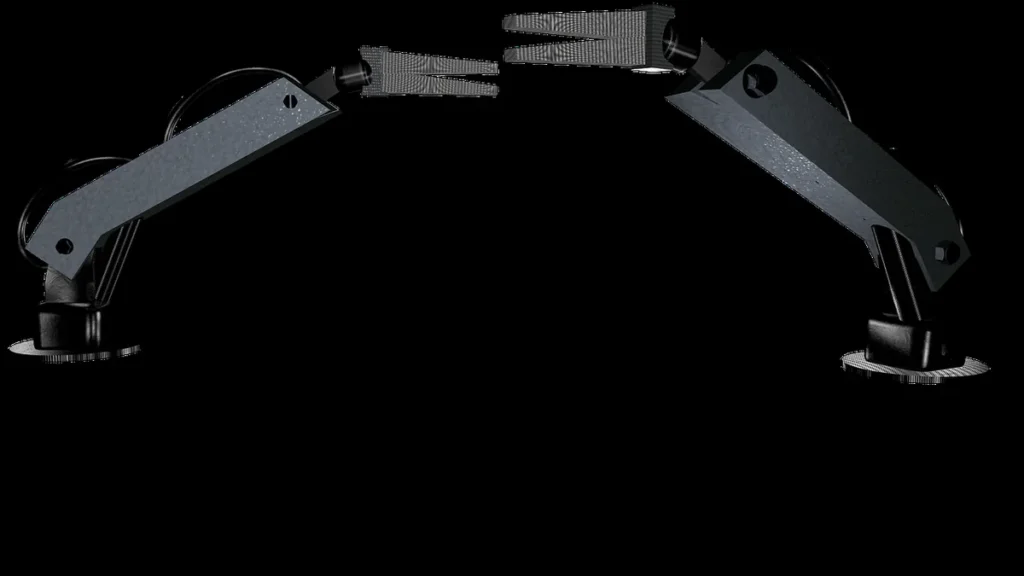
Picking up composite struts and aluminum joints from motorized dispensers, the Caltech robot, part of the ASTRA payload, assembled identical bay sections without astronaut assistance. DARPA described the machine as a simple gantry moving along three linear axes that connects truss members with custom-designed joints while deploying a thin reflective mesh. Inside an automated assembly box, the robot builds sections piece by piece and deploys completed sections, relying on solid engineering rather than complicated robotics or advanced algorithms.
The roughly 1 cubic meter (35 cubic feet) ASTRA payload survived its launch on March 30, 2026, from Vandenberg Space Force Base. It rode to low Earth orbit as one of 10 payloads on Momentus Inc.’s Vigoride 7 orbital space vehicle, aboard SpaceX’s Transporter-16 mission. Momentus hosted the payload, helped integrate it for launch, and supplied communications, power, imaging and other support services during the demonstration.
After launch restraints were released, ground controllers pushed the two prebuilt truss bays out of the builder and then assembled the third bay. Ground controllers push each completed bay out into the space environment before the sequence repeats for the next bay. The full ASTRA truss is complete when the team finishes 11 bays, tethered to netlike reflectors and pushed out into the space environment.
ASTRA’s antenna measures 1.4 meters in diameter, or 4.6 feet. It will use composite fiber tubes and aluminum joints, with a Kapton reflective surface. The perforated reflective film was co-invented by Caltech and University of Pennsylvania collaborators led by professor Igor Bargatin and needs less prestress than knitted metallic mesh, enabling much lighter structures. Nominally, the main manipulator moves to each position, picks up components, builds each bay on an assembly plate, then attaches a netlike perforated film forming two reflective cable nets prestressed by springs.
Ground teams sent build commands to the onboard computer through the Vigoride vehicle and checked outcomes against photos downloaded from space. The ASTRA system is reachable only about seven or eight times daily, in windows of roughly 15 minutes each. The team used an on-ground flight spare in Sergio Pellegrino’s Caltech lab to mimic problems confirmed in space, then relayed workarounds to the orbiting twin. Charles Sommer, Alan Truong and Caltech graduate student Tara Venkatadri were on the team.
The team troubleshot many unforeseen problems because the space environment differs from Earth, repeating operations to succeed. Jaden Suh, a former Caltech postdoctoral scholar now assistant professor at the University of Texas at Austin, said proof-of-concept testing is necessary because the space environment always brings many little surprises. Suh added, “As a child, I was super curious about and interested in space structures.”
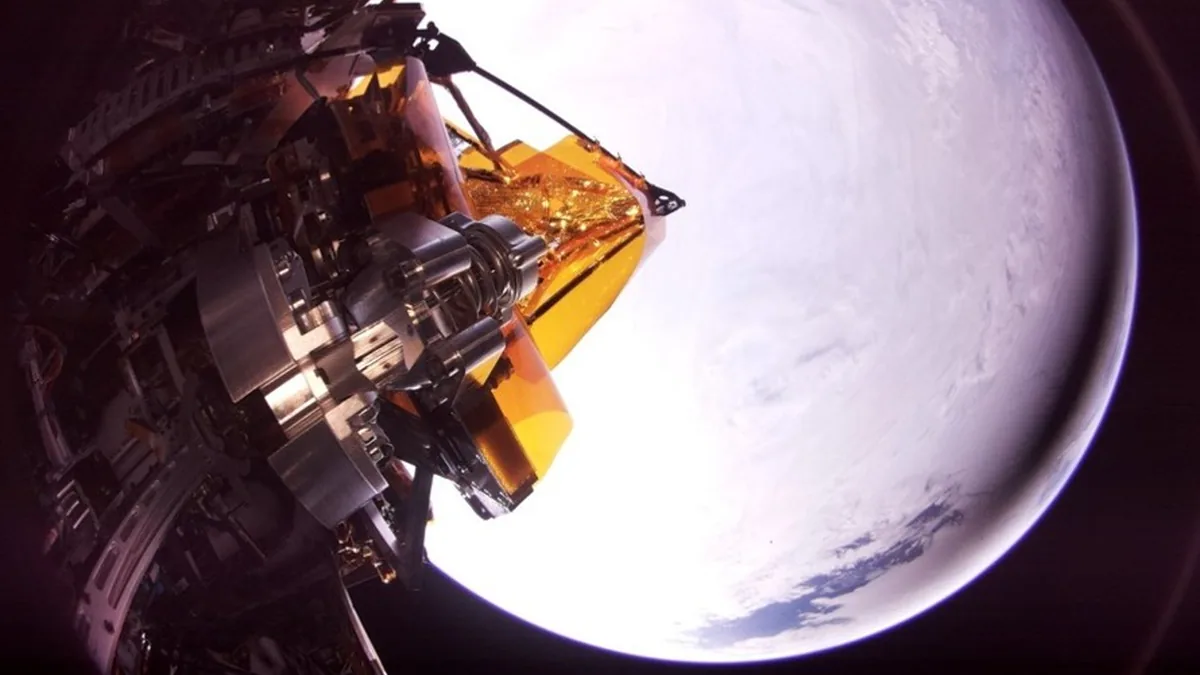
NOM4D began in 2022 with the goal of ferrying raw materials from Earth for in-orbit manufacturing. The space demonstration was the third phase of the project; earlier phases developed the concept and design and proved it in Earth laboratories, with the payload delivered to Momentus Inc. in under 12 months. ASTRA is one of only two phase-3 orbital demonstration projects; the University of Illinois Urbana-Champaign leads the other. Andrew Detor pivoted the final phase to a space demonstration after promising Phase 2 results, moving the effort from concept to a launched prototype in 15 months.
Current large space structures are constrained by rocket fairing dimensions, so they either fold for launch and unfurl, or are assembled by hand from components flown up over many missions. NOM4D provides a third path: assembling the structures in orbit. DARPA program manager Andrew Detor said the objective is efficient, scalable construction of very large structures hundreds of meters or kilometers across, and that nothing approaching that scale can be achieved today.
NOM4D is a proof of concept for space systems delivered as kits of building materials and assembled at their operating location. The approach fits large, low-mass designs including depots, habitats, solar arrays and radio antennas. Detor said future space operations will require large items such as depots, habitats, solar arrays for power and radio antennas to observe distant parts of the universe. He said, “There are no complicated robotics or advanced algorithms; it’s just solid engineering from the Caltech team to combine operations in a way that scales.”
Pellegrino, who co-directs Caltech’s Space Solar Power Project, called the short development timeline an enormous undertaking for the small team and said the work could benefit astronomy, astrophysics, communications and large solar arrays for space solar power. Large reflectors could serve as enormous mirrors for powerful space telescopes to observe more distant objects, or as apertures for large radio frequency antennas.
The University of Illinois Urbana-Champaign plans to launch an International Space Station project later in 2026 to test a resin system for energy-efficient polymerization that produces a strong composite structure. As the program winds down over the coming months, NOM4D seeks to spur ambitious ideas and major investment in space manufacturing and assembly for systems built to operate in space.
ASTRA’s mission concludes in December 2026, so finishing the complete 11-bay truss is unlikely, though the team considers the on-orbit assembly method viable and says the design needs simplifying and refining. Pellegrino said that with the mission ending in December 2026, the team can start considering new research directions opened by the demonstration. Detor described the demonstration as a beginning rather than an endpoint.



Join the discussion