Key facts
- An international team corrected an approximately eight-kilometer error in ancient Qufu's location, allowing them to reconstruct the path of a total solar eclipse from 709 BCE and measure Earth's rotation speed.
- The research was published in Astrophysical Journal Letters by Hisashi Hayakawa, Mathew J. Owens, Meng Jin, Mitsuru Sôma, and Mike Lockwood.
- Corrected coordinates let researchers produce fresh, accurate estimates of Earth's spin speed spanning the eighth to sixth centuries BCE.
- The timing of the 709 BCE eclipse is based on scientific consensus and is widely accepted by scientists, even though the later corona description remains uncertain.
An international team led by Hisashi Hayakawa of Nagoya University corrected an approximately eight-kilometer error in the location of ancient Qufu, letting them reconstruct the path of a total solar eclipse seen on July 17, 709 BCE at the court of China’s Lu Duchy.
Earlier studies had placed ancient Qufu about eight kilometers from its true location, a gap researchers identified using archaeological excavation reports and historical geographic evidence. The problem emerged when the team tested whether a total eclipse should have been visible from the assumed site of the Lu court under existing estimates of Earth’s ancient rotation. It should not have been, so the mismatch sent the researchers back to dig reports and historical geographic evidence, and fixing the coordinates resolved the conflict and enabled the eclipse path reconstruction.
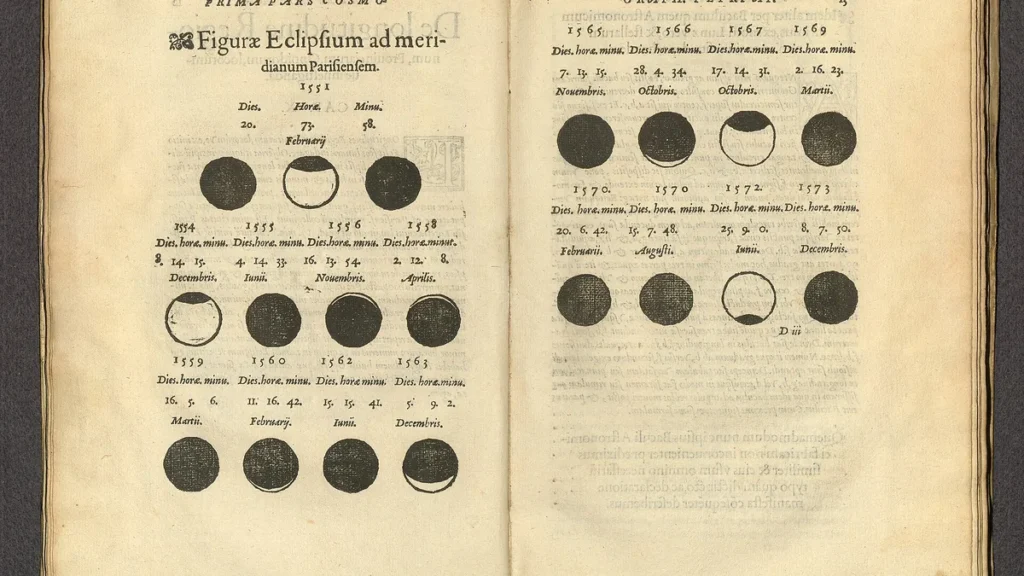
The eclipse took place on July 17, 709 BCE, and observers at the court of China’s Lu Duchy in Qufu, the ancient capital, saw it. The Spring and Autumn Annals preserves the report, dating the event to autumn, the seventh month, the renchen day, the first day of the month. Renchen marks a day in the traditional Chinese 60-day calendar cycle. Compilation of the chronicle occurred roughly 200 to 300 years after the eclipse, and its original account stated that the Sun was totally eclipsed.
Researchers regard the 709 BCE event as the earliest explicit written record of a total solar eclipse that can be securely dated. The team had used existing estimates of Earth’s ancient rotation to calculate that a total eclipse should not have been visible from the previously assumed location of the Lu court. That mismatch drove the check of archaeological dig reports and historical geographic evidence, and correcting the coordinates resolved the conflict. The delayed compilation means the original court observation survived through later historical writing before modern researchers reexamined it.
Lead author Hisashi Hayakawa is an assistant professor at Nagoya University’s Institute for Space-Earth Environmental Research and Institute for Advanced Research. He holds doctorates in solar physics and oriental history.
The research appeared in The Astrophysical Journal Letters, volume 995, issue 1, article L1, in 2025, with DOI 10.3847/2041-8213/ae0461. The paper was published on 2 December 2025. SciTechDaily’s report cites this publication date alongside the DOI and author list for the eclipse analysis, and Nagoya University’s December 2025 release also announces the publication.
Coauthors include Mitsuru Sôma of the National Astronomical Observatory of Japan, Mathew Owens of the University of Reading, and Meng Jin of the Lockheed Martin Solar and Astrophysics Laboratory. The full author list is Hisashi Hayakawa, Mathew J. Owens, Meng Jin, Mitsuru Sôma, and Mike Lockwood.
The study placed delta T, a measurement of variations in Earth’s rotation relative to a uniform timescale, between 20,264 and 21,204 seconds for the eclipse of 709 BCE. Earth rotated slightly faster 2,700 years ago than it does at present, because the planet’s spin has gradually slowed, partly due to friction from ocean tides generated by the Moon’s gravity. The gradual slowdown means ancient eclipse reconstructions must account for a faster historical rotation rate when determining the visibility of past events.
Corrected coordinates let researchers produce fresh, accurate estimates of Earth’s spin speed spanning the eighth to sixth centuries BCE. These measurements extend the delta T constraints from the 709 BCE eclipse across a broader historical window and help scientists understand changes in the length of Earth’s day over thousands of years. The same sources tie the work to improved dating of other ancient astronomical events.
Ancient Chinese dynasties employed specialists to observe celestial events under omenology, interpreting unusual sky phenomena as warnings that an emperor had acted improperly. The original chronicle account preserved the brief observation of the totally eclipsed Sun.
Thanks to the fixed location, scientists determined the Sun’s rotation axis orientation and modeled how the corona looked during the eclipse. The Hanshu, or Book of Han, an official dynastic history written about seven centuries after the eclipse, describes the eclipsed Sun as yellow above and below, possibly one of the earliest surviving descriptions of the solar corona. The corona interpretation remains uncertain because the passage appears in a source written centuries after the event. Hayakawa explained that the correction enabled these measurements.
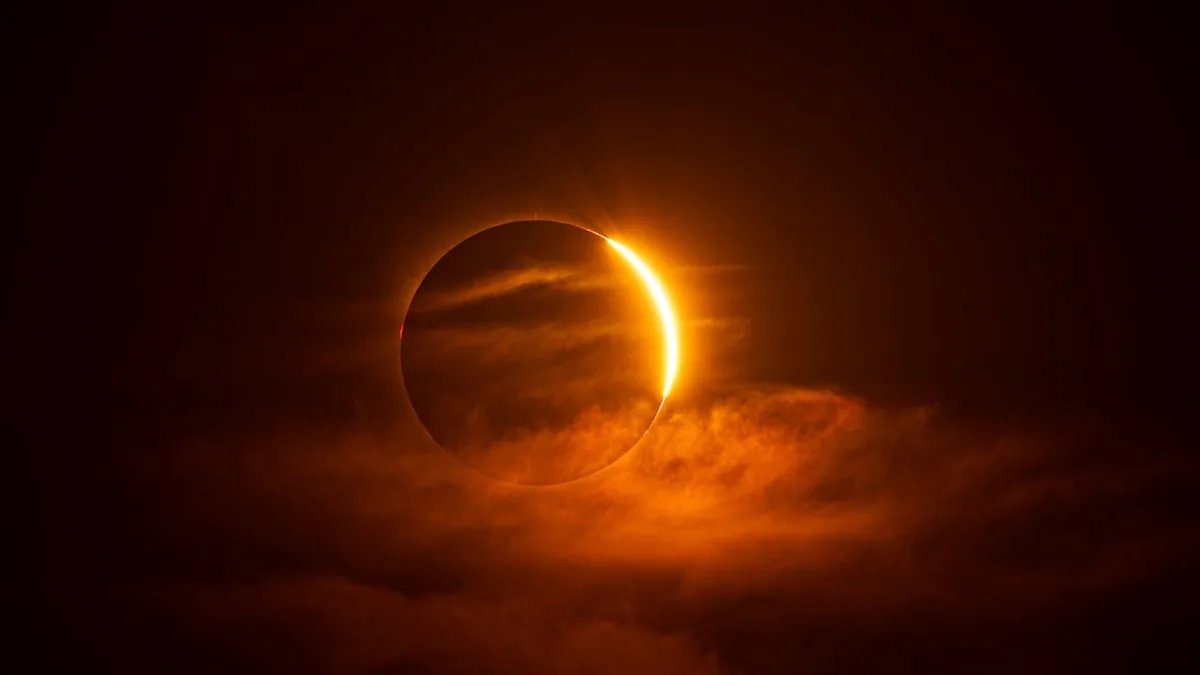
Solar activity rises and falls in a cycle that lasts about 11 years, marked by changing sunspot counts and magnetic strength. Grand minima bring exceptionally rare sunspots and weaken the normal solar cycle considerably. During such grand minima, sunspots become exceptionally rare and the usual solar cycle is much less pronounced. The eclipse took place shortly after the end of the Neo Assyrian Grand Minimum or Homer Grand Minimum, a prolonged quiet period lasting from approximately 808 to 717 BCE.
The possible corona structure suggests the Sun had resumed regular activity cycles with magnetic activity by 709 BCE and may have been near its 11-year cycle peak. Scientific consensus supports the timing of the 709 BCE eclipse, and scientists widely accept it, even though the later corona description remains uncertain. Researchers separate the securely dated eclipse from the Hanshu corona passage, written about seven centuries later, though the consensus timing still supports studies of Earth’s rotation and solar activity.
The findings offer potential independent support for previous reconstructions of solar activity based on radiocarbon measurements in tree rings. Trees absorb radiocarbon during photosynthesis and lock it into annual growth rings, while radiocarbon levels reflect cosmic ray intensity that decreases when solar activity increases.
Combining the results with tree-ring radiocarbon studies and ice-core records lets researchers better reconstruct solar activity and its effect on Earth’s climate over time. Ancient records, integrated with modern computational techniques, extract new and reliable information for both Earth and Sun, and this work continuously informs contemporary research on space and climate.
The research revises older Earth rotation models and supplies reference points for solar cycle studies across millennia. Fixed coordinates let scientists gauge the Sun’s rotation axis and how fast Earth spun during the ancient total eclipse, and the Daily Guardian links the work to benchmarks for solar cycles over long timescales. The Daily Guardian states previous studies had misplaced ancient Qufu, causing discrepancies.
Mitsuru Sôma said the dataset corrects past coordinate mistakes in Earth rotation studies and sharpens the dating of ancient astronomical events. His comment accompanies the delta T range of 20,264 to 21,204 seconds for the 709 BCE eclipse, and Sôma is a coauthor from the National Astronomical Observatory of Japan.
Mathew Owens said the addendum serves as a reference point for ancient solar activity studies and helps confirm solar models. Owens’s comment connects the ancient corona description to modern radiocarbon and ice-core research, and the same sources note the interpretation agrees with tree-ring reconstructions but is not definitive proof.
Meng Jin said that combining their records with modern methods can reveal new information about Earth and the Sun.
"Some of our ancestors were very skilled observers," Dr. Meng Jin, coauthor from the Lockheed Martin Solar and Astrophysics Laboratory, noted.
Dr. Meng Jin, Nagoya University



Join the discussion