Key facts
- Researchers measured 63 elements in Bennu aggregate material totaling about 8 grams, analyzed in four laboratories.
- Researchers combine the laboratory data into an average bulk composition they call Best Bulk Bennu (B3).
- The Bennu average matches the average CI chondrite composition within analytical uncertainties.
- Researchers conclude CI meteorites and returned carbonaceous asteroid samples best estimate the bulk Solar System composition of elements that are not highly volatile.
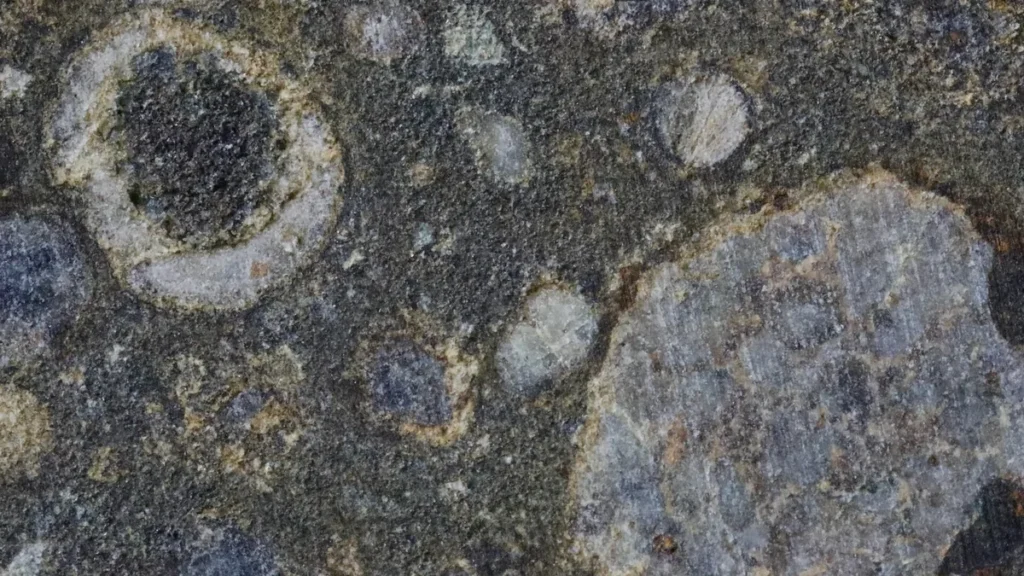
Researchers measured 63 elements in about 8 grams of aggregate material from asteroid Bennu, analyzing the unsorted bulk sample in four laboratories.
The team combined the laboratory data into an average bulk composition they call Best Bulk Bennu (B3). They derived this average to represent the bulk elemental makeup of the returned Bennu sample. The name Best Bulk Bennu distinguishes the combined result from the individual measurements made across the four laboratories.
Researchers compared the Bennu average to a published average Ivuna-type CI carbonaceous chondrite composition. The agreement fell within the margins of analytical uncertainty for the elements measured. This close match supports using Bennu samples as a check on CI meteorite chemistry, and the Bennu average and CI chondrite average compare similarly to solar photospheric composition, which represents the Sun’s elemental inventory and serves as a reference for the primordial Solar System. That similarity suggests Bennu preserved a representative sample of early Solar System material.
CI carbonaceous chondrites have long served as proxies for the bulk Solar System composition because they match solar values closely and show volatile enrichment compared with other chondrite classes, which are less similar to solar values. These meteorites have been subject to terrestrial alteration that may have modified their mineralogies and redistributed aqueously mobile elements. After landing on Earth, meteorites can experience chemical changes that alter minerals and move water-soluble elements. The study notes CI chondrites may have undergone such changes, which is why pristine Bennu samples are valuable.
The close match indicates terrestrial alteration of CI chondrites is effectively isochemical for elements that are not highly volatile, meaning those changes did not substantially shift non-highly volatile element abundances. The finding supports the reliability of CI meteorites as chemical standards despite their terrestrial history. Researchers conclude that CI meteorites and returned carbonaceous asteroid samples are preferable to other materials for estimating the bulk Solar System composition of elements that are not highly volatile. This conclusion follows from the close match between Best Bulk Bennu, CI chondrites, and solar values.
Initial analyses of Bennu material already revealed close compositional similarities with CI chondrites, giving researchers an opportunity to refine estimates of the bulk Solar System composition. NASA’s OSIRIS-REx mission delivered pristine material from the carbonaceous asteroid Bennu, traveling to the asteroid, collecting surface material, and returning it without terrestrial contamination. The OSIRIS-REx sample return offers an opportunity to check CI chondrite proxies against pristine material.
Within analytical uncertainties, no statistically significant differences appeared among separate portions of two aggregate samples ground into powder. Homogenization into powder was used to test whether the aggregate samples had uniform composition throughout. Finding no significant differences among these portions supports the idea that the material is uniform at this scale.
The researchers also examined pieces of a non-homogenized aggregate sample, including two previously reported subsamples, and found no significant compositional differences within uncertainty limits. They tested sample sizes from tens of milligrams up to several grams and detected no compositional changes tied to mass. Consistent results across powders, subsamples, and different masses led the team to conclude the returned Bennu material is homogeneous at the aggregate scale, so a single average composition can represent the bulk sample.
The paper contains 76 pages including Supplemental Information and is available through the arXiv preprint server. The page count includes the main text and supplemental information together. Dante Lauretta is identified as the sender of the arXiv submission.




Join the discussion