Key facts
- According to the authors of a 2025 paper in the journal Elements, China's Chang'e 5 and 6 missions brought back some 3.7 kg of lunar material. (S1).
- Missions 14 through 17 gathered material from a highly anomalous zone near the Imbrium Basin, described as a large dark lava plain covering the Moon's northwestern quadrant. (S1).
- The authors of a 2013 Astronomy & Geophysics paper report that most lunar meteorites were recovered in Antarctica, Oman, and Northwest African deserts, with some from Australian and Botswanan deserts. (S1).
- According to that 2013 paper, Yamato-791197 and Yamato-793169 were the first identified lunar meteorites, gathered in Antarctica in 1979 by Japan's meteorite-hunting program. (S1).
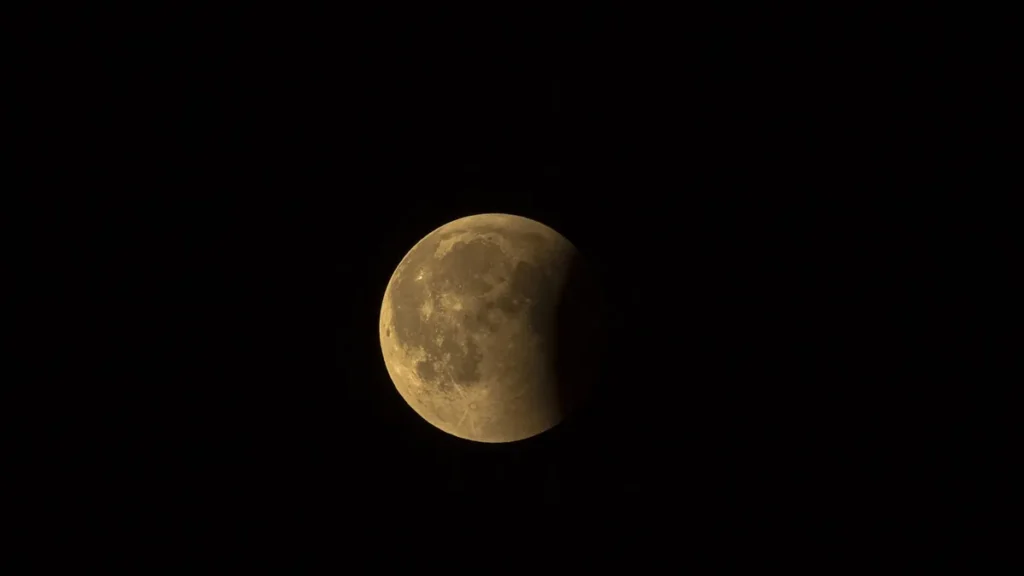
Universe Today reported that lunar meteorites—fragments of the Moon’s surface knocked into Earth or solar orbit that burn through the atmosphere and reach the planet’s surface—complement the Apollo samples and offer a window onto the Moon’s earliest formation. The report notes that researchers have confirmed only 835 lunar meteorites, making up 0.7% of all meteorites that reach Earth. Despite their scarcity, scientists believe these rocks come from across the entire lunar surface, including the far side, and in certain respects outperform lunar rocks brought back by spacecraft. Lunar meteorites are exceptionally useful as scientific material because they give researchers a glimpse into the Moon’s earliest formation.
Randy Korotev, a researcher at Washington University in St. Louis’ Department of Earth, Environmental, and Planetary Science, says in the report that lunar meteorites offer a more balanced view of the Moon than the Apollo program managed. Korotev points out that Apollo scientists did not realize that five of the six landing sites lay in or next to a geochemically unusual region of the Moon, a limitation he attributes to the absence of orbital mineralogical or compositional data and reliance on gray-scale photography for choosing landing sites.
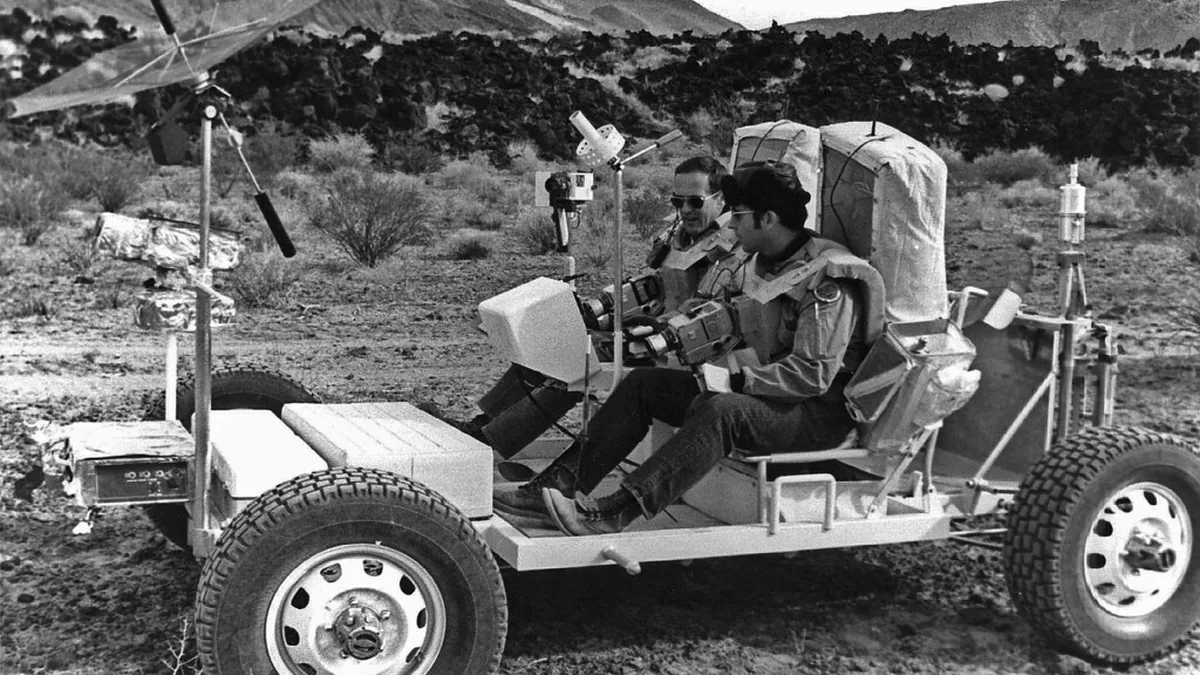
Korotev describes the Apollo program as driven by political goals rather than scientific ones, noting that scientists with a long-term vision had to urge NASA to let astronauts gather samples. According to a 2025 paper in the journal Elements, each Apollo mission and China’s Chang’e 5 mission touched down in a geochemically unusual near-side region known as the Procellarum KREEP Terrane, whose name refers to potassium, rare earth elements, and phosphorous.
Apollo missions 14 through 17 collected samples from a highly unusual zone near the Imbrium Basin, which appears as a dark lava plain spanning the Moon’s northwestern quadrant. The same 2025 Elements paper reports that the three Soviet Luna missions together brought back about 300 grams of lunar material, while China’s Chang’e 5 and 6 missions carried home roughly 3.7 kg of lunar material. The six Apollo landings gathered approximately 382 kg, meaning the Apollo haul dwarfs the Soviet and Chinese returns.
Korotev states that lunar meteorites come from almost random spots across the Moon’s surface—he notes that “lunar meteorites in contrast come from almost randomly distributed locations on the Moon’s surface”—although researchers cannot pinpoint exactly where any of them originated. Researchers have found most lunar meteorites in Antarctica, Oman, and Northwest African deserts, according to a 2013 Astronomy & Geophysics paper. Researchers have also found some in Australian and Botswanan deserts. The paper also observes that desert playas and Antarctic ice help scientists spot these space rocks, which is why researchers focus on deserts and barren wastelands.
The 2013 paper identifies Yamato-791197 and Yamato-793169 as the earliest recognized lunar meteorites, collected in Antarctica in 1979 by Japan’s meteorite-hunting program. Washington University in St. Louis notes that the Vernadsky Institute in Moscow estimates that several tens or a few hundred kilograms of lunar rocks strike Earth each year.
Washington University in St. Louis says rocks that orbit Earth eventually land on the surface anywhere from a few years to tens of thousands of years later. Rocks that orbit the Sun may strike Earth as long as a few tens of millions of years after ejection from the Moon.
A key open question is how the lunar highlands crust formed, and scientists are unsure whether the near side crust developed the same way as the far side crust. Katherine Joy of the University of Manchester states in the report that lunar meteorites might contain fragments of the Moon’s ancient far-side crust. Joy notes that researchers can analyze the chemistry and age of lunar meteorites to test the lunar magma ocean hypothesis, which is a theoretical global magma ocean that may have covered the Moon to a depth of hundreds of kilometers early in its history.
Joy states that each stone shows a remarkable snapshot of the Moon’s past, and not knowing its origin is like lacking the middle pieces of a puzzle. She adds that finding a sample from a geochemically distinctive location like Aristarchus, or one containing large chunks of the Moon’s mantle, would be extraordinary. Joy observes that such samples would reveal a great deal to scientists about the Moon’s interior and thermal history, underscoring the value of lunar meteorites as scientific material. The cleanest lunar samples still arrive on Earth via robotic or crewed spacecraft.

Join the discussion