Key facts
- Hewlett Packard Enterprise announced that its artificial intelligence compute module, named Spaceborne Computer-4, will deploy on Astrolab's FLIP rover for a lunar mission expected to launch in 2026.
- The system is designed to operate without fans, using a space radiator to keep from overheating, and is connected to the FLIP rover's cooling system while drawing power from the rover's batteries and solar cells.
- Spaceborne Computer-4 was designed to be compact, lightweight, autonomous, and fanless.
Hewlett Packard Enterprise announced Oct. 21, 2026 that the Spaceborne Computer-4 artificial intelligence compute module will deploy on Astrolab’s FLIP rover for a Moon mission launching in late 2026.
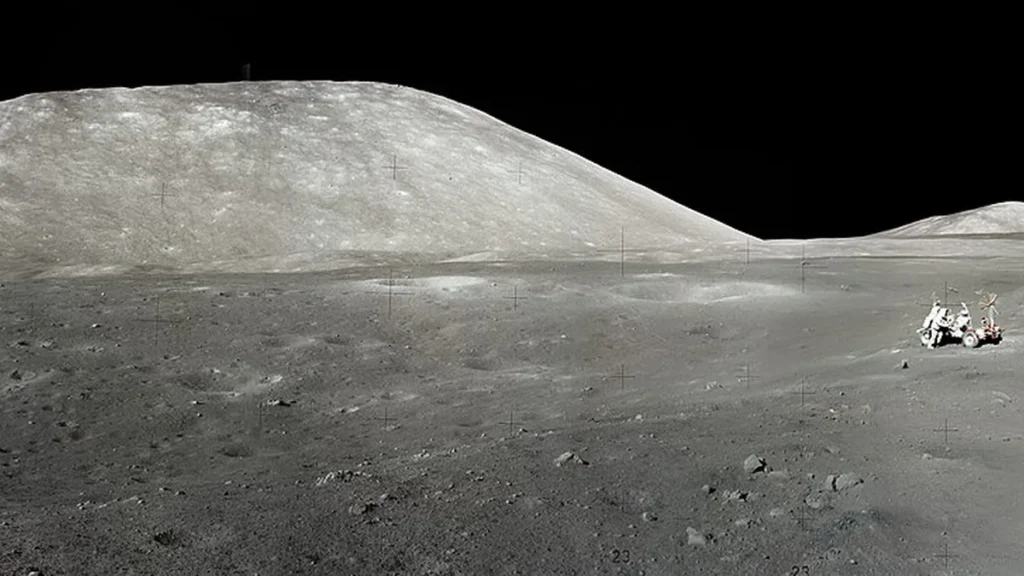
The mission flies under NASA’s Commercial Lunar Payload Services initiative as part of the Moon Base program to test advanced computing for future lunar missions and the emerging lunar economy. After touchdown near the lunar South Pole region, Voyager Technologies’ Griffin-1 lander will transport Astrolab’s FLIP rover, carrying the HPE module as a payload. UA.NEWS identifies the lander as Astrobotic’s Griffin under Griffin Mission 1, offering a different company name for the same Griffin-1 designator bound for the Moon’s south pole. The same lander will also carry CubeRover and the LandCam-X optical navigation system, plus a miniature archive called Nanofiche GLPH that holds human history.
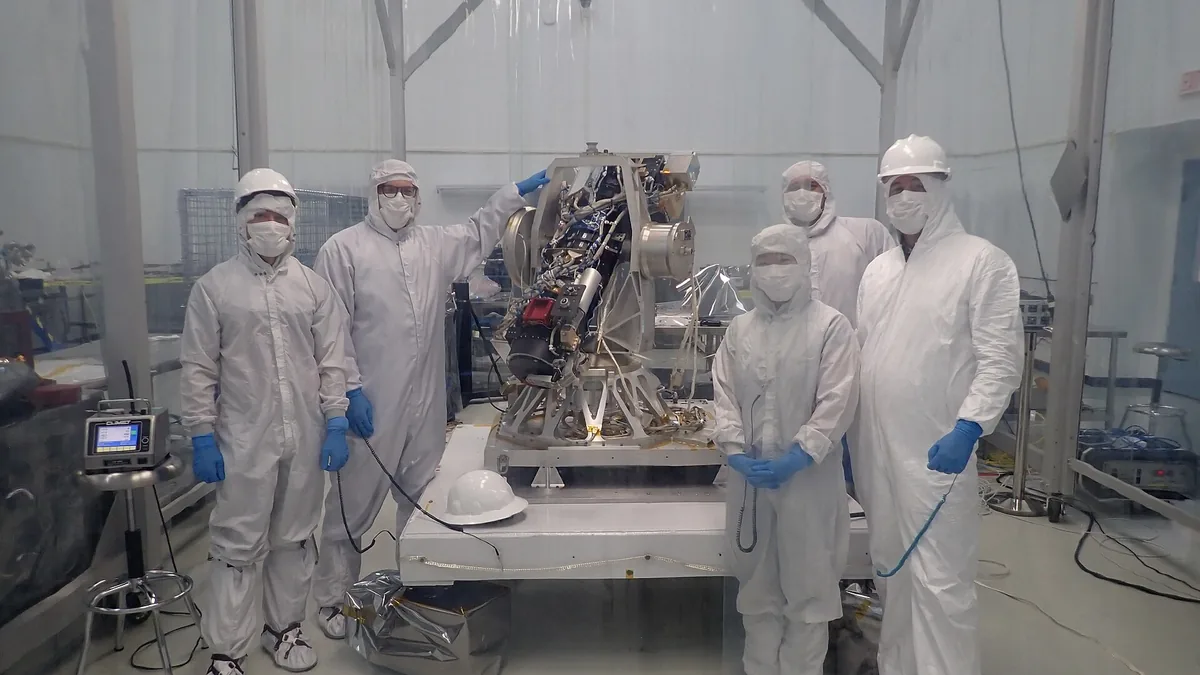
Spaceborne Computer-4 is compact, lightweight, autonomous and fanless, with a low-power CPU and GPU and flash-memory storage in solid-state drives from KIOXIA. The system uses a space radiator to avoid overheating instead of fans, links to the FLIP rover’s cooling system, and pulls power from batteries and solar cells on the rover. Manufactured from thermally conductive aluminum for conditions near the Moon’s south pole, the module operates for a year, including survival through lunar nights of complete darkness lasting more than 150 hours.
Jaret Matthews, Astrolab’s founder and CEO, said a graphics processing unit will fly to the Moon for the first time. UA.NEWS reports that Matthews called the GPU flight a novelty for operations on the lunar surface. Astrolab is one of two companies NASA picked to build a crewed rover for the Artemis program. HPE will support the mission on the backend by deploying software at Astrolab’s mission control to optimize insight delivery and manage automated workloads.
During the mission, the module will run core AI applications and the Moon’s first high-performance computing benchmarks. It will test large language models and handle visual and LiDAR data processing plus autonomous monitoring on the lunar surface. LiDAR processing supports mapping, navigation, terrain analysis and infrastructure development, and an AI services container will show that scalable AI service applications can deploy reliably on the Moon.
The computer will handle visual data and support autonomous observations, navigation, mapping and terrain analysis using localization software developed at NASA’s Jet Propulsion Laboratory for use on Mars. UA.NEWS says the rover will use Mars-proven JPL software to determine its location and plan its route without satellite navigation. The rover will use a machine-learning algorithm that compares local terrain features to an onboard map, helping determine location without GPS and steer clear of dangerous craters.
NASA will run an artificial intelligence neural net model trained using data gathered at Earth and the Moon as well as the International Space Station through the Federated Learning for Unbounded and Intelligent Decentralization experiment. The goal of the experiment is to show three separate AI models working together in coordination.
The agency will also test a tuned large language model with semantic processing to assist in searching and interpreting onboard documents. MarketScreener describes it as a second NASA software test focused on understanding what documents stored on the rover mean instead of just matching keywords.
Deloitte will put its Silent Shield system to work on the lunar computer, watching for cyber intrusions and flagging unusual activity while supplying analytics nearly in real time.
Spaceborne Computer-4 follows three earlier HPE space computers that flew to the International Space Station in 2017, 2021 and 2024. Those missions tested commercial off-the-shelf parts in space and then demonstrated upgrades to compute power, storage and onboard AI. Payload traces the lineage to prior ISS missions that progressively proved non-specialized hardware could operate in orbit and handle increasingly capable artificial intelligence workloads. It is the first HPE Spaceborne Computer built for operation in the vacuum of space, and the module can monitor radiation effects and reduce computing power during radiation episodes that might harm the hardware.
The goal is to lay groundwork for future Moon excursions to use edge computing during lunar sojourns, including mapping the lunar surface with in-situ data and demonstrating reliable, scalable deployment of future AI applications. Payload says the flight is an enabler for later astronaut and robot missions that need to process data on site rather than waiting for an Earth round-trip, and MarketScreener says the test results will help create the technological foundation required for future missions and research on the Moon’s surface.
Mark Fernandez, HPE’s chief scientist of space technologies and solutions, described the operational advantage of processing data on the rover instead of transmitting raw data to Earth. “What’s exciting is giving the rover the ability to make sense of what it collects, rather than simply sending everything home for analysis,” he said. This approach lets onboard computing deliver useful insights faster and make better use of Earth communications.





Join the discussion