Key facts
- The Kikai-Akahoya volcanic eruption occurred in Japan approximately 7,300 years ago, devastating the region with earthquakes, tsunamis, and meters of volcanic ash.
- At the time of the eruption, Jomon foraging communities in Japan relied on hunting, fishing, and gathering for survival as hunter-gatherers.
- Populations in southern Kyushu were already declining before the eruption and were sparsely inhabited by highly mobile groups when the disaster struck.
- Populations in northern Kyushu continued growing through and after the eruption, despite severe ecosystem damage, possibly due to refugees migrating from worse-hit areas.
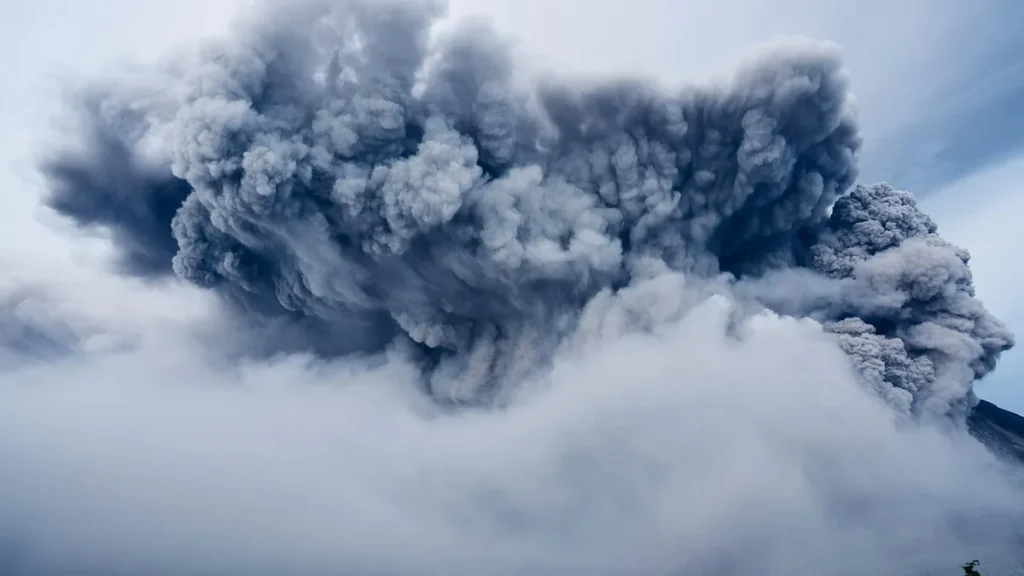
Around 7,300 years ago, the Kikai-Akahoya volcanic eruption devastated parts of Japan with earthquakes, tsunamis, and meters of volcanic ash, forcing Jomon foraging communities to adapt or migrate. The eruption triggered long-term changes in population distribution, social networks, and economic strategies that archaeologists are only now fully uncovering.
Archaeologists debated whether the eruption caused a total collapse of human life near the epicenter or if populations survived locally. The Jomon period in Japan was defined by hunter-gatherer societies that relied on hunting deer and boar, fishing, and gathering plants for survival. When the Kikai-Akahoya eruption struck, these communities faced immediate and severe disruptions. A layer of volcanic ash across southern Kyushu—now a key archaeological marker—reveals how populations responded differently depending on their location and mobility.
Previously, archaeologists debated whether the eruption caused a total collapse of human life near the epicenter or if populations survived locally. The new study, led by researchers at Lund University and Cambridge University and published in Science Advances, finds both views oversimplify the response. Instead, the disaster accelerated existing trends: populations in southern Kyushu were already declining and sparsely inhabited by highly mobile groups when the eruption struck.
While southern Kyushu suffered severe ecosystem damage, northern Kyushu saw continued population growth through and after the eruption. Researchers attribute this to refugees migrating from harder-hit areas, seeking safer ground where resources remained accessible. Inland survivors, meanwhile, moved toward northern coastlines, where marine ecosystems recovered faster. By exploiting abundant sea resources, these groups adapted more quickly, accelerating population growth in these regions.
The eruption also had indirect effects on the Jomon’s food sources. Grazing animals like deer and boar suffered catastrophic tooth attrition due to the ash-covered landscapes, disrupting the communities’ primary protein supply. This forced survivors to innovate, forming new social networks and economic strategies to thrive in the post-disaster environment. Regions farther from the eruption, though initially less affected, experienced population stagnation or decline after the disaster, possibly due to broader climate change or food supply disruptions.
The study’s findings challenge the idea of a uniform demographic collapse following the eruption. Instead, it demonstrates how unpredictable and complex societal responses to disasters can be, shaped by geography, mobility, and social adaptation. The volcanic ash layer left behind serves as a critical archaeological marker, allowing researchers to differentiate pre- and post-eruption population changes with precision.
Where and When to Look for Evidence
If you’re interested in exploring the archaeological and geological evidence of the Kikai-Akahoya eruption, southern Kyushu remains a primary site of study. The volcanic ash layer, visible in sediment cores and excavation sites, provides a clear timeline for understanding population shifts before and after the disaster. Researchers continue to analyze these layers to uncover more about how prehistoric societies adapted—and how similar patterns might apply to modern resilience efforts.




Join the discussion