Key facts
- On November 9, 2026, Comet 161P/Hartley-IRAS stands just under 50 degrees over the western horizon about two hours after sunset and shines at about 10th magnitude, Astronomy Magazine reports.
- The comet sits in far northern Aquila close to the Sagitta border, and Altair serves as a guide because the comet lies 7.7 degrees north-northeast of that star.
- A nearer but dimmer guide is fourth-magnitude Alpha Sagittae, lying just 2.3 degrees north of the comet's position on November 9, 2026.
- Even a small scope can catch the comet, while larger apertures give better views, and the southern side should look sharper under high magnification as the comet moves into the solar wind.
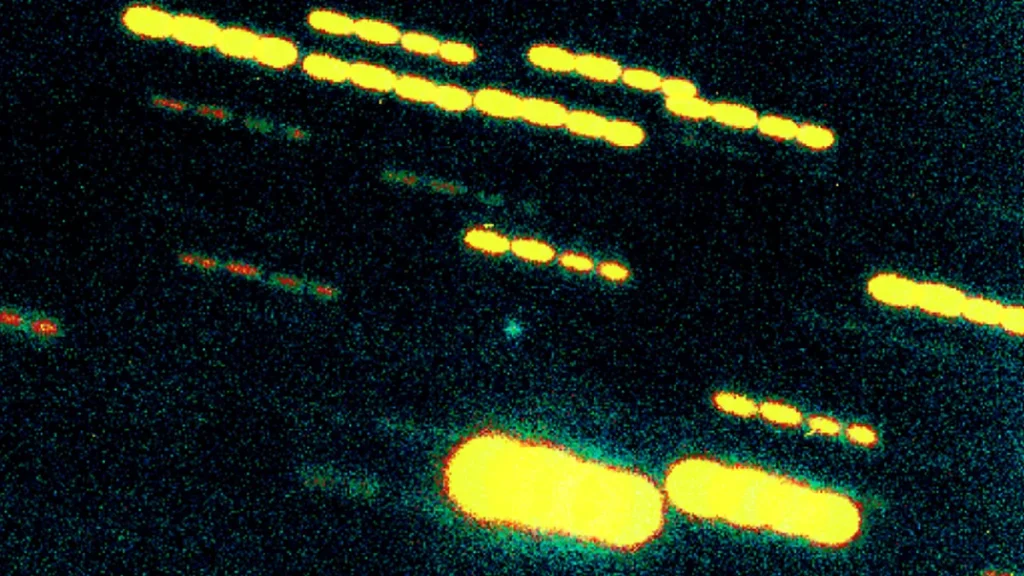
Comet 161P/Hartley-IRAS stands just under 50 degrees above the western horizon about two hours after sunset on November 9, 2026, shining at about 10th magnitude, Astronomy Magazine reports.
Astronomy Magazine’s night-sky column for November 9, 2026, appeared on the publication’s website. Klesman holds a Ph.D. in astronomy, with study topics ranging from minor planets to supermassive black holes. The column presents the comet as a dark-sky target after moonset leaves the sky nearly moonless.
Astronomy Magazine places the comet in far northern Aquila close to the Sagitta border on November 9, 2026, 7.7 degrees north-northeast of Altair. North-northeast is the compass point between north and northeast. The magazine identifies Altair as Aquila’s bright luminary and suggests using it to locate the faint comet in the northern part of the constellation.
Astronomy Magazine says a nearer but dimmer guide is fourth-magnitude Alpha Sagittae, which lies just 2.3 degrees north of the comet’s position on November 9, 2026. The magazine describes Alpha Sagittae as closer but fainter than Altair, offering a tighter reference point for observers with small instruments.
For precise aiming, theskylive.com gives apparent coordinates of right ascension 19h 38m 19s and declination plus 15 degrees 55 arcminutes 05 arcseconds. Right ascension and declination work like longitude and latitude on the sky. An arcminute is one-sixtieth of a degree, and an arcsecond is one-sixtieth of an arcminute.
The values are apparent coordinates for the current date. The page also lists J2000 coordinates, a common reference frame for star maps, and a finder chart based on Digitized Sky Survey imagery, an archive of sky photographs.
The comet is currently 1.089 AU, or 162,949,481 kilometers, from Earth and located in Aquila on the night of November 9, 2026, sky-tonight.com says. An AU, short for Astronomical Unit, is a standard yardstick for distances across the solar system.
The site obtains its orbital and small-body data from the NASA Jet Propulsion Laboratory Small-Body Database and the Center for Near-Earth Object Studies. Small-body data covers asteroids and comets. It identifies the object as 90001107 161P/Hartley-IRAS, a Jupiter-family comet in Aquila. It takes 21.5 years to complete one orbit around the Sun.
The comet is visible from sunset until before midnight on November 9, 2026 from an observer’s location, sky-tonight.com reports. The site supplies a nightly rise and set timetable, a schedule of when the comet appears and disappears, plus an annual visibility chart showing when it is above the horizon. It will remain visible until November 29, 2026, when it moves too close to the Sun and temporarily leaves the night sky.
For a location at 40 degrees north, 90 degrees west, Astronomy Magazine’s almanac lists sunrise at 6:38 A.M., sunset at 4:49 P.M., moonrise at 7:12 A.M., and moonset at 4:40 P.M. on November 9, 2026, with the Moon a 1 percent waxing crescent measured at 10 P.M. local time. A waxing crescent is a thin, growing sliver of the Moon.
Astronomy Magazine’s almanac times are local for that latitude and longitude. Because the Moon sets at 4:40 p.m., shortly before sunset at 4:49 p.m., the evening sky is nearly moonless, which the column says makes this a good dark-sky target.
theskylive.com reports the latest observed magnitude of 10.2 from the COBS Comet Observation Database. Magnitude is the scale astronomers use to describe how bright an object appears in the sky, and larger numbers mean fainter objects. The value comes from the most recent observation contributed by observers worldwide and includes observed magnitude, coma diameter, and tail length. The coma is the comet’s fuzzy, Sun-lit atmosphere.
theskylive.com cautions that predicted magnitude from JPL Horizons may be unreliable because a comet’s brightness can change quickly and unpredictably. It advises preferring the observed COBS value over the JPL Horizons prediction.
On November 3, 2026, Brixiis Observatory in Kruibeke logged the comet with observatory code B96, an identifier assigned to observing sites. An ICQ-format observation recorded magnitude 12.6 using a 40.0L aperture at an altitude of 49.8 degrees. Altitude is the object’s height above the horizon, and aperture is the size of a telescope’s light-gathering opening.
Brixiis Observatory’s CCD photometry in the R band from the same night put the comet around magnitude 14.9 to 15.0, reported in Minor Planet Center and ICQ formats. CCD is a light-sensing camera chip, and the R band is a red-light filter used in photometry.
theskylive.com says the comet made its closest approach to Earth between 2000 and 2099 on Friday, October 2, 2026. It passed at 0.503296 Astronomical Units, or 75,292,017 kilometers.
Astronomy Magazine says even a small scope can catch the comet, while larger apertures give better views. Under high magnification, the southern side should look sharper as the comet pushes into the solar wind, the stream of charged particles flowing from the Sun.
Astronomy Magazine says the Coathanger asterism, Collinder 399 in Vulpecula, lies roughly 5 degrees northwest of the comet or about 4 degrees northwest of Alpha Sagittae. Vulpecula is a constellation near Sagitta. An asterism is a recognizable star pattern that is not an official constellation.
On November 9, 2026 it is visible in binoculars or any telescope, and Astronomy Magazine says lower magnification gives the better view. The asterism shows a straight line of stars crossed by a small southern curve.
Astronomy Magazine says the open cluster NGC 6802 sits at the eastern edge of the Coathanger asterism, giving observers another deep-sky object to scan in the same region of sky. An open cluster is a group of stars, and a deep-sky object lies beyond our solar system.
theskylive.com computes the comet’s path from orbital elements with an epoch of February 23, 2020, at 00:00 UTC, or JD 2458903.5, from the JPL Small-Body Database. Orbital elements are the numbers that define an orbit’s shape and position. An epoch is a fixed reference moment for orbital calculations, and JD is a continuous count of days used by astronomers. Coordinated Universal Time, or UTC, is the world’s standard civil time.
theskylive.com publishes an ephemeris table, an orbit visualization, and links to additional reference pages alongside those elements. An ephemeris is a table listing a celestial object’s positions over time.




Join the discussion