Key facts
- Astronomers found two planet remnants orbiting the white dwarf J1328−1450.
- A double debris disc structure exists around J1328−1450.
- Nicola Gentille Fusillo led the research team studying this system.
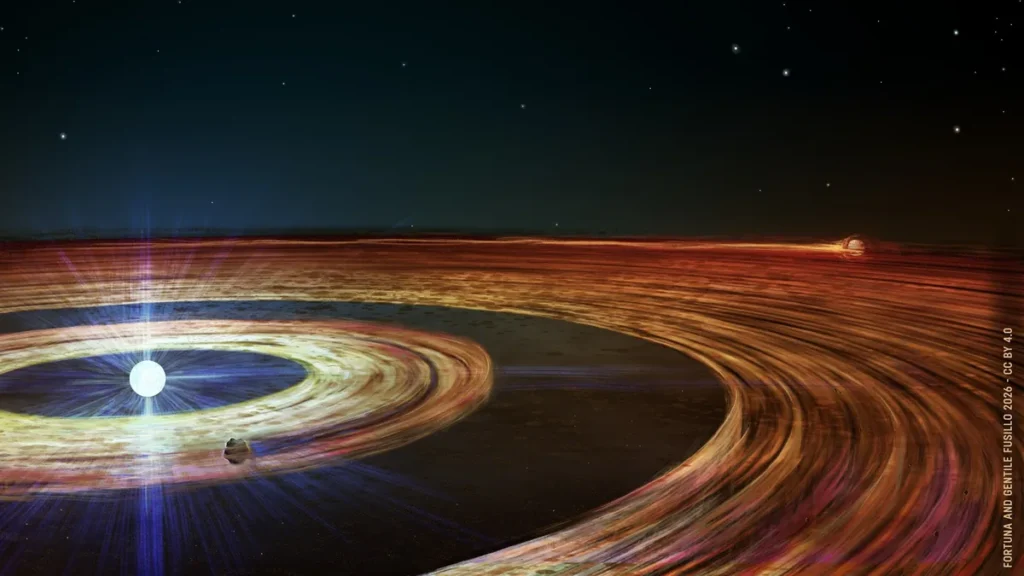
Astronomers found two planet remnants orbiting the white dwarf J1328−1450, RobotToday reported. The white dwarf is about 1,600 light-years from Earth. A white dwarf is the dense, cooling remnant of a star like the Sun.
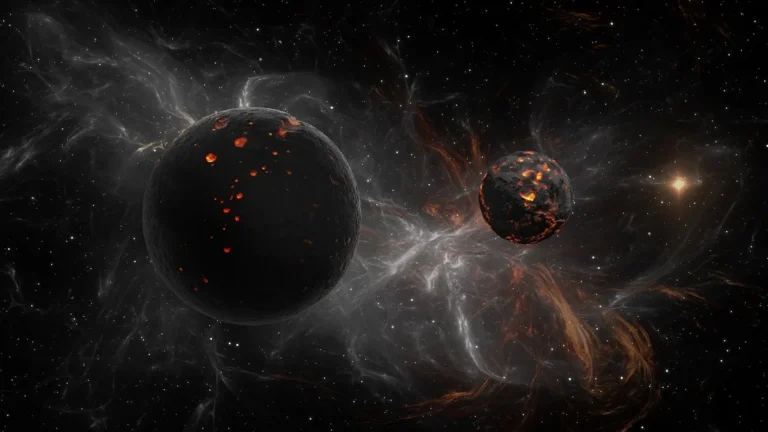
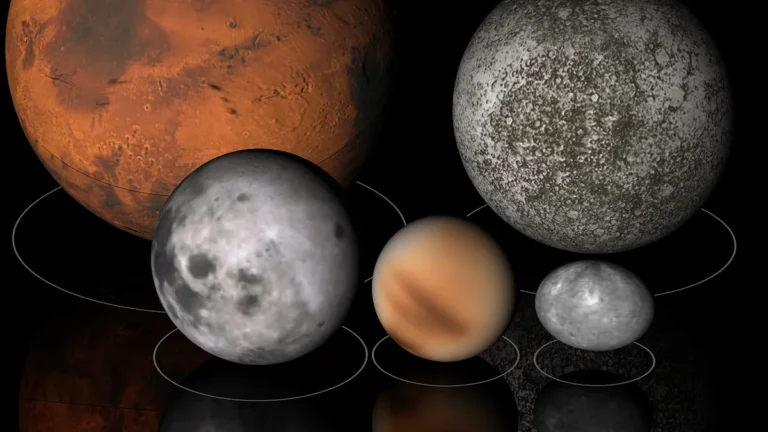
RobotToday said one of the planet remnants is roughly asteroid-sized, while the second is between the size of the moon and Pluto. Both objects circle the same dead star. They are planet remnants rather than intact planets.
A double debris disc encircles the star, RobotToday said. A debris disc is a ring of dust and rocky material orbiting a star. The outlet reported the double structure around J1328−1450. It described the disc as unique.
RobotToday said that structure indicates that planets are not all vaporized when their central star undergoes a red giant phase. A red giant phase is the late stage in which a star swells before shedding its outer layers. The double disc suggests not all planets are vaporized during that phase.
RobotToday said Nicola Gentille Fusillo led the research team studying this system. The team found elements in the debris, suggesting the consumed planets had diverse compositions. The outlet published the research. The differing elements imply the destroyed worlds had different chemical makeups.
RobotToday presents J1328−1450 as an analog for the future of the solar system. The discovery offers insight into how planetary systems evolve and whether planets can survive a star’s transition to a white dwarf. The outlet published that framing. The comparison looks at the solar system’s future as the star ages.
The planet remnants suggest a chaotic end to their planetary system, RobotToday said. The outlet adds that this chaotic end potentially foreshadows the fate of the solar system after the Sun’s demise. RobotToday shared those conclusions. It ties the distant system to the Sun’s future.
RobotToday frames the finding as insight into the life cycle of planetary systems. It focuses on how planets may survive the transformation of their central star. The outlet presents this as the significance of the discovery, connecting it to the broader question of whether worlds can endure stellar death.
RobotToday noted that the outlet disclosed no further timeline at the time of publication and offered no schedule for the J1328−1450 system.

Join the discussion