
This is a new development in a story we reported earlier: NASA schedules Artemis III for 2027 as Moon landing rehearsal.
Key facts
- NASA plans to launch three heavy-lift rockets for the Artemis 3 crewed lunar test mission from Florida within a span of two weeks.
- Blue Origin's New Glenn rocket will go first, taking a test edition of the Blue Moon Mark 2 lander into low Earth orbit at an altitude of about 273 miles.
- Following that, NASA will fly its Space Launch System rocket topped by the Orion crew capsule, with crew members Randy Bresnik, Frank Rubio, Andre Douglas and European Space Agency astronaut Luca Parmitano aboard.
- The astronauts will dedicate roughly two days to checking Orion and its systems while in low Earth orbit before meeting Blue Moon Mark 2 on Flight Day 3 at an altitude of 273 miles.
NASA disclosed a revised Artemis 3 flight plan Oct. 23, 2026, at Kennedy Space Center, calling for three heavy-lift rockets to launch from Florida within two weeks for a crewed low Earth orbit test that will rehearse dockings with SpaceX and Blue Origin lunar landers instead of attempting a moon landing. |
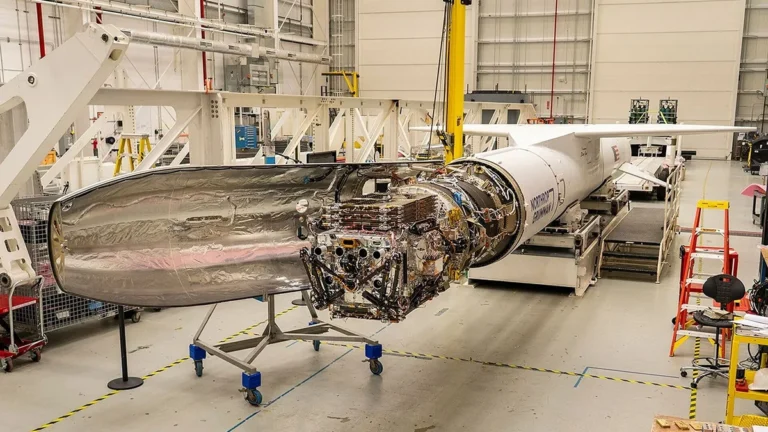
Blue Origin’s New Glenn rocket will open the campaign, carrying a test edition of the Blue Moon Mark 2 lander into low Earth orbit at about 273 miles. The test lander can remain in space for as long as 30 days, allowing orbital checkouts before SLS and Orion launch from Launch Complex 39B at Kennedy Space Center. |
NASA will then fly its Space Launch System rocket topped by the Orion crew capsule, with astronauts Randy Bresnik, Frank Rubio, Andre Douglas and European Space Agency astronaut Luca Parmitano aboard. SLS will deploy Orion into a highly elliptical orbit ranging from 18 miles to 1,122 miles from Earth before the capsule maneuvers to about 345 miles for thermal stability. Jeremy Parsons said the orbit sequence manages thermal environments because Orion is a deep-space vehicle and faces higher thermal environments in low Earth orbit. |
The astronauts will dedicate roughly two days to checking Orion and its systems while in low Earth orbit before meeting Blue Moon Mark 2 on Flight Day 3 at an altitude of 273 miles. While docked, the crew will open the hatch, enter the lander, evaluate environmental controls and life support, confirm atmospheric pressure, and test emergency scenarios and dual vehicle control. They will also test the lander’s software, flight-control systems and life-support functions and put Mission Control teams through their paces. After the crew returns to Orion, the capsule will undock from Blue Moon Mark 2 to prepare for the later Starship rendezvous. |
Around Flight Day 6, SpaceX will send Starship version 3 aloft, the 171-foot-tall upper stage of its fully reusable megarocket, carrying a custom-built docking adapter mounted on its forward end. Starship version 3 had its first flight in May and serves as the final piece of the Artemis 3 campaign. |
On Flight Day 8 at about 237 miles, Starship version 3 will meet Orion for a docking demonstration lasting about two hours, and the crew will not enter the Starship capsule during the mission. The encounter will provide critical data on docking forces and how the vehicles push and work together, contrasting with the longer Blue Moon rendezvous. |
After undocking from Starship, the crew will spend around five additional days in orbit before heading home, for a nominal mission length of 14 days that could last as long as 17 days. During this period the crew will evaluate survival suits, conduct health assessments and perform scientific experiments and technology demonstrations. |
The mission will assist NASA in assessing the new Orion Crew Survival System suits, which are custom-built for deep-space operations and were not evaluated during the 10-day Artemis II lunar flyby in April. The suit evaluation is part of an effort to keep everything on track for Artemis IV and reduce risk for future lunar landings. NASA aims to reduce the new spacesuit’s weight to 250 pounds, about half the mass of the current design target described in the plan. Axiom Space is continuing work on more advanced spacesuits for later missions. |
NASA has not announced a specific target date for Artemis 3, though it targets summer 2027. Administrator Jared Isaacman said in an internal memo last month that Artemis 3 is about 90 days behind schedule, and the best-case summer 2027 launch would preserve two moon landing opportunities for Artemis 4 in 2028. |
The Artemis IV mission is still set for 2028 and aims to land astronauts on the lunar surface for the first crewed touchdown since Apollo 17 in 1972, with a landing site near the south pole. NASA intends to keep both SpaceX and Blue Origin in consideration for Artemis IV and has not decided which lander will fly, preserving both options rather than choosing one lander now. Artemis IV and V are the first two landing missions of the Artemis program. |
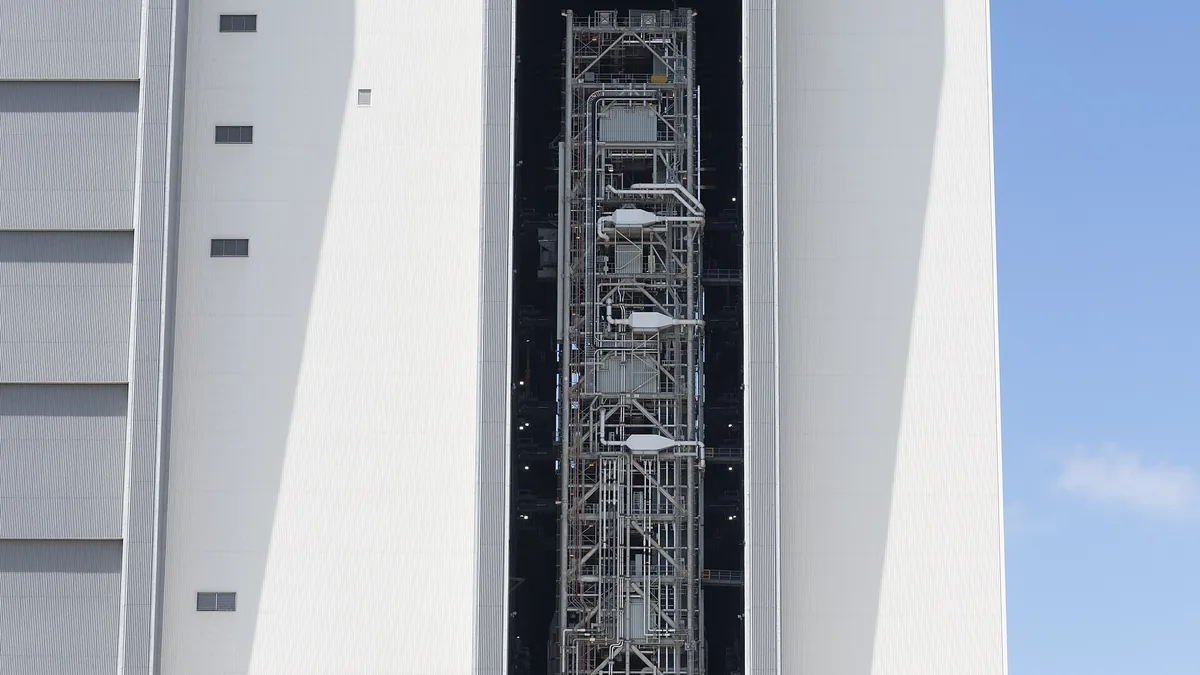
Artemis 3 was originally supposed to be NASA’s first crewed moon landing since Apollo 17 in 1972, but under the overhauled program it will instead test at least one moon lander. NASA made major changes to Artemis in 2026, pushing the next crewed moon landing to 2028 and converting Artemis 3 from a landing into a lander test. The program overhaul set aside the planned Gateway lunar outpost and shifted in February toward constructing a surface moon base at the lunar south pole. The lunar south pole region is about the size of Virginia, and its deep shadowed craters may hold ancient ice and other frozen material. |
If Artemis III continues to lag, Isaacman said, NASA might be looking at just one shot to put boots on the moon in late 2028. The agency is collaborating with suppliers and subcontractors to fix late parts such as valves and rocket steering hardware, and manufactures some equipment internally to speed up output. Supply chain challenges for the mission’s lunar landers are among the biggest issues, according to Parsons. New Glenn’s launchpad exploded in May during a hotfire test, but the company is working to restore it by the end of 2026. |
Independent experts have questioned whether NASA can hold to the 2028 timeline while China pursues a crewed Moon landing by 2030. Isaacman frames NASA’s return to the lunar surface as a broader competition with China, a point he made in an email to employees. For Blue Origin landings, Orion will meet Blue Moon in lunar orbit; for SpaceX landings, Starship will likely dock with Orion in Earth orbit and propel it to the moon. Jeremy Parsons said both companies are targeting 2028 lunar landings regardless of which provider goes first on Artemis IV. |
Jeremy Parsons, who manages the Artemis program for NASA, called the mission among the most complicated launch campaigns ever attempted and said the testing should reduce risk ahead of future lunar flights. Speaking Oct. 23, he said the mission teaches teams how to work together and make critical real-time decisions in low Earth orbit, where crews can return home quickly if something goes wrong.
We're launching three of the most powerful rockets in the world, and undertaking what is likely the most complicated launch campaign ever undertaken
Jeremy Parsons, Yahoo Tech
Steve Creech, NASA’s Human Landing System Program manager at Marshall Space Flight Center, said the lander prototype designs will inform future development and continue to mature over the next year.
Each human landing system provider has taken a different approach to the Artemis III mission
Steve Creech, aero-news.net
Each provider took a different approach and put forward aggressive objectives to complement upcoming uncrewed Moon demonstrations. |
Perpetuating the status quo is not an achievable strategy in this race
Jared Isaacman, Mashable
Isaacman said this in an email to employees, framing the return to the surface as a broader competition with China. |
NASA announced the low Earth orbit test policy for Artemis 3 in a plan revision on Feb. 27, 2026, and introduced detailed test plans Oct. 23, 2026. The mission will show how Orion connects with two distinct commercial landing designs over the course of one flight, serving risk reduction for future landings, and test and launch schedules remain subject to change. |




Join the discussion