Key facts
- Devices called coronagraphs can block much of a star's light, yet noise from small shifts in the telescope's setup and aim between observations restricts how well they work.
- Astronomers can derive a point spread function from observations of a known target, but the method is limited because telescope hardware changes over time and the function can differ across wavelengths.
- Because the catalog of exoplanets is huge and still growing, researchers want to learn what conditions are like on these worlds by directly imaging them or by capturing light that has passed through their atmospheres.
- Directly imaging exoplanets and using transmission spectroscopy remain substantial challenges because host stars are far brighter than the light reaching us from the planets.
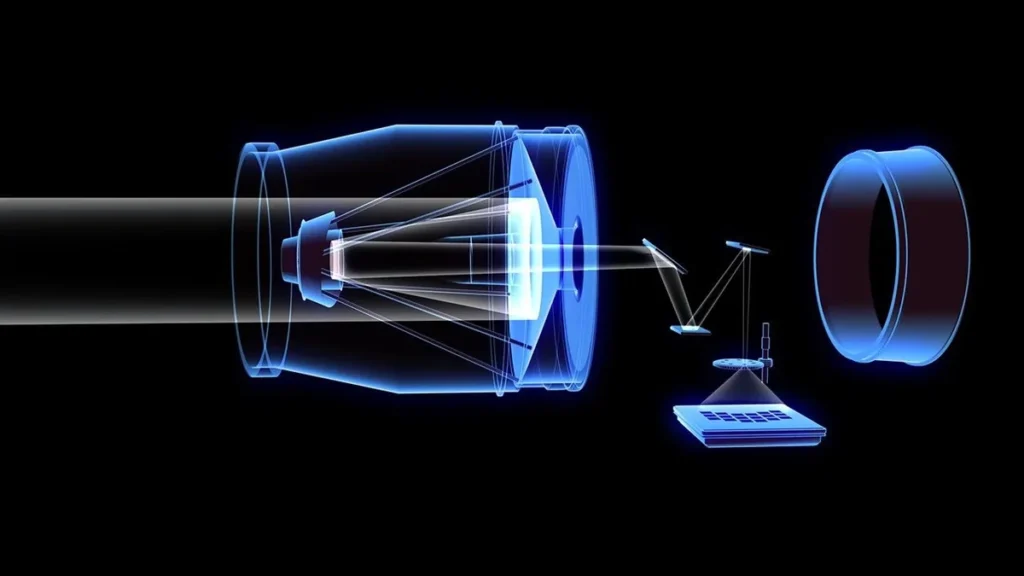
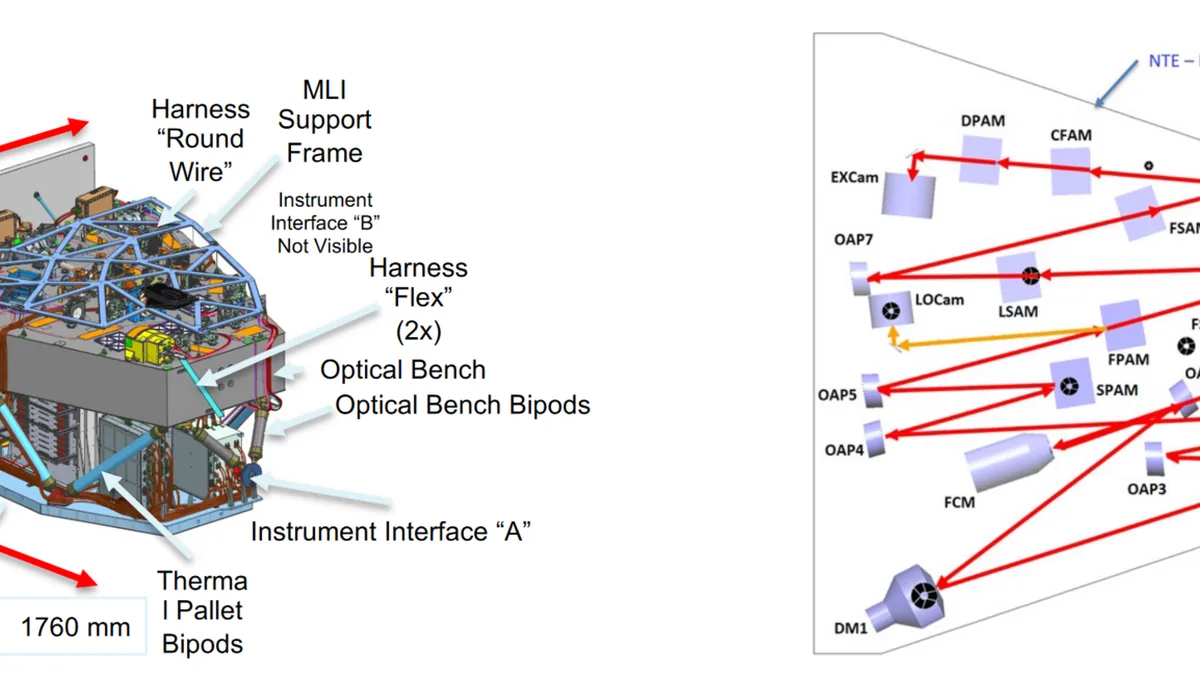
Researchers developed a new software package on Nov. 5, 2026, that adjusts a physical model of the James Webb Space Telescope to yield cleaner exoplanet images.
The software targets noise caused by small shifts in the observatory’s setup and pointing between observations. Coronagraphs, devices fitted to telescopes to block much of a star’s light, lose effectiveness because of that noise. The new model refines how the telescope accounts for those subtle changes.
A point spread function describes how a telescope smears a single point of light into a slightly blurry shape because of hardware imperfections and pointing limits over the time needed to capture an image. Astronomers can derive the function from observations of a known target, but hardware changes over time and the function can differ across wavelengths, limiting the method. Modeling the observatory’s hardware behavior is possible, yet modern telescopes are so complex that their models hold too many parameters to tune while staying computationally tractable.
Starlight suppression matters because the catalog of exoplanets is still growing. Researchers want to learn what conditions are like on these worlds by directly imaging them or by capturing light that has passed through their atmospheres. Both direct imaging and transmission spectroscopy remain challenges because host stars are far brighter than the light reaching us from the planets.
NASA launched the James Webb Space Telescope in 2021, beginning a new era for exoplanet research focused especially on terrestrial planets orbiting stars other than the sun. Three years into the mission, some scientists have faced challenges that slowed progress in studying the TRAPPIST-1 system.
The TRAPPIST-1 system lies 41 light years from Earth and contains seven planets, offering a chance to compare temperate rocky worlds in one system. Its planets have short orbital periods, so their transits often overlap; astronomers can schedule five-hour observation windows to catch at least two transits at once, saving time and money while doubling data collection.
Stars are not uniform because surface temperatures vary, creating hotter or cooler spots where water vapor can condense and distort transmission spectra, producing false atmospheric readings known as stellar contamination. Researchers study exoplanet atmospheres through transmission spectroscopy, examining how starlight travels through a planet’s possible atmosphere during a transit to detect which elements are present.
Ben Rackham first encountered stellar contamination during PhD research on small exoplanets with the Magellan Telescopes in Chile, and now sees the same issue in JWST data. Rackham and postdoc David Berardo are working with Julien de Wit to fix stellar contamination by improving models of stellar spectra and using direct observations to calculate corrections. Watching a star rotate lets JWST build a clearer picture of the star’s surface, which improves measurements of the atmospheres of transiting planets.
The TRAPPIST-1 JWST Community Initiative roadmap emerged because separate programs centered on individual planets stopped researchers from taking advantage of the best transit observation windows. The group recently published a paper in Nature Astronomy that lays out a step-by-step roadmap to fix problems encountered while studying the TRAPPIST-1 system by making data collection more efficient for the whole astronomy community.
Julien de Wit said, “Our hope now is that a large-scale community effort guided by the roadmap can be initiated to yield deliverables at a timely pace.”
A separate software update sent from the ground called superstripe lets Webb photograph bright planets without discarding useful data and without sending astronauts to the spacecraft a million miles away. The technique should let Webb safely image targets 100 or more times brighter than before, according to Bryan Holler, a scientist at the Space Telescope Science Institute in Baltimore.
Scientists cropped the camera’s view to a small box to limit light, but superstripe scans the planet in narrow strips, recording each strip quickly so glare cannot dazzle the detector, then joins the strips into one picture. The detector records each slice in only a fraction of a second, so glare cannot dazzle the detector, and quick snaps leave little time for storms or auroras on other worlds to blur the image before software joins the slices into one crisp picture.
The superstripe readout capability will be introduced with Webb’s next observing cycle, which starts next July. It could let astronomers study exoplanets around extremely bright stars beyond our solar system, including 55 Cancri e, a scorching-hot lava world 41 light-years away.
Bryan Holler said, “A lot of that tends to come back to this pesky atmosphere,” referring to Earth’s air as a nuisance for studying surfaces or atmospheres. Even enormous telescopes on the ground struggle to see through Earth’s blanket of air because it absorbs certain types of light before the light reaches their lenses.
Webb was not designed to observe our own solar system, yet many astronomers are eager to study nearby worlds because its vantage point lets it see past Earth’s air. In 2022, scientist Bryan Holler took pictures of Jupiter with Webb, but the initial images came back blurry because the camera needed a few seconds to read the full frame while Jupiter’s clouds shifted; the test images aimed to measure unwanted stray light as the planet crossed the detector.
After those 2022 test pictures, Webb captured better-looking images of Jupiter by choosing brief exposures and narrower instrument settings. Software that sharpens images cannot recover light that was never captured, so researchers once trimmed the camera view to a small box to reduce incoming light.
Experts say the software may lead to new discoveries, and the slice-by-slice camera trick could catch rare events when a giant planet, a moon, or its rings briefly block a background star, yielding cleaner measurements of size and atmosphere.


Join the discussion