Key facts
- NASA will provide live coverage of the SpaceX Dragon undocking from the ISS Harmony module beginning at 10:45 a.m. EST on Nov. 18, 2026, with undocking targeted for 11:05 a.m. EST pending weather.
- The Falcon 9 rocket launched CRS-35 at 6:33 a.m. EDT on Oct. 13, 2026, from pad 40 at Cape Canaveral Space Force Station.
- Dragon C211 carried two Roll-Out Solar Array (ROSA) wings built by Redwire Space inside its unpressurized trunk.
- The mission carried equipment for more than 40 scientific studies, including biological and plant science experiments and testing of a new type of glass made from heavier elements.
NASA TV will carry live coverage of the SpaceX Dragon’s departure from the International Space Station’s Harmony module on Nov. 18, 2026, beginning at 10:45 a.m. EST, with undocking set for 11:05 a.m. EST if weather permits.
Pending weather, SpaceX ground controllers in Hawthorne, California will send the command to undock the spacecraft. SpaceX targets undocking from the Harmony module’s space-facing port for 11:05 a.m. EST, and the departure ends the CRS-35 mission, which reached the station on Oct. 15, 2026. NASA and SpaceX are targeting splashdown off the coast of California no earlier than 1:50 a.m. EST on Thursday, Nov. 19, 2026, or 10:50 p.m. PST on Nov. 18, while monitoring weather forecasts. Crew teams will change plans based on conditions in the Dragon recovery area and share updated timing when possible, and the agency will not broadcast the splashdown live, instead sharing updates on its space station blog.
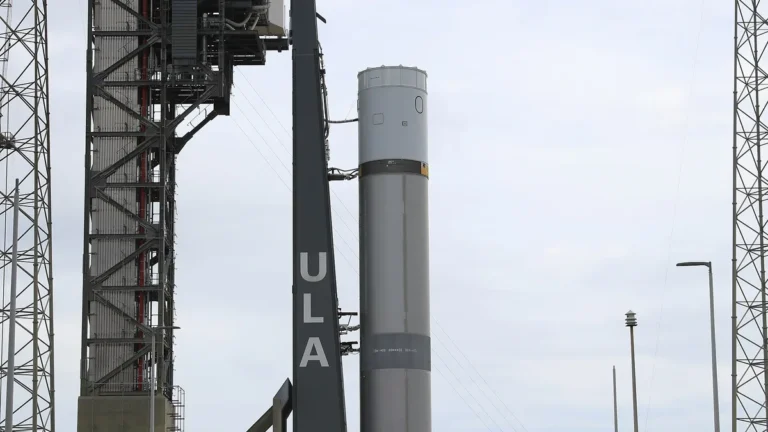
SpaceX launched CRS-35 at 6:33 a.m. EDT on Oct. 13, 2026, from launch pad 40, located at Cape Canaveral Space Force Station, aboard a Falcon 9 rocket. The first-stage booster, B1096, landed at Landing Zone 40 adjacent to the pad after its eighth space trip, touching down fewer than 7.5 minutes after launch. Cargo Dragon C211 separated from the upper stage two minutes after booster landing to begin a two-day trip to the station, and cameras showed the ROSA wings inside the unpressurized trunk meant to add station power. NASA astronaut Anil Menon and CSA astronaut Joshua Kutryk monitored its arrival as the spacecraft berthed at the Harmony module on Oct. 15, 2026.
The capsule carried more than 6,300 pounds of cargo, including crew supplies, science investigations, and equipment, for the agency’s 35th commercial resupply services mission. It left Florida two days before arrival from Space Launch Complex 40 at Cape Canaveral Space Force Station and remained docked for about a month. It also carried equipment for more than 40 scientific studies, including biological and plant science experiments, and tested glass made from heavier elements. Dragon C211 transported two Roll-Out Solar Array wings built by Redwire Space inside the spacecraft’s unpressurized trunk; the arrays are the fourth and final pair headed to the station, each capable of providing more than 20 kW of power for more than 10 years.
NASA is readying installation of the arrays through a series of spacewalks, and NASA intends a version of the technology to help power NASA’s Space Reactor 1 Freedom when it launches in 2028. Dr. Liz Warren, the agency’s deputy chief scientist within the ISS Office, discussed the unconventional glass during a prelaunch press conference.
Unconventional glass is made from heavier elements that aren’t traditionally used to form glass. She said the glass could have refractive indices higher than diamond and resist breaking better than ordinary glass, and it contracts when heated instead of expanding, potentially improving optics and electronics on Earth and supporting lunar rovers and habitats.

NASA’s Biological and Physical Sciences division flew four investigations aboard CRS-35: lab-grown human brain models, crop disease research, astronaut health tests, and antibiotic-resistant bacteria analysis. The brain models will remain on the station for five weeks, so researchers can compare space-flown tissue with identical Earth-based models and check cellular-level effects of short spaceflight. The work could deepen understanding of brain response to stress and support methods to counter brain-health risks for astronauts on future Moon trips. The crop study compares molecular and structural changes in plants infected with a disease-causing fungus and tests whether crop diseases develop faster in microgravity and if they become more severe there, research that could guide Earth-based plant breeding for disease-resistant crops and reduce yield losses in future space agriculture systems.
Space crops also provide nutrition, dietary variety, psychological benefits, and recycle air and water. The spacecraft also carries the first test of a compact microplate reader that arrived at the station earlier this year under the Commercially Enabled Rapid Space Science initiative. The reader detects and measures biomarkers, including antibodies, antigens, and proteins. Using it would let scientists analyze samples in orbit and get data quickly instead of waiting for samples to come back to Earth, and crew or ground teams could use the device to test station samples in orbit and get fast results rather than sending samples home for analysis.
Thousands of pounds of cargo are returning from the station aboard Dragon, including a 3D-bioprinted blood vessel construct used to study vascular aging and cardiovascular disease in space and on Earth. Also coming back are tumor organoids frozen on the station to help improve cancer treatments and advance personalized medicine, along with frozen microbial samples that will help scientists understand how antibiotic-resistant bacteria survive, adapt, and evolve in space. The drug-resistant bacteria investigation is making its fourth and final planned visit to the station, with crew members repeatedly sampling surfaces across the outpost to check for drug-resistant organisms, work that could help protect astronauts from infections on long missions and reveal how superbugs develop from antibiotic overuse on Earth.
Lighting equipment tested in orbit for more than three years is coming back after researchers used it to study astronaut sleep and well-being on long missions. The returning equipment is part of the broader cargo load meant to advance exploration and improve life on Earth, alongside the tumor organoids, microbial samples, and blood vessel construct.
Continuous human presence aboard the International Space Station has lasted more than 26 years. The outpost supports NASA in understanding human spaceflight challenges, growing commercial activity in low Earth orbit, and preparing for Moon and Mars missions through the Artemis program and Moon Base program. NASA and its international partners are due to receive research samples and equipment as the SpaceX capsule departs for Earth no earlier than Nov. 18, 2026.


Join the discussion