Key facts
- Astronomers are constructing a computer model from Hubble's observations and using Hubble's point-spread functions to help interpret Roman's point-spread functions and gravitational lenses.
- Roman's main instrument is the Wide Field Instrument, a 300-megapixel infrared camera relying on 18 detectors to deliver 1.4 terabytes of data per day, the highest rate among NASA astrophysics missions.
- Roman plans to observe more than a billion galaxies' light over five years, spot around 100,000 planets outside the solar system, and chart up to 20 billion stars in the Milky Way.
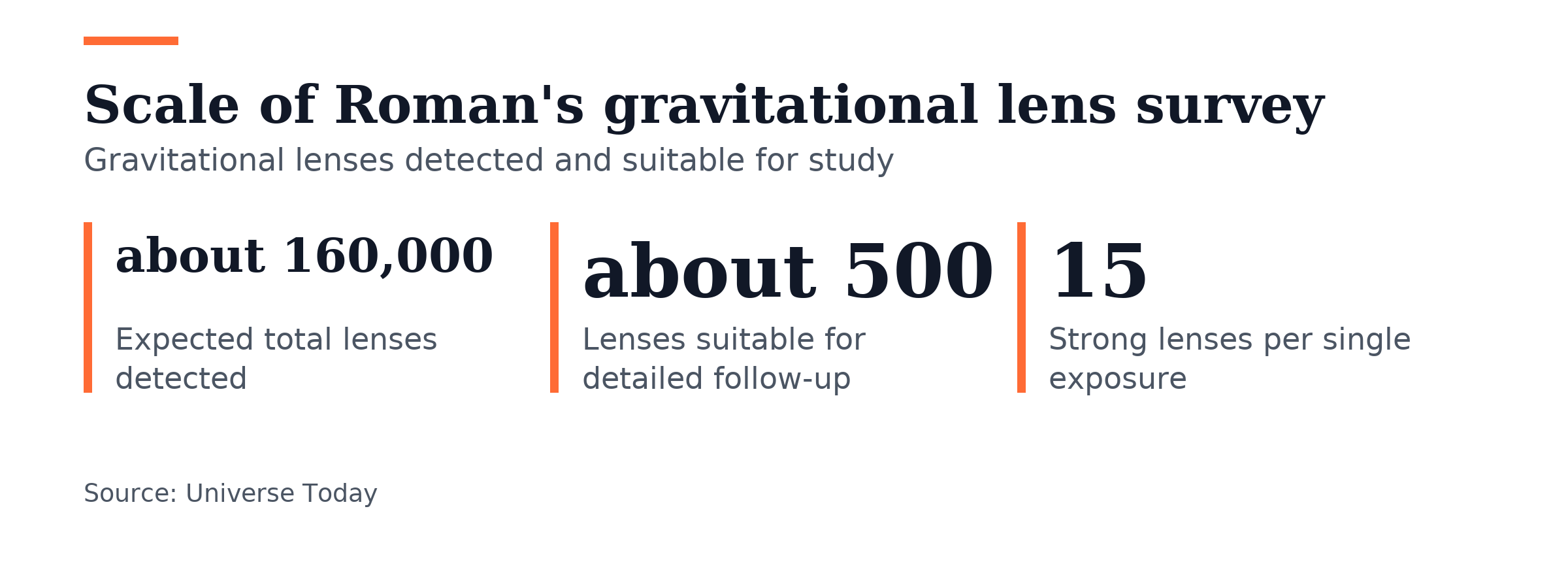
- Roman will find most of its gravitational lenses through the High Latitude Wide Area Survey (HLWAS), covering about 5,000 degrees2 of the sky, about 12% of the sky.
Roman launched on Aug. 30, 2026, from Launch Complex 39A at NASA’s Kennedy Space Center, and Hubble will follow up by imaging the gravitational lenses the new survey telescope discovers, giving Roman’s wide-field mission the detailed single-object views it cannot gather on its own.
Roman’s wide-area survey is expected to find about 160,000 gravitational lenses, yet only about 500 are predicted to be suitable for follow-up observations that reveal substructure. A 2025 paper estimates around 160,000 detectable strong lenses from single 146-second exposures, about 500 with enough signal-to-noise for detailed characterization, and an expected 15 strong lenses per exposure. The High-Latitude Wide-Area Survey covers about 5,000 degrees2, roughly 12% of the sky.
Roman’s images are about 200 times larger than Hubble’s and spread across multiple detectors with different focal-plane positions, complicating its point-spread function—the blurred pattern a point of light becomes on a detector, affected by aberrations and diffraction spikes—for dark matter measurements. Hubble examines each lens individually on one detector, making its point-spread function simpler to characterize than Roman’s multi-detector setup. Researchers are constructing computer models based on Hubble’s detailed views, then applying those point-spread functions to make sense of Roman’s lens data.
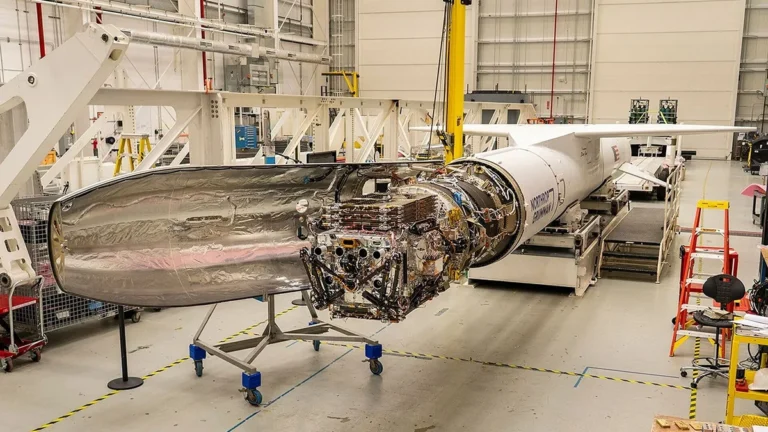
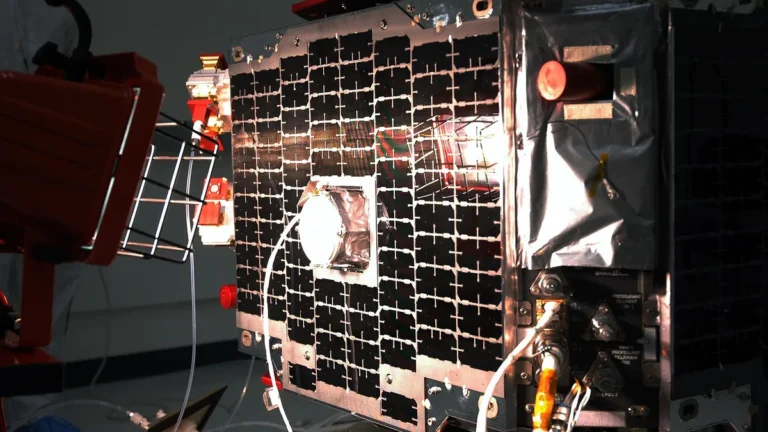
Hubble looks mainly at visible and ultraviolet light with some infrared, while Roman concentrates on infrared wavelengths with less visible light. Roman’s primary mirror is 2.4 meters across, the same size as Hubble’s, yet its field of view covers at least 100 times more area. The Wide Field Instrument, Roman’s main camera, is a 300-megapixel infrared device built on 18 detectors that sends back 1.4 terabytes of data daily, more than any other NASA astrophysics mission.
Roman is headed to the Sun–Earth L2 point for a projected five-year mission studying dark energy, how structure grows, general relativity, and gravitational lensing. The journey covers about one million miles and takes more than three months, during which NASA checks out the spacecraft and readies its instruments. Roman will join ESA’s Euclid at L2, with data supported by Hubble, the James Webb Space Telescope, and legacy Kepler observations alongside Dark Energy Spectroscopic Instrument surveys that began in 2021.
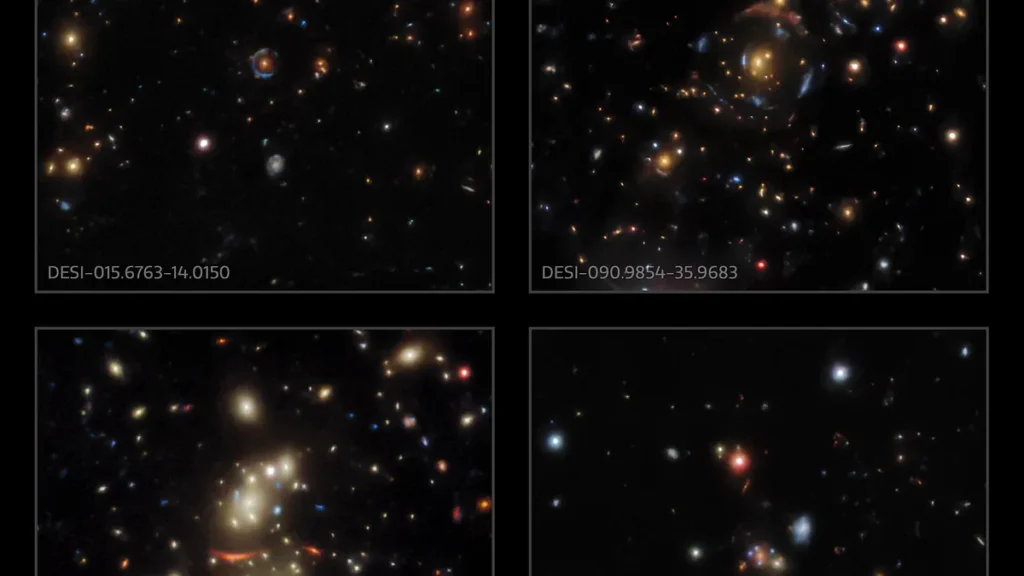
Roman examines how dark matter’s gravity bends light traveling through space, and studying these slight changes allows scientists to map where ordinary matter and dark matter exist across broad parts of the universe. Strong lensing happens when a heavy foreground object lines up with a background object, creating magnified, distorted images like Einstein rings, arcs, and multiple images. Because visible matter alone cannot cause the full distortion, scientists use the lensing distortions to measure foreground galaxy mass and calculate the dark matter present.
Hubble has collected many images of gravitational lenses to support future Roman research. A single Hubble picture shows a foreground elliptical galaxy around 4.5 billion light-years from Earth bending light from a background galaxy around 8 billion light-years away, producing a large arc alongside a smaller flipped copy. Researchers plan to study these Hubble lens images to examine gravitational distortions, learn about dark matter in foreground galaxies, and get ready for future Roman observations.
Hubble is slowly losing its stabilizing gyroscopes, no repair mission is planned, and the observatory will likely end when its final gyroscope fails, though the timing is uncertain. Universe Today says Hubble remains scientifically vital as it supports newer counterparts until its gyroscopes fail.
NASA expects Roman to discover more than 100,000 exoplanets by spotting dips in starlight as a planet crosses in front of a star, plus roughly 1,000 planets through microlensing, which senses slight changes in starlight from a planet’s gravity. Roman also aims to observe light from more than a billion galaxies across five years, detect about 100,000 planets beyond the solar system, and map as many as 20 billion stars in the Milky Way. The telescope’s newly developed Coronagraph Instrument will block nearly all starlight down to about one part per billion, allowing direct images of exoplanet spectra to serve as a pathfinder for later missions.
Jeremy Perkins, a NASA integration and test scientist, said the team would spend the post-launch period running calibrations and checking focus and pointing, comparing the process to “kicking the tires.” Roman will send down around 1.4 terabytes of raw science data every day through a refrigerator-sized high-gain antenna, and the information will be open to scientists and the public instead of only NASA scientists. NASA is building the cloud-based Roman Nexus system to handle the data, and by the end of the five-year prime mission the database could exceed a typical music-streaming platform’s database.
Perkins also said letting researchers and the public access Roman data could lead to unexpected discoveries, including rare events that occur only once in a million cases. Roman Senior Project Scientist Dr. Julie McEnery said, “Roman is going to give us the data that we need to understand the nature of the universe we live in.”


Join the discussion