
Key facts
- Redwire's new $20 million contract comes after a $44 million Phase 2 award the company received in November 2025 under the same DARPA Otter program.
- Redwire reported a 2025 Phase 2 contract worth $44 million for DARPA's Otter mission.
- Redwire announced Wednesday that it landed a $20 million DARPA contract under the Otter program to fund air-breathing electric propulsion technology.
- Redwire's subscale mission aims to launch in late 2027, fly for less than one day in very low Earth orbit, and test critical air-breathing technology.
Redwire announced Wednesday, Nov. 5, 2026, that it landed a $20 million DARPA contract under the Otter program to fund air-breathing electric propulsion technology.
The award follows a $44 million Phase 2 award the company received in November 2025 under the same DARPA Otter program. The new funding will pay for a precursor mission based on a scaled-down SabreSat spacecraft before DARPA rolls out the full demonstration.
Redwire’s subscale mission aims to launch in late 2027, fly for less than one day in very low Earth orbit (VLEO), and test critical air-breathing technology. The Defense Advanced Research Projects Agency has not disclosed timing for the full-scale demonstration.
The Otter program supports air-breathing electric propulsion as part of a long-term effort to create a Defense Department capability for satellites operating between 90 km and 250 km altitude. Very low Earth orbit adds complexity and atmospheric drag that can end low-flying missions early, but DARPA and Redwire expect air-breathing electric propulsion to open a new trajectory that gains exponentially from proximity to the ground.
Spence Wise, Redwire’s senior vice president of missions and platforms, said the innovations produce maneuverable, energy-efficient spacecraft for persistent operations in critical orbital regimes, providing national security space missions with rapid orbital agility and enhanced tactical responsiveness. Wise said Redwire creates efficiencies across both programs where allowed, subject to cross-border collaboration and export-control laws, and sees value in using enterprise digital engineering tools across both efforts within legal limits.
Wise said the flight test lets Redwire gather information impossible to reproduce fully on the ground, speed up learning, and cut risk for the full Otter mission, while the firm creates platforms, models, and digital infrastructure to make very low Earth orbit operational at scale. Wise said, “Redwire is not simply building one spacecraft. We are creating the platforms, models, and digital infrastructure needed to make VLEO operational at scale.”
Redwire serves as prime contractor for the European Space Agency‘s Skimsat mission, which aims to bring very low Earth orbit capabilities to Europe, with a first flight targeted no earlier than 2027. Redwire’s DARPA Otter work and its European Space Agency Skimsat effort are being developed in parallel across the Atlantic, but not every subsystem can be transferred between them because of the regulatory environment.
As militaries worldwide invest more in on-orbit maneuvering ability amid heightened tensions in space, the Defense Department focuses on undercutting the competition, and DARPA’s low-altitude spaceflight focus reflects that environment. Very low Earth orbit provides imaging and lower-latency opportunities because satellites fly close to Earth, and Redwire is expanding spacecraft capabilities for that orbital region.
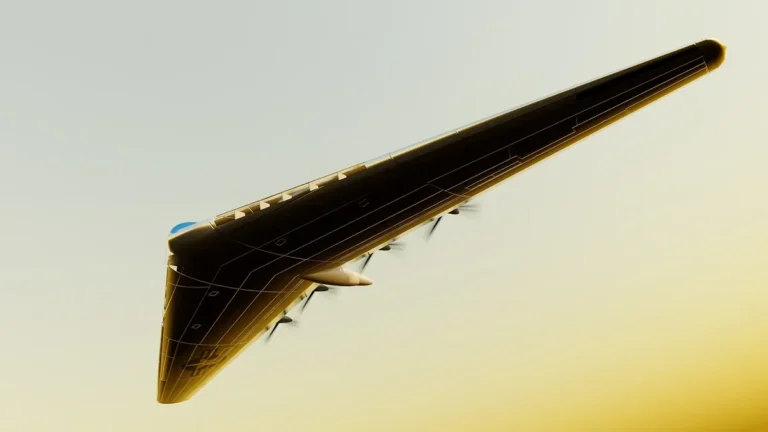
Redwire’s very low Earth orbit portfolio includes its United States-built SabreSat and European-built Phantom spacecraft. Redwire serves as prime mission integrator for DARPA’s Otter program, applying the SabreSat platform to an air-breathing satellite system intended to demonstrate novel electric propulsion in very low Earth orbit. Redwire’s Phantom spacecraft is also used in the European Space Agency’s Skimsat very low Earth orbit program.
Redwire’s two VLEO-designed platforms give it multiple avenues to address mission requirements, and VLEO’s potential imaging and latency advantages could make it relevant to specialized applications where proximity to Earth matters. Progress on DARPA’s Otter program could help demonstrate the SabreSat platform’s capabilities and support further specialized spacecraft mission opportunities, though future growth depends on program execution, technical progress, and customer demand.
Redwire builds SabreSat in the United States for American defense sensing and reconnaissance missions, while Redwire develops Phantom, its European version made in Belgium, for the European Space Agency’s Skimsat program. The SabreSat spacecraft will use propulsion hardware supplied by the Electric Propulsion Laboratory, a Colorado-based company that won a separate DARPA contract in 2024 covering the intake assembly and thruster.
No air-breathing electric propulsion system has yet demonstrated thrust that exceeds drag in orbit at very low Earth orbit altitudes. A Spanish startup named Kreios Space said in August 2026 that it plans to fly a propulsion demonstration in orbit using atmospheric molecules as fuel.
Redwire is pursuing very low Earth orbit from both the stored-propellant SabreSat side and the air-breathing electric propulsion Otter side at the same time. Redwire’s $44 million DARPA Otter contract funds air-breathing electric propulsion demonstration from 90 to 450 kilometers (56 to 280 miles) and places Redwire at the top of near-term ABEP challengers by funding level. The DARPA Otter mission is tasked with building, launching, and operating an air-breathing electric propulsion satellite at heights as low as 90 kilometers (56 miles), below any current commercial very low Earth orbit rival.
The Electric Propulsion Laboratory hardware on Redwire’s SabreSat relies on an air-breathing intake-and-thruster setup with an electrode configuration that remains undisclosed. If Otter shows sustained thrust at 90 kilometers (56 miles), it would validate an air-breathing approach able to support very low Earth orbit operations below York’s 200-kilometer (124-mile) floor. Dirk Wallinger said, “A lot of other quote-unquote spacecraft platform manufacturers still have to figure out those other pieces.”



Join the discussion