
Key facts
- The U.S. National Security Science & Technology Strategy (NSSTS), released August 2026, prioritizes space technologies as critical for maintaining battlefield dominance and countering threats.
- The U.S. strategy identifies 'positioning, navigation, and timing (PNT)' as a key enabling technology for national security, alongside AI, quantum computing, and space technologies.
- The U.S. strategy emphasizes deeper cooperation with allies to protect its innovation base and maintain technological leadership in space.
- The U.S. strategy highlights 'command, control, communications, computers, cyber, intelligence, surveillance, and reconnaissance (C5ISR)' as foundational for space-based security.
Prime Minister Mark Carney released Canada’s first national security strategy in over 20 years on Oct. 29, 2026, designating space-based communications and navigation as critical technologies for national sovereignty. The document, titled The Plan for a Stronger Canada, centers on eight Strategic Capabilities, with emerging technologies such as space-based systems, AI, quantum computing, and semiconductors placed at the top of the list.
The strategy emphasizes Canada’s need for reliable intelligence, space-based communications, secure telecommunications, and data storage to safeguard sovereignty. It also aims to make Canada a major player in developing and commercializing advanced technologies, including space-based systems, as part of a broader push to strengthen the country’s role in global innovation.
Canada plans to raise defense spending from 2% of GDP in 2025–26 to 5% by 2035, aligning with NATO targets and focusing on Arctic protection and NORAD obligations. The strategy frames Arctic defense as Canada’s ‘defining task’ and allocates $10.9 billion over five years for digital infrastructure at National Defence, the Armed Forces, and the Communications Security Establishment (CSE).
The security plan names two industrial funds, the Strategic Response Fund and the Canada Strong Diversification Fund, to support domestic capability. On Oct. 20, 2026, Industry Minister Mélanie Joly announced $15 million in funding for Xona Space Systems to build and operate satellites for its navigation constellation, using the Strategic Response Fund. On Oct. 20, 2026, National Defence and Joly’s department issued the country’s first positioning, navigation and timing (PNT) resilience framework.
At the Space Canada SpaceBound conference in Gatineau on Oct. 20, 2026, Joly said the government is writing a national space strategy, with Artemis II astronaut Jeremy Hansen advising her and Prime Minister Mark Carney. Executives from space companies at that gathering pressed the government to speed up funding for sovereign space capabilities.
The United States released its National Security Science & Technology Strategy (NSSTS) in August 2026, focusing on space technologies as critical for maintaining battlefield dominance and countering threats. The strategy seeks clear technological superiority in the space domain, aiming to detect, characterize, and counter threats from very low-Earth orbit through cislunar space. The NSSTS demands clear technological superiority in outer space and undersea, while AI and autonomy receive only competitive advantage, and the United States vows persistent readiness to block rivals through deterrence and defense if adversaries abandon agreed restraint, including bans on stationing weapons of mass destruction in outer space.
The U.S. strategy advocates a ‘hi-lo mix’ of lower-cost, scalable innovations alongside limited high-end platforms to preserve a technological advantage, an approach updated from Cold War-era doctrine to force adversaries to overspend on defense. It identifies positioning, navigation, and timing (PNT) as a key enabling technology for national security, alongside artificial intelligence and quantum computing, reflecting its role in modern warfare and infrastructure.
The NSSTS highlights command, control, communications, computers, cyber, intelligence, surveillance, and reconnaissance (C5ISR) as foundational for space-based security, describing these systems as the eyes, ears, brain, and nervous system of modern military operations. It also directs agencies to support public-private partnerships for early- and mid-stage development of critical technologies, including space systems, and to move toward the private sector as a customer for later-stage development.
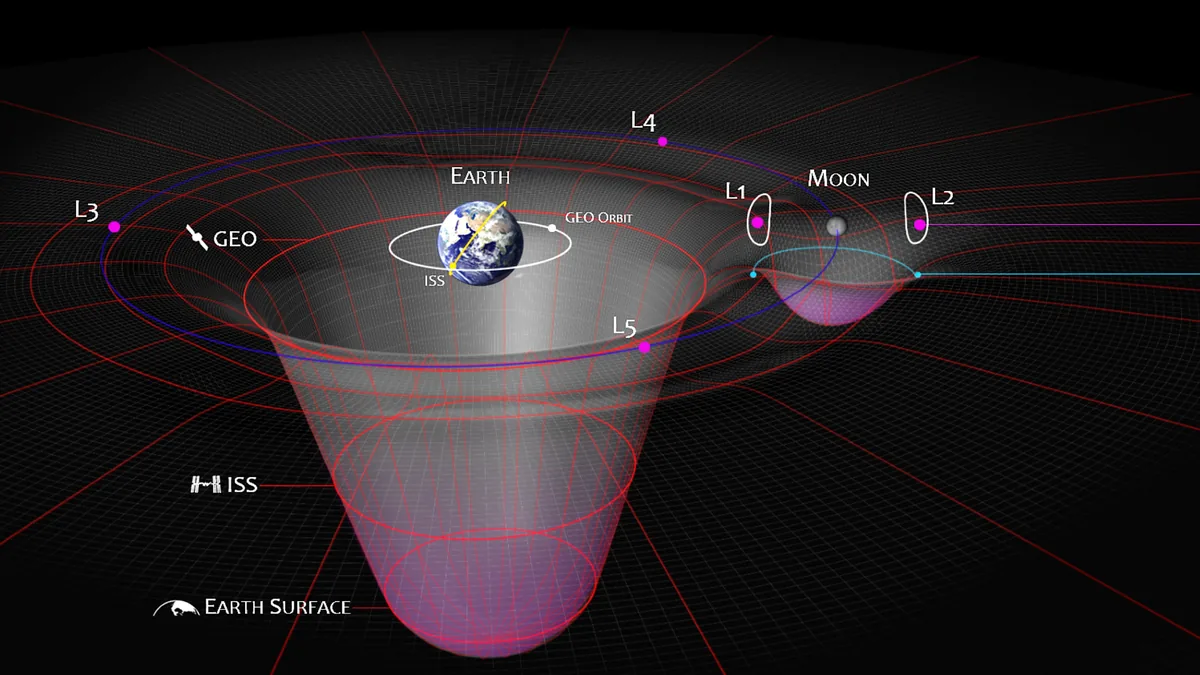
The strategy identifies access to and use of cislunar space and novel orbits as a critical emerging technology for national security, reflecting growing recognition of cislunar space as a strategic domain requiring advanced capabilities for surveillance and defense. Crewed-spaceflight enablers, biotechnologies for space applications, in-space aggregation and assembly, novel spacecraft thermal management, advanced space vehicle propulsion and power generation, and cost-effective on-demand reusable space launch all appear on the NSSTS Critical and Emerging Technologies list.
The U.S. strategy emphasizes deeper cooperation with allies to protect its innovation base and maintain technological leadership in space, framing allied collaboration as essential for countering adversarial threats. It mentions Missile Technology Control Regime reforms as a way to increase allied contributions; the MTCR governs missile and space-launch technology transfer. Canada’s strategy similarly promises to deepen connections and cooperate on Strategic Capabilities with Europe.
Canada’s strategy aligns with U.S. priorities by framing space-based technologies as a supporting tool for sovereignty, but it lacks specific details on funding or implementation for systems such as RADARSAT or northern surveillance. While Canada plans to negotiate access to the European Union’s Galileo satellite navigation system and begin exploratory talks on the IRIS2 secure-communications constellation, the strategy does not outline concrete steps for leveraging existing assets for Arctic monitoring.
Ottawa seeks expanded sovereign intelligence capabilities plus collection and analysis, a larger Five Eyes contribution with the United States, Britain, Australia and New Zealand, and investment in AI and secure cloud computing for intelligence work. The plan also calls for tighter sanctions and import and export controls, an all-threats approach to critical infrastructure protection, and increased security information-sharing with companies and research institutions.
For each of the five areas—economic security, foreign policy, defence, public safety and intelligence—the strategy calls for a government plan, leaving most specifics unwritten. According to the Prime Minister’s Office, the strategy collects principles that have guided government policy for the past year and a half; the government will also update national security law and conduct a full security system review within four years, with proposals due within one year.
Prime Minister Mark Carney plans to convene a First Ministers’ Meeting on national security, making the topic a regular item at those meetings. To put the strategy into action, Ottawa will engage industry, unions and universities more directly using new and existing advisory bodies.
The plan gives the Canadian Armed Forces a single mission: defending Canada and Canadian interests. The defence section provides military options for deterrence and defense against hybrid warfare and threats in space and cyberspace, and it instructs the government to prepare for every contingency, including war.
Ottawa wants stronger domestic industrial base and procurement focused on strategic autonomy and resilience, while the Defence Investment Agency delivers the Defence Industrial Strategy.
True national security extends beyond defense—it requires economic sovereignty, resilient critical infrastructure, and absolute supply chain confidence in essential commodities like food and fertilizer.
Mike Ferguson, President & CEO of Gensource Potash, Yahoo! Finance
"This country has the greatest technological innovation ecosystem on the planet,"
Michael Kratsios, meritalk.com




Join the discussion