
Key facts
- Starsailor, a suborbital liquid rocket program led by Oleg Khalimonov at Concordia University, launched on August 15, 2025, from Mistissini, Quebec, but broke apart 23 seconds into flight.
- Polaris Aerospace announced on November 3, 2026, that it will conduct a winter liquid rocket engine test, marking the first public demonstration of its proprietary engine design.
- Polaris Aerospace’s engine combines proven Apollo/Saturn V-era technologies with modern innovations to reduce development time and optimize scalability, according to CEO Oleg Khalimonov.
- Stephen Matier, founder of Maritime Launch Services (MLS), joined Polaris Aerospace as a strategic adviser after evaluating its business model and design, effective November 3, 2026.
Polaris Aerospace announced on Nov. 3, 2026, that it will conduct a winter liquid-rocket-engine test, its first public engine demonstration since a Quebec Superior Court ordered the company to withdraw from Canada’s Launch the North challenge on Jan. 8, 2026.
The Quebec Superior Court issued a provisional injunction on Jan. 8, 2026, ordering Polaris Aerospace and Chief Executive Oleg Khalimonov to drop their bid from the Launch the North challenge, stop using Concordia University’s Starsailor intellectual property, and cease claiming rights to it. The court ruled in favor of Concordia after finding a strong preliminary case that Polaris had used university intellectual property tied to Starsailor, a suborbital rocket program Khalimonov led. Polaris denied using Starsailor documentation, arguing that its orbital launch vehicle proposal was fundamentally different from Starsailor.
Starsailor, a suborbital liquid-rocket program led by Khalimonov at Concordia University, launched on Aug. 15, 2025, from Mistissini, Quebec, but broke apart 23 seconds into flight. The Stewart engine on Starsailor put out around 35 kilonewtons of thrust and used tank pressure instead of pumps to force propellant into the engine. Concordia’s Space Concordia group developed the program, where Khalimonov worked first as a student and later as an employee.
Polaris submitted its proposal to Launch the North in December 2025, before the January injunction forced its withdrawal from the Department of National Defence challenge meant to build a Canadian launch capability. In court filings, Khalimonov and Polaris argued they had not used any Starsailor documentation because an orbital rocket is fundamentally different from Starsailor, an unguided single-stage suborbital rocket. The Superior Court of Quebec’s finding was preliminary and made before a full hearing.
Polaris said on Nov. 3 that its liquid-rocket-engine work is well underway alongside a new vehicle design and manufacturing plan for larger orbital rockets that the company says it can build in a fraction of the time and cost of traditional aerospace programs. The test will be the first public demonstration of Polaris’s proprietary engine design, which combines proven Apollo/Saturn V-era technologies with modern innovations, according to Khalimonov. He said the design simplifies rocket architecture, reduces manufacturing complexity, and prioritizes rapid, scalable production.
Khalimonov said global competitors are racing to duplicate SpaceX using complex technologies and bottlenecked manufacturing, while Polaris is changing the basic economics of rocket construction. He said the winter demonstration could change rocket development around the world. Khalimonov added that details would come later and that the approach draws on decades of established rocket engineering while simplifying the vehicle and improving scalability.
Polaris aims to develop scalable, ITAR-free orbital launch vehicles, targeting mass production with reduced time and cost compared to traditional aerospace programs. Khalimonov criticized the industry’s reliance on complex, expensive technologies and positioned Polaris as a provider of reliable, cost-effective launch solutions.
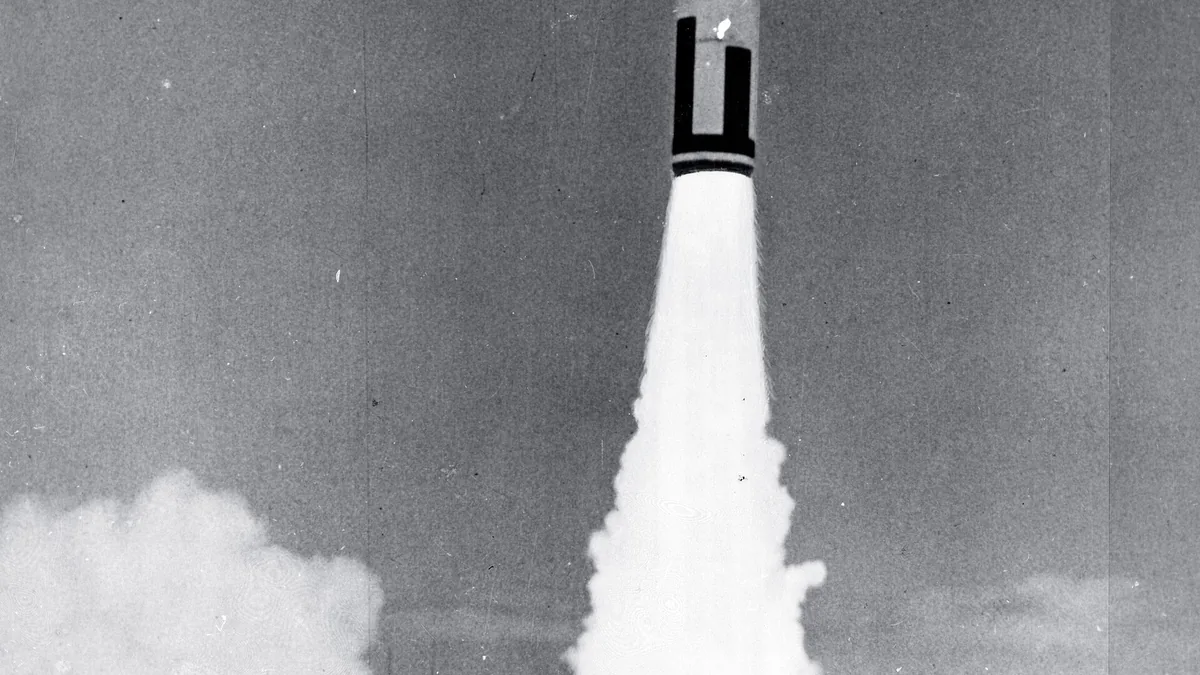
Stephen Matier, founder, president and chief executive of Maritime Launch Services, joined Polaris Aerospace as a strategic adviser effective Nov. 3, 2026, after evaluating its business model and design. Maritime Launch Services is developing Spaceport Nova Scotia near Canso, Nova Scotia. Matier said it is rare to see a team rethink rocket architecture from first principles with a fierce focus on unit costs, simple operations and ease of manufacturing. Khalimonov said he cannot share details on whether Matier or Maritime Launch Services invested in Polaris, but said the company has attracted serious players and is putting the right strategic partnerships in place.
Matthieu Hoang-Cao, Polaris’s co-founder and chief technology officer, served 10 years in the Canadian Armed Forces and has industrial experience in research, development, and production-line scaling. He said transitioning a rocket program from research and development into a high-rate industrial production line requires building for simplicity and resilience from the start. Polaris’s core team consists of Space Concordia graduates, including Khalimonov, who led the Starsailor program as a student and later as an employee. Khalimonov said the team met at university, later worked for rocket companies abroad or other Canadian industries, and is returning for this opportunity.
The company’s release credits Khalimonov with Canada’s record for the largest liquid rocket engine developed and fired. It also credits him with leading the launch of the world’s largest amateur rocket.
The University of Waterloo Rocketry Team launched a liquid bi-propellant rocket named Polaris in August 2026, reaching an altitude of 63,497 feet and breaking the world record for the highest amateur liquid rocket launch. Liquid bi-propellant means a rocket powered by two liquid propellants, typically a fuel and an oxidizer. The rocket featured an upgraded recovery system and a more powerful engine, with successful parachute deployment and safe recovery, unlike the team’s 2025 Aurora launch, which lost flight data.
Another private effort, Canada Rocket Company, announced its R-2 reusable medium-lift launch vehicle, capable of delivering over 12,500 kilograms to sun-synchronous orbit using methalox propulsion with nine E-1 engines. The company, backed by venture capital and the Department of National Defence, has raised over $22.5 million in its first eight months and aims to compete in the growing satellite launch market.
Polaris’s engine test and adviser appointment come as the company works to continue as a launch vehicle developer after the court removed it from the federal challenge.




Join the discussion