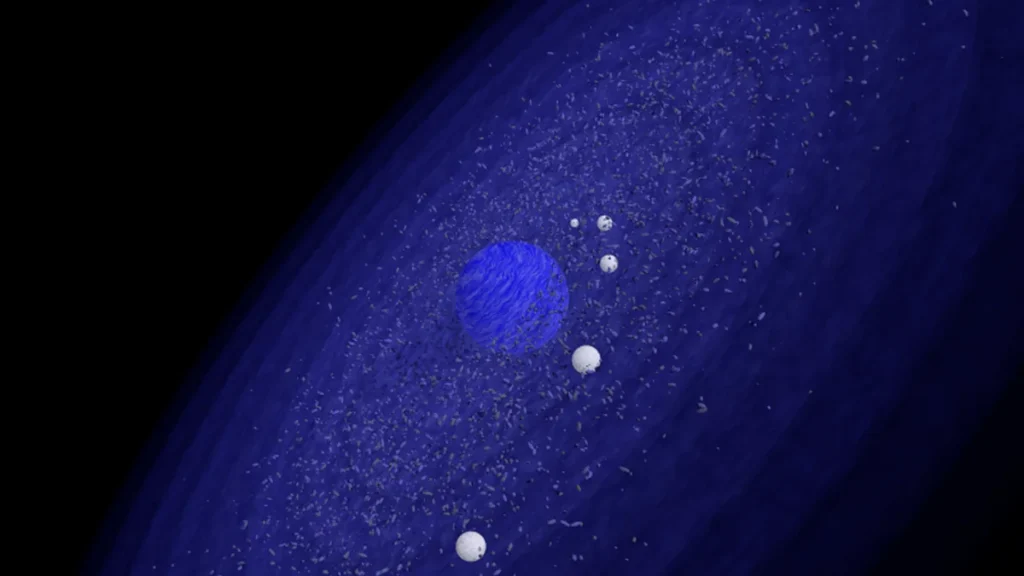
Researchers at the University of Texas at Austin published new models in Communications Physics on Nov. 8, 2026, arguing that shifts in electrical conductivity deep inside the ice giants could account for Uranus’s and Neptune’s unusual magnetic fields.
The models indicate that the magnetic tilt at Uranus and Neptune might move by tens of degrees over decades, whereas other regions could change only slightly across a comparable span of time. The team calls this a prediction rather than a measurement. Voyager collected limited snapshots, so experts want further evidence before judging whether the field of either planet moved by a specific amount since the 1980s flybys.
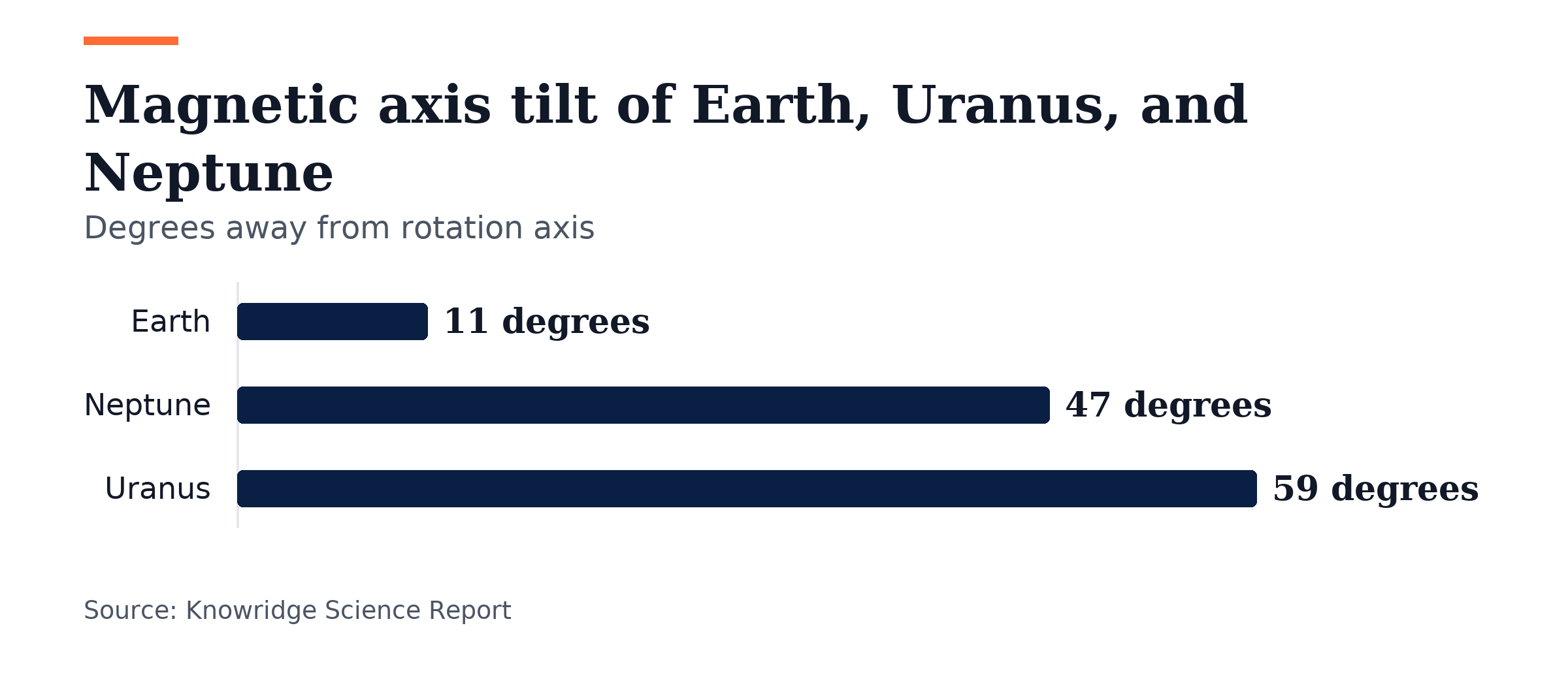
Earth’s main magnetic axis leans about 11 degrees from its rotation axis, while Uranus and Neptune show larger corresponding tilts of about 59 degrees and 47 degrees, plus more complicated magnetic structures. Voyager 2 flew past Uranus in 1986 and Neptune in 1989, and the fields it found were not dipolar like those of Earth, Jupiter and Saturn; they looked more like a tangled maze than an orderly set of lines. Nearly 40 years after those flybys, the Voyager archive is still returning unexpected results.
The ice giants measure roughly four times Earth’s width, and scientists believe they contain mixtures such as water, ammonia, methane, hydrogen, helium and rocky material. Intense pressure and temperature can break molecules apart, altering how easily the material conducts electricity, which matters for the team’s modeling approach. The team built models in which electrical conductivity increases with depth, calculating how fluid motion, heat and magnetism develop together across many possible interior arrangements instead of assuming uniform properties across the whole conducting region.
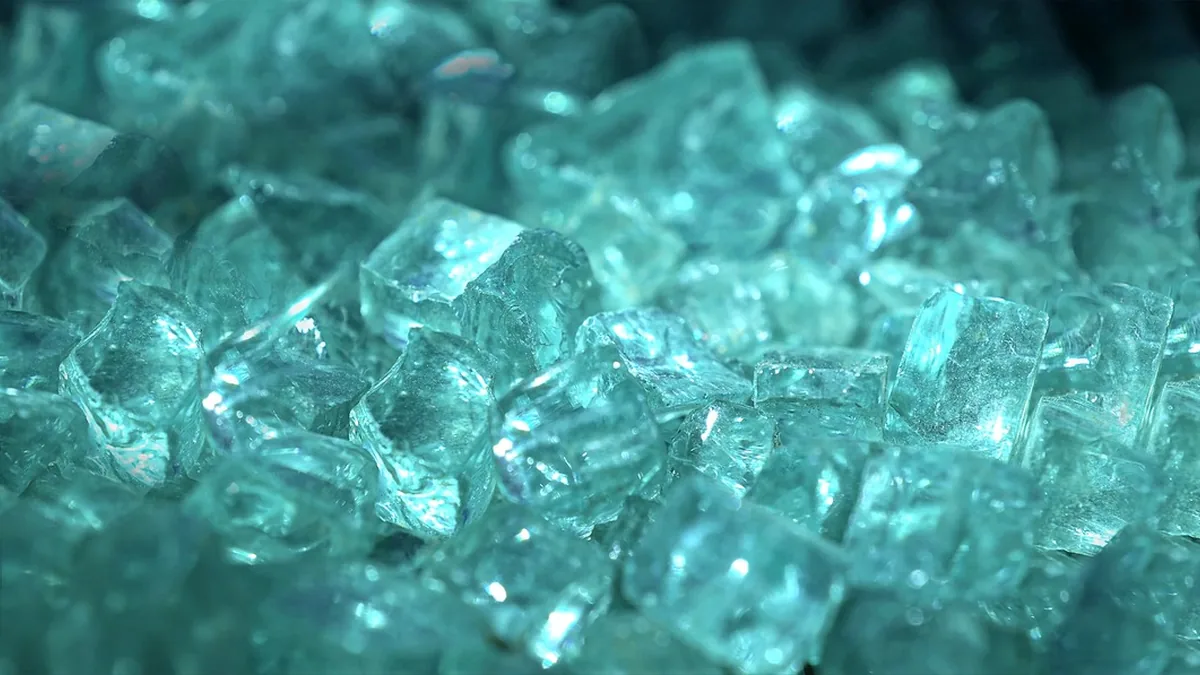
On Sept. 11, 2026, researchers led by Alexis Forestier of CEA, France’s Alternative Energies and Atomic Energy Commission, reported a new H2O ice phase whose oxygen atoms sit in a hexagonal close-packed sublattice; the work appeared in Physical Review Letters in 2026. The discovery came from laboratory experiments that recreated extreme planetary conditions. In the experiments, scientists crushed ice samples between two ultra-hard diamonds in a diamond anvil cell, heated the trapped ice with lasers past 1,800 Kelvin, and applied pressures of 230 gigapascals, exceeding 2 million times Earth’s atmospheric pressure.
X-ray diffraction at the European Synchrotron Radiation Facility revealed that oxygen atoms arranged themselves in a hexagonal lattice known as hexagonal close-packed. At pressures above 200 gigapascals and temperatures above 1,800 Kelvin, the hexagonal close-packed form became the dominant phase of superionic ice, replacing the face-centered cubic phase. The face-centered-cubic-to-hexagonal-close-packed transition within the superionic regime of warm dense ice may alter models of planetary interiors for Uranus and Neptune. It might also change how scientists model those worlds.
Superionic ice contains a solid oxygen grid through which hydrogen nuclei move freely like a liquid, allowing the material to conduct electricity. On planets like Uranus and Neptune, ice enters this exotic state because of immense heat and pressure, and superionic ice has been proposed as helping to generate their unusual magnetic fields.
On Nov. 25, 2024, Burkhard Militzer of the University of California, Berkeley used modeling to show that the mantle’s watery layer generates the magnetic field, while layers containing carbon, nitrogen and hydrogen do not create magnetism. Militzer drew on earlier studies that used Voyager data to build simulations of both planets’ interiors, and this behavior explains why the magnetic fields are more disordered.
Militzer’s simulations found that movement in the water layer may drive the planets’ magnetic fields, while deeper layers form few chemical bonds or bond mostly with one another, which prevents convection in the simulation. Within the mantle, water, methane and ammonia layers separate like oil and water. They remain divided into an oxygen range layer and a carbon nitrogenous layer. “They stay separated into an oxygen range layer and the carbon nitrogenous layer,” Militzer said.
Verifying the results requires direct in situ measurements, and the leading mission concept remains the Uranus Orbiter and Probe. Planets of the Neptune and Uranus type occur more often than Jupiter-like worlds, and mini-Neptunes that weigh between Earth and Neptune are even more abundant.
Auroras offer a way forward because their shapes and locations reflect interactions between charged particles and a planet’s magnetic environment. Combining James Webb Space Telescope images with Voyager measurements and models could help estimate the fields as they exist today.




Join the discussion