Key facts
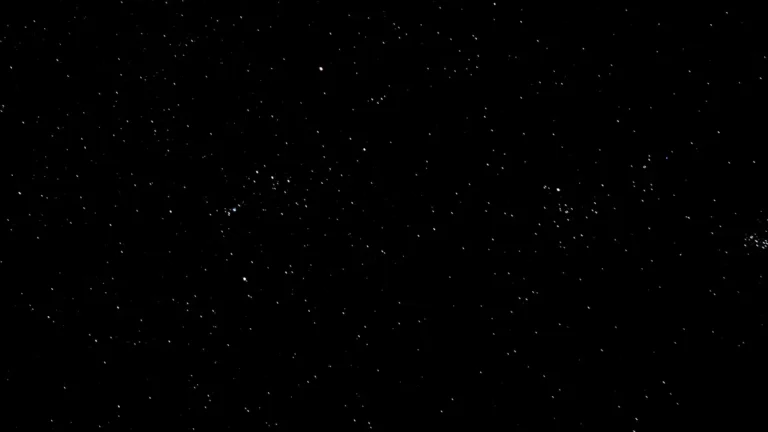
- NASA's Astronomy Picture of the Day on November 25, 2026 features a video of infrared light from the Milky Way's center gathered by the SPHEREx satellite. (S1).
- Cosmic dust grains are hundreds of times smaller in scale than household dust and are built from tiny oxygen-carbon compounds plus other elements flung into space as a star dies.
- SPHEREx data let astronomers study how cosmic dust affects observations and reveal the composition and morphology of the Milky Way. (S2).
- Observing how light behaves at different wavelengths lets scientists infer new stars and star-forming regions that dust would otherwise hide. (S2).
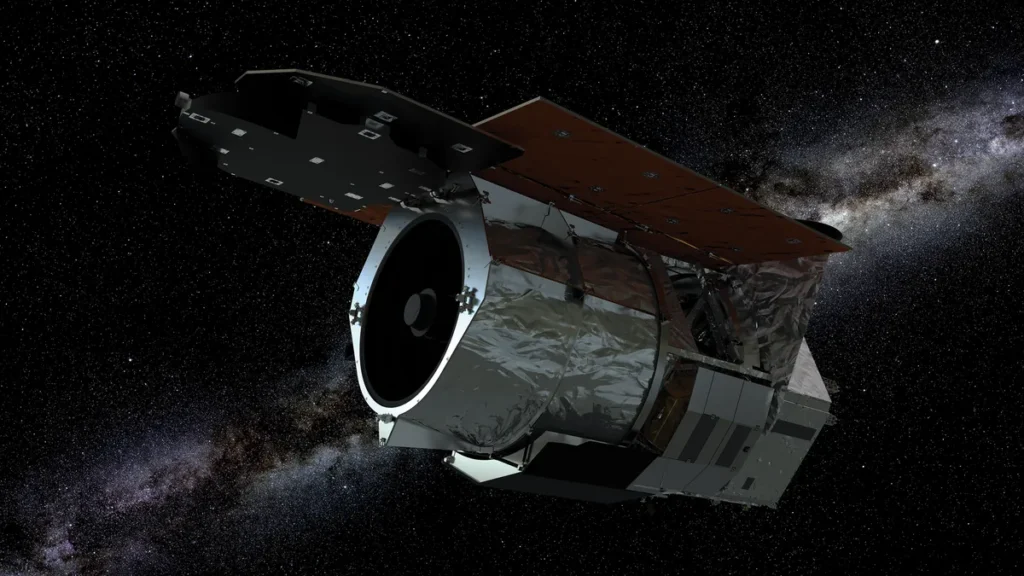
NASA’s Astronomy Picture of the Day posted a SPHEREx satellite video of infrared light from the Milky Way’s center on November 25, 2026.
At near-infrared wavelengths such as 1.2 microns, dust absorbs and scatters light, so the Galactic Center appears almost entirely blocked to SPHEREx. Cosmic dust grains are hundreds of times smaller than household dust and consist of tiny oxygen-carbon compounds and other elements flung into space as a star dies.
Mid-infrared light penetrates dust and reaches SPHEREx, showing galactic regions that remain hidden at shorter wavelengths.
Using SPHEREx data, astronomers can study how cosmic dust affects observations and reveal the Milky Way’s composition and structure. Tracking how light behaves at different wavelengths lets scientists infer new stars and star-forming regions hidden by dust.
SPHEREx launched on a SpaceX Falcon 9 rocket from Vandenberg Space Force Base on March 11, 2025, as a joint project of NASA’s Jet Propulsion Laboratory and the California Institute of Technology. When its 25-month prime mission ends, it is expected to gather spectra across roughly 14 billion sky pixels and scan the full sky about four times. The mission aims to chart hundreds of millions of galaxies, investigate the epoch of reionization, gauge inflation’s mark on the galaxy power spectrum, and catalogue water ice and biogenic molecules across the interstellar medium.
The heliosynchronous survey continuously sweeps the full sky, so data accumulate on every bright source without target-of-opportunity interrupts, and observations build up in publicly available Level 2 products in NASA’s Infrared Science Archive.
Earth‘s atmosphere blocks infrared, light beyond red that human eyes cannot see, at water vapor bands near 2.7 microns and carbon dioxide bands near 4.3 microns, preventing continuous ground observation from 2.5 to 5.0 microns. From space, SPHEREx covers 0.75 to 5.0 microns.
SPHEREx tracked a V572 Velorum dust shell as it cooled from 1,030 K to 480 K over about a year, with its inferred mass growing tenfold from roughly one-billionth to one-hundred-millionth solar masses. Classical novae happen across the Milky Way at an estimated 25 to 75 per year, though only a fraction are seen optically because dust obscures the Galactic plane.
Asymptotic giant branch stars and supernova remnants make up most of the Galactic dust budget, while classical novae added an estimated few solar masses over the Milky Way’s history, a modest amount compared with hundreds of solar masses per billion years from AGB stars. SPHEREx images from June 20, 2025 captured V572 Vel in outburst during standard survey operations, five days before amateur observers spotted the nova optically. ATel #18127 was posted October 29, 2026 by D.P.K. Banerjee of the Physical Research Laboratory in Ahmedabad, India, and co-authors A. Evans, C.E. Woodward, S. Starrfield, and V. Joshi.
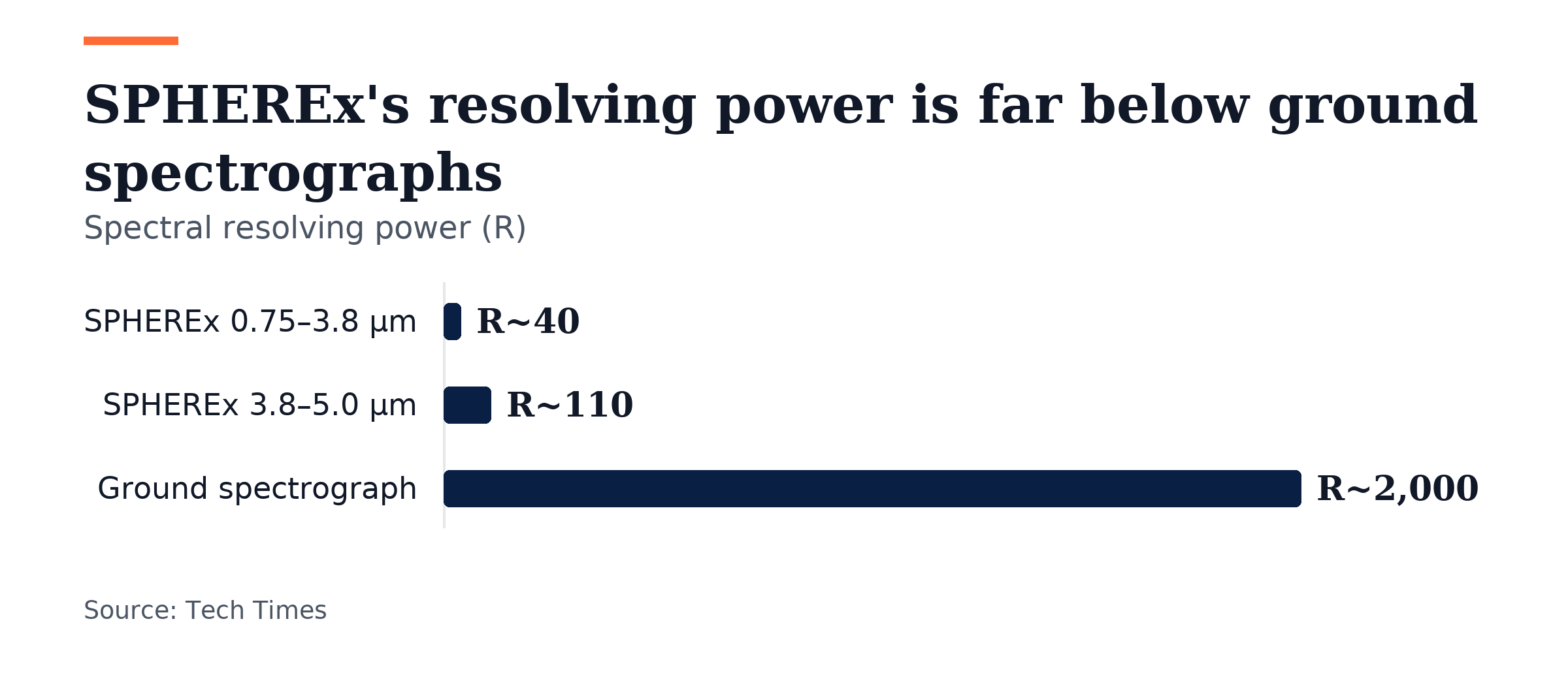
A 2026 preprint from Karambelkar and co-workers used forced photometry on SPHEREx archival images, identifying two new candidate FU Orionis outbursts, reclassifying three classical novae, and recovering one nova that optical surveys had missed. SPHEREx’s spectral resolution runs at roughly R=40 from 0.75 to 3.8 microns and R=110 from 3.8 to 5.0 microns, which is too low to confidently identify individual emission species. Confirming coronal emission in V572 Vel calls for medium-resolution spectroscopy at resolving power of about 2,000 or higher.

Join the discussion