Key facts
- Researchers derived carbon-12 to carbon-13 ratios of 126 for benzonitrile and greater than 55 for indene in TMC-1.
- In the laboratory, researchers produced deuterated indene at the aliphatic position and recorded its rotational spectrum along with spectra for nine singly substituted carbon-13 isotopomers of indene.
- Polycyclic aromatic hydrocarbons have recently been found in cold dark clouds using rotational spectroscopy.
- Infrared observations show that large aromatic molecules tend to carry excess deuterium and sometimes excess carbon-13, a pattern tied to their probable formation in the outflows of evolved stars.
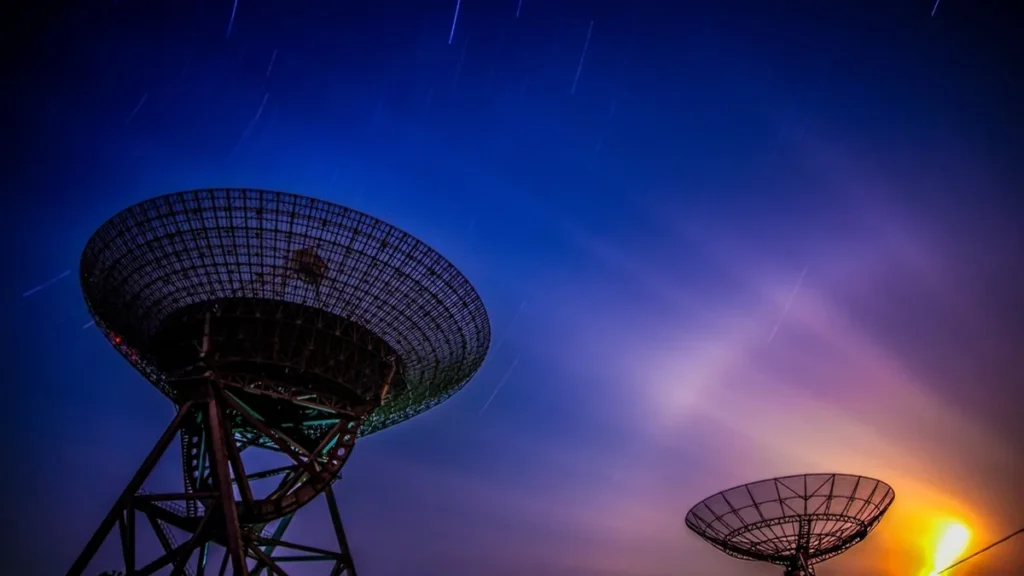
Astrobiology Web reported that on Nov. 16, 2026, researchers working with QUIJOTE data from the Yebes 40-meter telescope reported deuterium-to-hydrogen and carbon-12-to-carbon-13 measurements for benzonitrile and indene in the cold dark cloud TMC-1, concluding that PAH-like molecules — organics built from multiple fused aromatic rings — most likely assembled there from smaller hydrocarbons rather than arriving as fragments from an earlier stage of the cloud.
Astrobiology Web reported that the aromatic deuterium-to-hydrogen ratio derived from benzonitrile came to 0.53 percent. Deuterium is a heavy form of hydrogen, and the ratio measures how much of it occurs alongside ordinary hydrogen. Isotopic ratios help researchers decide whether polycyclic aromatic hydrocarbons — large ring-shaped carbon molecules — grow from small hydrocarbons or arrive as fragments from an earlier phase of the cloud, and the benzonitrile result supplies the aromatic-side value for deuterium in that comparison. Comparing the two values tests the competing formation routes.
For indene, the laboratory measurement of deuterated indene put the aliphatic deuterium-to-hydrogen ratio below 3.3 percent, Astrobiology Web reported. The aliphatic position is the molecule’s non-ring framework. Deuterated indene carries deuterium at that position. That value supplies the aliphatic-side deuterium value for the same interstellar comparison.
The carbon-12 to carbon-13 ratio reached 126 for benzonitrile and stood at greater than 55 for indene, Astrobiology Web reported. Carbon-13 is a heavier isotope of carbon, while carbon-12 is the common form. Together these carbon measurements complete the isotopic picture and are benchmarked against ratios already determined for other TMC-1 species.
The measurements found no excess deuterium or carbon-13 that could be tied to molecules inherited from an earlier cloud stage, Astrobiology Web reported. A top-down scenario holds that large molecules formed around evolved stars and later broke apart in the cloud. Elevated levels of either isotope would signal that big molecules assembled around such stars before fragmenting, so the absence of enrichment weakens the top-down inheritance explanation.
Because the derived values match isotopic ratios found for other molecules in TMC-1 and lack the stellar-ejecta signature, the authors conclude that bottom-up assembly from smaller precursors is the most likely origin, Astrobiology Web reported. A stellar-ejecta signature would point to material released by dying stars. The paper compares its new measurements to TMC-1’s chemical inventory already characterized in earlier work. The result favors gradual construction from small hydrocarbons over inheritance from fragmented large molecules.
The astronomical search applied a line stack method — a technique that combines many spectral lines to sharpen a weak signal — to QUIJOTE observations gathered with the Yebes 40-meter telescope, a radio telescope, Astrobiology Web reported. Laboratory measurements of deuterated and carbon-13-substituted indene went alongside existing benzonitrile spectra as the team applied the technique. The search made a tentative detection of deuterated benzonitrile and a clear detection of carbon-13-substituted benzonitrile toward TMC-1, but found no sign of deuterated or carbon-13-substituted isotopomers of indene.
In the laboratory, researchers created deuterated indene at the aliphatic position and measured its rotational spectrum, together with spectra for nine singly substituted carbon-13 isotopomers of the molecule, Astrobiology Web reported. Rotational spectroscopy identifies molecules from the way they tumble in space. Isotopomers are molecules that differ only in which atom carries a rare isotope. Those reference spectra were needed to identify the species in the telescope data or rule them out.
Rotational spectroscopy has revealed polycyclic aromatic hydrocarbons in cold dark clouds, establishing that these large aromatic molecules exist in such environments, Astrobiology Web reported. A cold dark cloud is a cold, dense region of interstellar gas. Scientists are split on whether these molecules assemble gradually from small hydrocarbons or form when larger molecules break apart after arriving from an earlier diffuse-cloud phase. A diffuse cloud is a more thinly spread interstellar cloud.
Readings in infrared light show that big aromatic molecules generally hold added deuterium and sometimes added carbon-13, a signature tied to how they probably formed in outflows from aging stars, Astrobiology Web reported. Infrared observations measure light beyond the visible range. Stellar ejecta are the streams of gas and dust released by those stars. That enrichment pattern would mark a top-down inheritance route, and the TMC-1 measurements show no such enrichment.
The paper has passed peer review for Astronomy and Astrophysics and appears as arXiv:2611.21834; researchers posted it to the preprint server, Astrobiology Web reported. A preprint server hosts research papers before formal journal publication. Peer review means evaluation by other experts before publication. The authors of arXiv:2611.21834 wrote, “Comments: Accepted for publication in A&A.”
Join the discussion