Key facts
- The watchdog advised NASA to base the next Starliner flight schedule on findings from ongoing investigations.
- The OIG recommended that NASA and Boeing set up a central process giving NASA access to simulation testing results.
- The 2024 Boeing Crew Flight Test carried commander Barry "Butch" Wilmore and pilot Sunita "Suni" Williams to the station on a mission planned to last days.
- Following launch attempts involving liquid helium leaks and thruster problems, the Starliner mission stretched to nine months, and NASA ruled the capsule Calypso unsafe, sending it back without Wilmore and Williams.
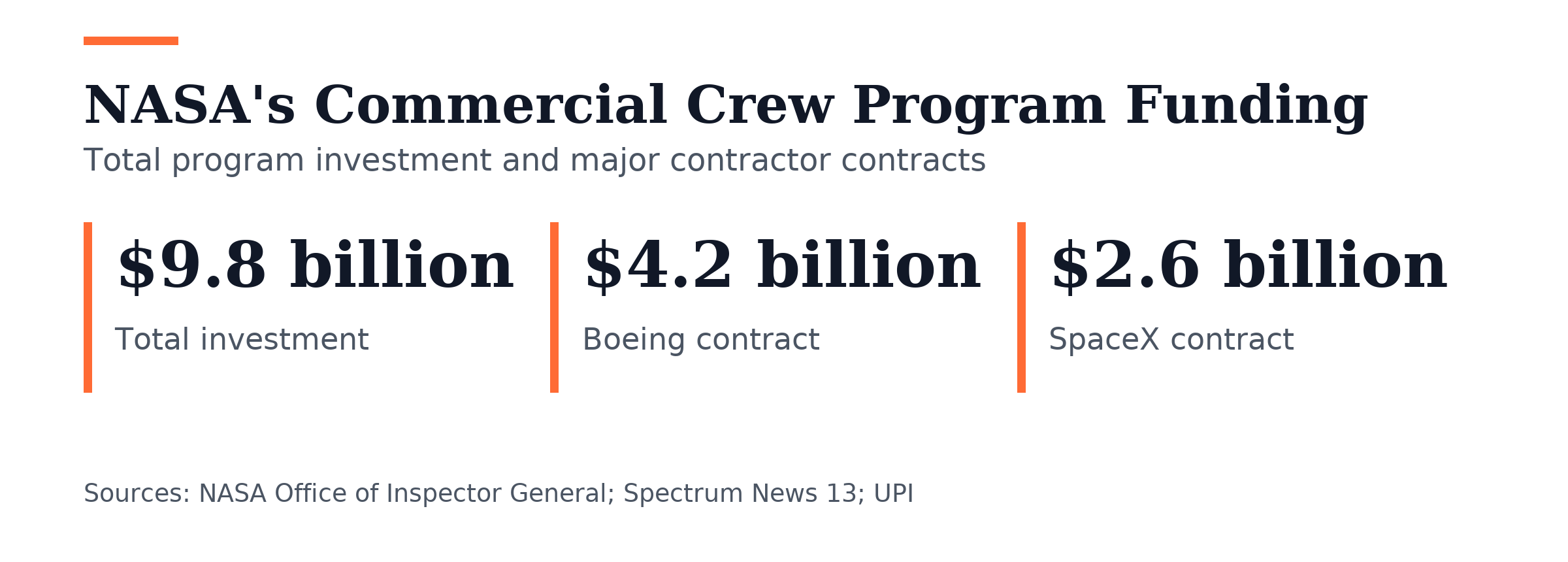
NASA’s Office of Inspector General released its 43-page commercial crew report on June 30, 2026, highlighting issues with Boeing and its Starliner capsule. NASA has invested $9.8 billion in the program since 2014, according to the OIG, which projects that NASA will not give Boeing human-rating certification (the process NASA uses to verify a spacecraft is safe enough to carry astronauts) for Starliner until late 2027, six years behind the original 2020 timeline. The agency will continue to rely solely on SpaceX for crewed transportation through 2030, according to the report.
The OIG released a 43-page report on the commercial crew program on June 30, 2026, highlighting issues with Boeing and its Starliner capsule.
The OIG’s May 4, 2026 audit reports describe broader program strains. NASA’s Artemis campaign reformulation to meet the Administration’s national space policy goals led to the termination or repurposing of the Exploration Upper Stage, Universal Stage Adapter, Mobile Launcher 2, and Gateway Habitation and Logistics Outpost. The agency relies on dated launch infrastructure at Kennedy Space Center and Wallops Flight Facility that often does not meet current needs. As of February 2025, NASA had allocated over $26 billion in government property to contractors supporting six Artemis programs.
NASA awarded 2022 contracts to Axiom Space and Collins Aerospace to compete for next-generation spacesuits for Artemis lunar missions and ISS operations, according to OIG audit reports. Spectrum News reported on an April 2026 OIG report saying the Axiom Space moon suits will not be ready for Artemis IV in 2028.
The OIG says NASA works with SpaceX and Blue Origin on lunar landers for crew descent, surface stays, and ascent to lunar orbit. For fiscal year 2026, the OIG rated NASA’s information security program at Level 3 under the Federal Information Security Modernization Act annual evaluation.
NASA’s commercial crew program has already drawn $9.8 billion in investment since 2014, according to an OIG report on Boeing and its Starliner capsule. The OIG projects that NASA will not give Boeing human-rating certification for Starliner until late 2027, six years behind the original 2020 timeline. Human-rating certification is the process NASA uses to verify a spacecraft is safe enough to carry astronauts. NASA will continue to rely solely on SpaceX for crewed transportation through 2030, according to the OIG report.
Boeing’s Starliner has not flown since a crew flight test in June 2024, when technical issues left astronauts Barry “Butch” Wilmore and Sunita “Suni” Williams stranded on the station for nine months; they returned on a SpaceX capsule. NASA had planned the test flight to last days. After launch attempts involving liquid helium leaks and thruster problems, NASA ruled the capsule Calypso unsafe and sent it home without its crew.
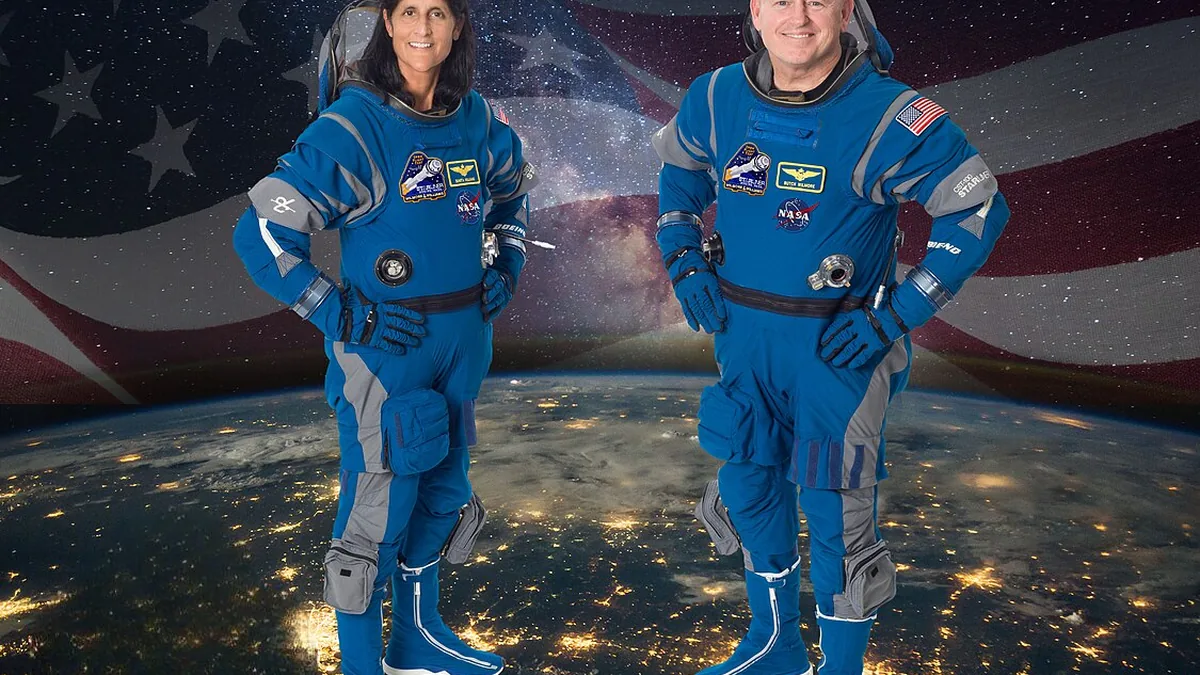
NASA had planned to bring Wilmore and Williams home on a SpaceX Dragon capsule, the vehicle that eventually returned them to Earth. Starliner has also experienced propulsion system failures and parachute anomalies, and NASA has scheduled no further crewed or uncrewed flights.
The agency’s contracts with SpaceX and Boeing amount to $2.6 billion and $4.2 billion respectively, and those contracts have increased in value to over $8 billion. The OIG recommended deferring payments to Boeing for Starliner-3 until human-rating certification is complete. Other recommendations call for using investigation results to build a realistic schedule, resolving Type A mishap issues (the most serious mishap category), and creating a central process for NASA access to simulation testing results. The watchdog also advised NASA to base the next Starliner flight schedule on findings from ongoing investigations.
The OIG found that NASA was overconfident in Boeing’s design and potential success because the provider relied on heritage systems and long-standing space flight experience, leading to unrealistic launch and flight test schedules that NASA accepted. NASA’s underutilization of the contract’s data rights limited the agency’s ability to analyze and resolve flight simulation training failures, compounding schedule pressure. The inspector general said in July 2026 that it remains unclear whether Boeing can send additional astronauts to the station.
The International Space Station is planned to deorbit in 2030, but NASA wants to maintain a continuous low-Earth-orbit presence and is assessing how to transport crews to low-Earth orbit through 2040. The inspector general said Boeing’s and NASA’s certification work faces challenges that slowed progress and raised costs and risks for crew transportation to the station through 2030. The watchdog asked whether Starliner will earn crew certification before 2030, when NASA plans to retire the station, while Boeing holds contracts for three crewed flights before then.
Starliner flew two uncrewed flights before its crew flight test, and no more crewed or uncrewed missions are on the schedule. SpaceX has set its 13th crewed flight for September, and the company has kept crew transportation steady after solving its own technical problems. SpaceX remains the sole U.S. provider flying NASA astronauts to the ISS while Boeing works on certification.
Boeing said it remains focused on Starliner safety, quality, and mission readiness and continues to work closely with NASA to prepare for future Starliner flights in support of NASA’s commercial crew goals. “Boeing remains focused on Starliner safety, quality, and mission readiness.”






Join the discussion