
Key facts
- AstraSense replaces traditional threshold-based alarms with predictive reasoning to detect component degradation, diagnose faults, and estimate remaining operational capability in real time.
- AstraQua’s Agentic Physical AI, powered by the Adaptive Quorum Foundation Model, enables low-power onboard intelligence to reduce reliance on continuous cloud connectivity for autonomous systems.
- AstraQua’s technology is being adapted for autonomous planetary and lunar exploration rovers, expanding beyond aviation to industrial robotics and mixed-team autonomy in space and terrestrial applications.
- AstraQua operates in California and Kentucky, developing Agentic Physical AI to enable autonomous machines to perceive, reason, adapt, and collaborate without continuous connectivity.
On Oct. 21, 2026, NASA awarded AstraQua Inc. a $1,274,990 Phase II Small Business Innovation Research contract to develop AstraSense, an onboard software suite for autonomous machine health intelligence in environments with limited or no ground communication. The contract targets autonomous systems operating beyond continuous communications, where latency or blackouts prevent cloud connectivity. AstraSense provides real-time self-diagnosis and fault prediction for mission-critical systems.
AstraQua’s Phase I contract focused on health management and sensing technologies for sustainable aviation and autonomous platforms, proving real-time diagnostics and predictive-health capabilities. The Phase II award focuses on aircraft integration and safety-critical validation for electric and hybrid-electric aviation.
AstraSense replaces traditional threshold-based alarms with predictive reasoning that detects component degradation before it becomes a failure. The system continuously processes onboard sensor data from electric propulsion, battery arrays, and electromechanical actuators, evaluating early wear signals to estimate remaining operational capability in real time. When it senses declining health, the vehicle can slow down, return to base, or initiate a safe recovery procedure without human intervention.
Loay Elbasyouni, founder and CEO of AstraQua, framed the technology as a way to teach robots to feel pain, enabling them to make safer decisions based on their own health status. He said the goal is to let machines ‘slow down before breaking down,’ ensuring that real-time self-assessment guides every maneuver. In his words, “That’s what we mean by teaching robots to feel pain: using their own health to make better, safer decisions in real time.” Elbasyouni’s background includes leading electrical systems for NASA‘s Ingenuity Mars Helicopter and avionics at Blue Origin, experience he brings to AstraQua’s fault-management strategy.
The heart of AstraSense is AstraQua’s Agentic Physical AI, powered by the Adaptive Quorum Foundation Model, a framework designed for low-power, onboard intelligence. This model enables predictive health and operational self-awareness without relying on cloud connectivity, which is essential for missions where latency or blackouts disrupt ground communication. By combining physical AI with collaborative reasoning, the system allows teams of robots to adapt dynamically when one member’s performance degrades. The technology targets edge environments such as lunar missions and deep space, where robots make every decision locally.
AstraSense integrates with AstraQua’s modular autonomy architecture, enabling mixed teams of robots – drones and ground rovers – to share health status and coordinate tasks. When a machine’s health declines, it can effectively ‘call in sick,’ and the architecture reassigns its duties to a capable peer; for instance, if a ground robot fails during an industrial inspection, drones can continue surveying while another robot takes over equipment checks. This collaborative approach ensures mission continuity even as individual platforms age or fail. The underlying software connects perception, onboard reasoning, and collaboration across different robot types, creating a seamless teamwork fabric.
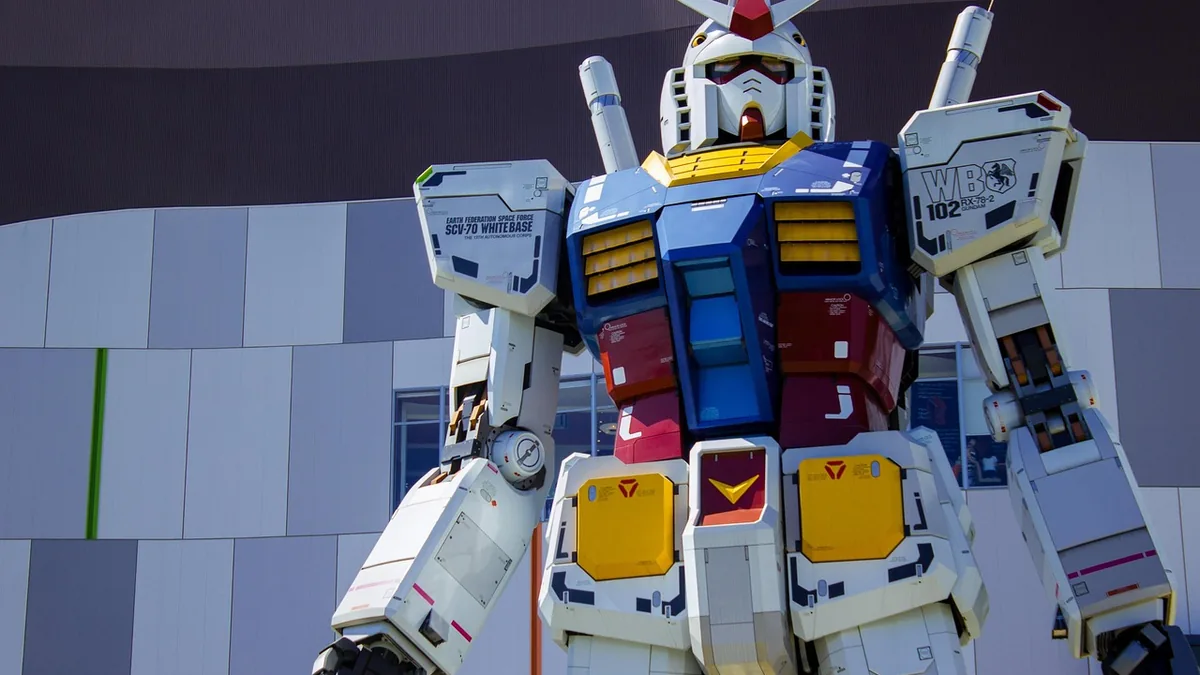
The Phase II contract includes safety-focused verification and validation on hardware testbeds for electric and hybrid-electric aviation applications.
While the immediate focus is on aviation, AstraQua is adapting AstraSense for autonomous planetary and lunar exploration rovers, expanding the technology’s reach into industrial robotics and mixed-team autonomy in space and on Earth. The company envisions a cross-domain solution that works for autonomous systems in air, land, sea, and space, emphasizing adaptability in collaborative missions.
He led electrical and power-electronics systems for NASA’s Ingenuity Mars Helicopter, and served as a rocket-engine avionics engineer at Blue Origin. In 2026, LA Times Studios named him among its Aerospace & Defense Business Visionaries, recognizing his contributions to physical AI and autonomous machine health technology.
AstraQua operates out of California and Kentucky, where its teams develop the Agentic Physical AI that underpins AstraSense.




Join the discussion