Key facts
- NASA Moon Base Manager Carlos García-Galán said the agency is moving from mission-focused buying to obtaining rockets, payloads and landers and matching them while NASA keeps oversight and ownership of each mission.
- García-Galán said rockets and orbital transfer vehicles held ready as transportation services are critical to meet the aggressive timelines the Moon Base program is chasing.
- NASA is calling on Blue Origin's New Glenn, Relativity Space's Terran R and SpaceX's Falcon 9 as launchers; only Terran R has not flown, with a debut expected in 2027.
- The first task order is a $185 million award to launch Advanced Space's CAPSTONE 02, with Arrow Science and Technology as prime contractor, SpaceX flying Falcon 9 and Quantum Space providing the Ranger transfer vehicle.
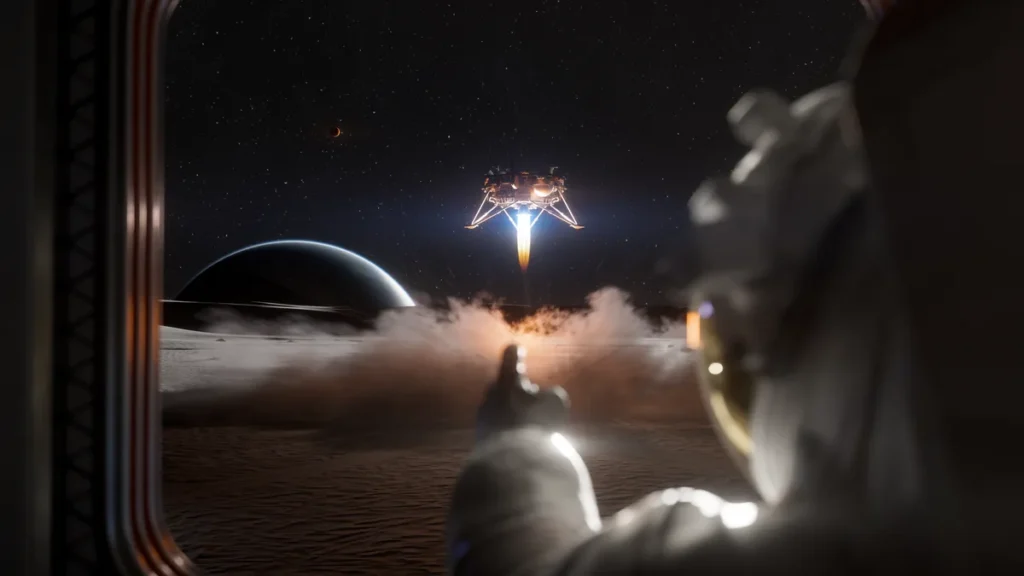
NASA awarded six task orders under its 10-year Venture-Class Acquisition of Dedicated and Rideshare (VADR) contract worth about $1.3 billion for Moon Base transportation to the lunar surface and cis-lunar space on Saturday at MAX POWER in Cape Canaveral.
Spaceflight Now says Moon Base Manager Carlos García-Galán announced the awards at a news conference on Saturday, Nov. 8, while KeepTrack, published Nov. 9, says NASA announced the awards Saturday at MAX POWER without naming the date.
Carlos García-Galán said the agency is moving from mission-focused buying to obtaining rockets, payloads and landers first, then matching them while NASA keeps oversight and ownership of each mission. He said ready rockets and orbital transfer vehicles are critical to meet the aggressive timelines the Moon Base program is chasing during Phase One, which runs from now through 2029 and focuses on technology demonstrations and science experiments the agency calls the “science of survival.”
NASA is calling on Blue Origin’s New Glenn, Relativity Space‘s Terran R and SpaceX’s Falcon 9 as launchers; only Terran R has not flown, with a debut expected in 2027. Blue Origin’s New Glenn rocket exploded in May. For orbital transfer vehicles, NASA is turning to Blue Origin, Firefly Aerospace, Impulse Space and Quantum Space; these spacecraft are in various stages of development and had yet to fly in space as of the announcement.
Mark Wiese, manager of NASA’s Moon Base Transportation office, said NASA is buying transportation capacity to accelerate industry, sending companies a clear demand signal and maturing commercial orbital transportation to deliver Moon Base assets. “We’re buying transportation capacity to accelerate industry in alignment with the requirements NASA has for Moon Base missions,” Wiese said.
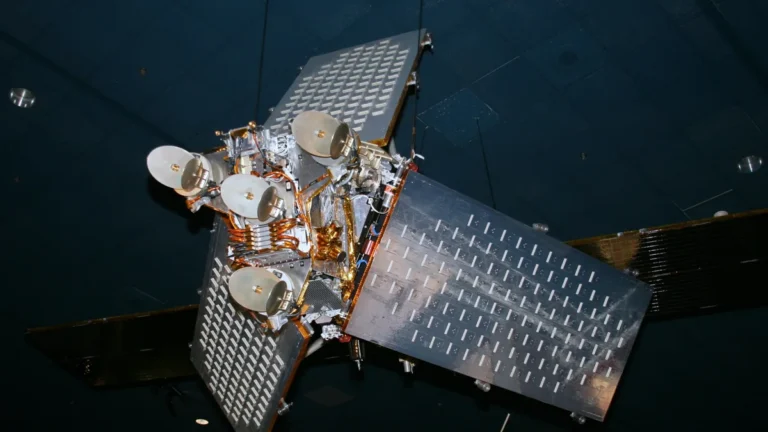
The first task order is a $185 million award to launch Advanced Space’s CAPSTONE 02, with Arrow Science and Technology as prime contractor, SpaceX flying Falcon 9 and Quantum Space providing the Ranger transfer vehicle, slated for the 2027-2028 timeframe. CAPSTONE 02 is two satellites building on CAPSTONE 1 that will fly in cislunar space to test navigation and communication capabilities.
A SpaceX Falcon 9 will carry Intuitive Machines communication satellites with Impulse Space as prime contractor for integration, potentially using Impulse’s Mira orbital transfer vehicle to fly several Altus communication satellites on one ride. García-Galán said putting several Altus communication spacecraft on one ride gets them out faster and liberates future CLPS missions from having to carry one of these satellites.
Three missions will fly on Blue Origin New Glenn rockets; the first uses Firefly’s Elytra orbital transfer vehicle to carry three NASA MoonFall hopper drones close to the Moon’s surface in 2028. The drones will land at a first location, communicate with each other and NASA, then hop to designated locations; using Elytra reduces the propellant the drones need until they reach the surface, maximizing performance left for their mission.
Two New Glenn missions will use Blue Origin’s Blue Ring orbital transfer vehicle, with details to be fleshed out; one would fly communication satellites with a primary NASA payload to demonstrate cislunar communication capability. García-Galán called it a demo to test making the approach standard so all Moon assets can communicate.
The sixth task order pairs Relativity Space’s Terran R rocket with Impulse Space as prime contractor to carry Impulse’s Helios kick stage and a lunar lander. García-Galán said the Terran R mission is a high-risk, high-reward demonstration rather than a task order for specific payloads, with no payload selected yet and options already in work under review. NASA will evaluate the results of the demo before deciding where to take it forward, and on the Terran R mission the lander will deploy NASA payloads in cislunar orbit before attempting a lunar descent.
Mark Wiese said it is critical for NASA to establish an intergalactic freight network to move the large amount of mass needed to the lunar surface, smoothing other logistics and potentially benefiting users beyond NASA. Wiese said NASA has instruments and assets it needs to be stacked up and ready to work the transportation network and must not put all of that mass on its landers.
NASA is partnering with the Commercial Access to Space program, so government partners including a team called Nicky’s team can help run the trains on time and avoid leaving launch capacity unused, Wiese said.
NASA named eight companies for the CLPS 2 lander program, a 10-year agreement worth as much as $10 billion for landers carrying 2 to 6 metric tons. The eight companies are Blue Origin, Firefly Aerospace, Intuitive Machines, ispace-U.S., Lockheed Martin, Northrop Grumman, SpaceX and Voyager Technologies, and NASA will rely on them for Moon Base components.
NASA paired the $10 billion CLPS 2 budget with an expanded CLPS 1.0 budget that increased from $2.6 billion to $4.2 billion. CLPS 2 expands on CLPS 1.0 to create infrastructure and vehicles, including cargo landers, needed to continuously transport supplies and crew from Earth to the lunar surface.
NASA announced $1.3 billion in funding to Blue Origin, Arrow Science and Technology and Impulse Space to build orbital transfer vehicles that act like long-distance freight trucks carrying cargo landers to the Moon. Three missions will complete under the OTV effort: research to reduce human risk and pin down the most effective ways to deploy CLPS landers, MoonFall drones meant to assess the moon and identify the optimal base spot, and infrastructure testing to confirm the design works.
NASA awarded Blue Origin a $94 million development contract plus performance-based $140 million in lunar delivery for Promise, the Polar Rover for Observation, Mapping and In-Situ Exploration, a nuclear-powered moon rover. The Jet Propulsion Laboratory at Caltech will handle Promise’s management, and its nuclear core lets the rover keep working through two-week lunar nights and in permanently shadowed regions the sun never touches.
NASA’s Moon Base Student Challenge offers $1 million in prizes to students with the best ideas for solving problems on the way to a permanent presence on another world. Jared Isaacman described the challenge during a speech packed with students and kids. “We are inviting students from across the country to help solve some of the problems,” Isaacman said.
To support permanent lunar operations, Firefly Aerospace is joining NASA’s $10 billion CLPS 2 program and competing for large cargo lander task orders. Firefly CEO Jason Kim said, “Onboarding to this $10 billion program positions us to compete for and deliver task orders.”
Relativity Space remains private with no defensible current valuation; NASA added Terran R to its NLS II launch-services contract. The U.S. Space Force included a Relativity Space subsidiary in National Security Space Launch Phase 3 Lane 1 in July 2026, letting the company compete for future launches without guaranteeing a flight.
NASA’s first aerospace technology expo, Max Power, ran Wednesday through Sunday at Kennedy Space Center and included an update on the Ignition initiative, which promises to put a base on the Moon by 2032. Artemis’s third mission is slated for 2027, with people returning to the moon in 2028, and NASA regards Artemis missions as preparation for the Moon Base.
NASA says buying standby transportation capacity gives companies a clear demand signal, matures commercial orbital transportation to deliver Moon Base assets, and paves the path for more capable transportation options needed to build the Moon Base. Administrator Jared Isaacman said the existing CLPS all-or-nothing model cannot handle the flight rate required by the Moon Base plan. VADR task orders buy launches before payloads are assigned, and Isaacman said the current CLPS structure does not scale.
NASA awarded energy storage and transmission contracts to Honeybee Robotics, a Blue Origin company, and Yank Technologies for hardware forming the Mini-Communications and Solar Tower (miniCast), assembled at Marshall Space Flight Center in Huntsville, Alabama.

Join the discussion