
Key facts
- China will use two separate launches that dock in lunar orbit to land taikonauts on the Moon before 2030.
- Two of three taikonauts transfer from Mengzhou into Lanyue for descent to and return from the lunar surface, then transfer back into Mengzhou for the return to Earth; the third stays in orbit aboard Mengzhou.
- An uncrewed Mengzhou test in low-Earth orbit is targeted for early 2027 on a Long March 10A, a single-core variant with no boosters.
- An uncrewed 2028 test of the larger Long March 10 and Lanyue includes descent to the Moon and ascent back to lunar orbit.
Wang Xiang, deputy chief designer of China’s crewed space program and chief designer of its lunar exploration program, presented the country’s crewed Moon landing architecture at the 7th Manned Space Symposium in Beijing on Oct. 31. He said China will use two separate launches that dock in lunar orbit to land taikonauts on the Moon before 2030. The China Manned Space Agency hosted the two-day event at Beihang University, drawing more than 800 experts and scholars.
China has said since 2023 that it will put taikonauts on the Moon before 2030, but the crewed lunar program had been largely opaque before this public timeline release. The presentation gave the first public details of how Beijing expects to execute the landing after years of developing the Long March-10, Mengzhou, and Lanyue. The 2026 symposium presentation shares execution details for a goal Beijing has publicly held for three years.
Under the disclosed architecture, two Long March 10 rockets separately send the Lanyue lunar lander and the Mengzhou crewed spaceship into Earth-moon transfer orbit. The spacecraft then dock in lunar orbit, and the crewed dual launch proceeds to the Moon, though officials have set no firm date for the landing. This split launch profile is the core of China’s architecture.
Two of three taikonauts will transfer from Mengzhou into Lanyue for descent to the lunar surface and the return trip to lunar orbit, then transfer back into Mengzhou for the journey home. The third crew member remains aboard Mengzhou in orbit. This crew split mirrors Apollo’s lunar-orbit-rendezvous distribution but takes place across two separate launch vehicles. Wang said the approach matches China’s existing technical capabilities and infrastructure, and that separate development standardizes production for a long-term vehicle family.
China does not have a rocket as powerful as the Saturn V, so controllers will verify that Lanyue reached lunar orbit before the crew commits to the trip. Wang said a nationwide system for mobilizing resources is the fundamental advantage for addressing the plan’s considerable challenges, and he framed the split launch design as pragmatic given current Chinese launch capacity rather than requiring a new heavy-lift rocket.
The plan departs from Apollo in one notable way. It omits a mission like Apollo 8 or Artemis II, in which a crew flies to the Moon and returns without landing. Apollo 7, 8, 9, and 10 served as crewed test flights preceding the lunar landings, while China’s disclosed sequence does not include a comparable crewed lunar-orbit precursor.
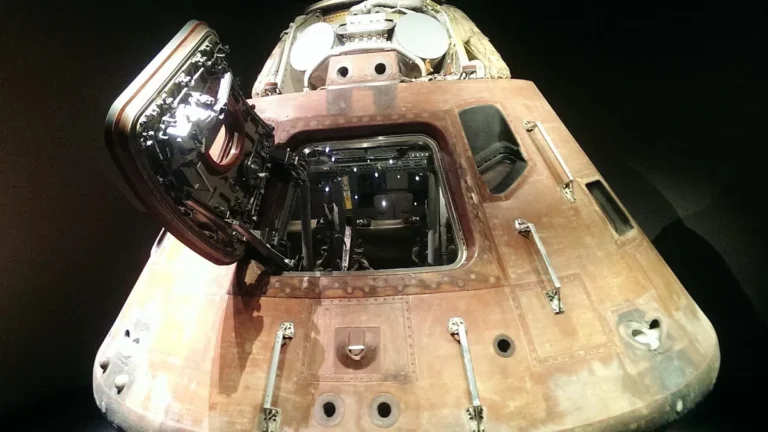
Only the United States has landed people on the Moon, though countries including China have put robotic landers there. Neil Armstrong and Buzz Aldrin landed in the Sea of Tranquility on July 20, 1969, and five more U.S. crews followed over the next three years, ending with Apollo 17 in December 1972. This history provides context for the new space race between the United States and China.
The test campaign begins with an uncrewed Mengzhou flight in low-Earth orbit targeted for early 2027 on a Long March 10A, a single-core variant with no boosters. Mengzhou has already arrived at Wenchang ahead of that test, and this flight is the first of three uncrewed test flights preceding the crewed landing. The China Manned Space Agency asked Chinese institutions on Oct. 22 to propose payloads for the uncrewed Lanyue flight, setting a March 1, 2027 deadline.
The Long March 10 family includes two variants for the campaign. The Long March 10A is a single-core rocket with no boosters, designated for the 2027 Mengzhou test, while the larger Long March 10 pairs a core stage with two boosters for the 2028 lander test and the 2029 dress rehearsal.
A slide from Wang’s presentation listed the three uncrewed tests before the 2030 crewed landing: the 2027 Mengzhou test, a 2028 Lanyue landing test, and a 2029 two-launch dress rehearsal. In 2028, the larger Long March 10 will send Lanyue to the Moon for descent and ascent back to lunar orbit, validating the lander before any crew flies.
In 2029, two Long March 10 launches will carry uncrewed Mengzhou and Lanyue vehicles, which will dock in lunar orbit to rehearse the full sequence without crew. This dress rehearsal repeats the complete two-launch sequence ahead of the eventual landing mission. Engineers have already completed Mengzhou zero-height abort and maximum dynamic pressure escape tests, Lanyue landing and takeoff tests, and a Long March-10 low-altitude demonstration and validation test. Wang said development is progressing smoothly under a single development framework with integrated design and interface verification.
On Feb. 11, 2026, Mengzhou passed a maximum dynamic pressure abort test and splashed down safely at sea in what was described as China’s first at-sea recovery of a crewed spacecraft. The same day, a Long March-10 low-altitude demonstration at the Wenchang Space Launch Site in Hainan Province also tested Mengzhou’s escape system under maximum aerodynamic pressure.
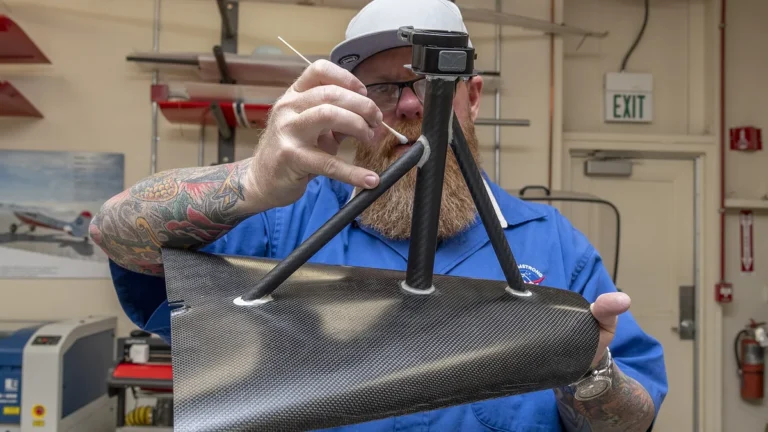
In August 2025, the agency tested a high-fidelity mock-up of the 26-ton Lanyue lander near Beijing using tethers to simulate lunar gravity, validating lander handling before flight tests begin. Development is also underway on a moonwalk spacesuit and a crewed lunar rover, along with the Mengzhou spacecraft and Long March 10 rocket.
Mengzhou will continue carrying astronauts to the Tiangong space station in low-Earth orbit, giving the vehicle human flight experience closer to Earth despite the lack of a dedicated lunar-orbit shakedown flight. Key decisions remain open. No firm date exists for the crewed landing before 2030, and the disclosed architecture leaves out any crewed lunar-orbit or flyby mission that would return without landing.
The United States is pursuing its own lunar deadline with urgency. NASA Administrator Jared Isaacman has said he intends to return American astronauts to the Moon before Chinese taikonauts arrive, and at an Oct. 23, 2026 news conference he blamed institutional inertia and misplaced priorities for holding back the U.S. space program. He framed the American lunar timeline as delayed by decades of decisions, some imposed and some self-made, and added, “China will soon have reusable rockets.”
President Trump initiated the Artemis program during his first term with a 2024 landing goal that has slipped repeatedly, a history that helps explain why NASA’s current schedule is under pressure from China’s advancing program. NASA awarded lander contracts to SpaceX in 2021 and to Blue Origin in 2023, and Isaacman wants both companies to put astronauts on the Moon in 2028 as part of the effort to beat China.
The American approaches also use two-launch logic, though with different vehicles and contractors. Blue Moon MK2 would launch on New Glenn to lunar orbit by itself while Orion rides the Space Launch System separately to dock with the lander. Under the SpaceX concept, Starship docks with Orion in Earth orbit and pushes Orion to lunar orbit, a profile in which the lander participates in trans-lunar injection rather than flying independently. In both concepts, two astronauts enter the lander for the surface trip and return to Earth in Orion.
NASA has set a target of landing humans on the Moon by 2028, about a year ahead of China’s before-2030 goal. The United States has been working on SLS for 15 years and Orion even longer, giving it a more established rocket and crew vehicle. Still, a U.S. landing could slip to 2030 or later because the schedule depends on lunar landers from SpaceX and Blue Origin. This long development history contrasts with China’s more recent but publicly detailed architecture reveal.
Isaacman has cancelled the Lunar Gateway space station and planned upgrades to the Space Launch System rocket to keep the 2028 effort viable. These cancellations are part of a broader effort to keep that landing viable while competing with China. Under the revised Artemis sequence, Artemis III is now a crewed Earth-orbit test in 2027, with the first landing moving to Artemis IV targeted for early 2028.
Wang framed China’s broader lunar strategy as building knowledge and capability before resource use, calling for a prolonged survey phase to understand the Moon. He said crewed and uncrewed lunar efforts share technologies, infrastructure, personnel, and achievements from the Chang’e program, with robotic lunar exploration achievements feeding the crewed landing effort as a foundation.
The symposium marked a shift from opacity to disclosure for China’s campaign. Until now, the crewed lunar program had been opaque, and the slides shared on social media provide the most publicly detailed account yet of the effort.



Join the discussion