Key facts
- Five Artemis III astronauts met President Donald Trump at the White House on October 28, 2026, accompanied by NASA Administrator Jared Isaacman.
- Isaacman told reporters the Moon rock given to Trump was collected by Apollo 14 commander Alan Shepard, who also played golf on the Moon.
- The White House official X account posted a photograph of Isaacman and the Artemis III crew posing with President Trump.
- Artemis III will fly three powerful rockets-SpaceX's Starship, NASA's Space Launch System (SLS), and Blue Origin's New Glenn-each sending one spacecraft to dock in low Earth orbit.
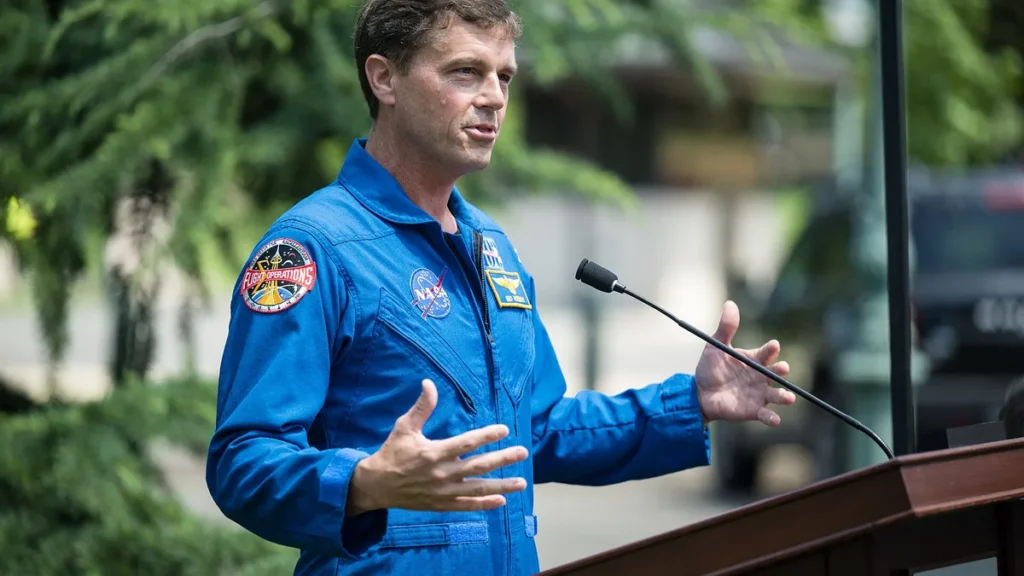
NASA Administrator Jared Isaacman accompanied five Artemis III astronauts to a White House meeting with President Donald Trump on October 28, 2026. Sources: Starlust
The Oval Office meeting included a Moon rock from Apollo-era astronauts, and the White House official X account posted a photograph of Isaacman and the crew posing with Trump. Isaacman shared the image on his own X account and wrote “It was a great day at the White House with President Trump and the talented crew of Artemis III”. He credited Trump with leading a new era of American space leadership. Sources: Starlust
The Artemis III crew consists of commander Randy Bresnik, mission specialists Andre Douglas and Frank Rubio, European Space Agency mission pilot Luca Parmitano, and backup Bob Hines. Starlust lists the crew composition in its report on the October 28 White House meeting and the summer 2027 launch. Sources: Starlust
Isaacman told reporters the rock came from Apollo 14 commander Alan Shepard, known for playing golf on the Moon, and called it the largest moon rock NASA brought back from the Apollo era. Starlust says the largest Apollo-era sample is Big Muley, a 26 lb (11.7 kg) rock that Charlie Duke recovered on Apollo 16, not the rock given to Trump. Sources: Starlust
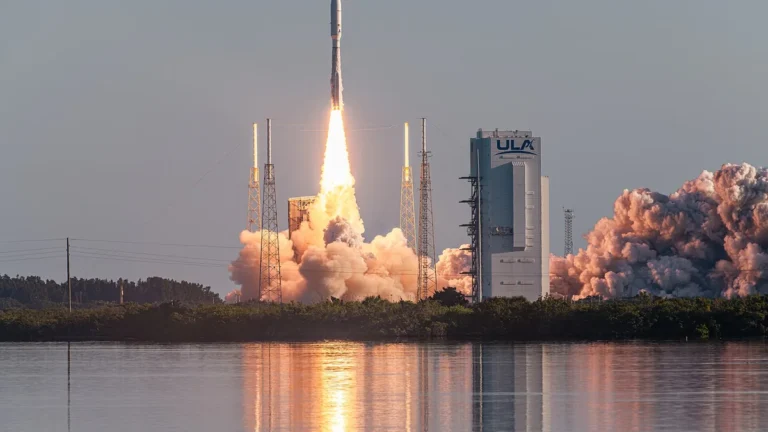
Last week, NASA finished stacking the SLS booster for Artemis III and said the core stage was stacked the day before. Since the Artemis III crew is not going to the Moon, the core stage will receive a spacer in place of the Interim Cryogenic Propulsion Stage, and NASA expects the rocket to roll out to the launch pad in coming months for prelaunch tests. Artemis III will use three powerful rockets – SpaceX’s Starship, NASA’s Space Launch System, and Blue Origin’s New Glenn – sending one spacecraft each to dock in low Earth orbit. The mission is meant to prove technologies ahead of an Artemis IV crewed Moon landing that would dock Orion with a private lander in lunar orbit, and both companies are building human-rated landers. Sources: Starlust
Artemis III will not include a Moon landing for astronauts, NASA says. Earlier in 2026, the agency remade the mission as a crewed Earth-orbit flight to rehearse docking Orion with lunar landers from SpaceX and Blue Origin, cutting risk before the first Artemis landing. In February 2026, NASA announced an Artemis architecture overhaul that slots Artemis III between the Artemis II lunar flyby and the first crewed landing, and the agency announced the Artemis III astronauts after that redesign. Artemis IV and Artemis V are the first two Artemis landing missions and are targeted for launch in 2028. Sources: Mashable

In a Sunday email to employees, Jared Isaacman said Artemis III trails its schedule by roughly three months. He called summer 2027 the best-case scenario for the Artemis III launch date. He said continued lagging could leave NASA with only one late-2028 chance to put astronauts on the Moon. NASA Watch, Keith Cowing’s blog, published the email online Monday, and NASA confirmed its authenticity to Mashable. Sources: Mashable
Isaacman said perpetuating the status quo is not an achievable strategy in the race with China and that too much is on the line. He said China was positioned to field landers carrying rovers and hopper drones and could block access to desirable lunar sites if NASA had remained with Gateway. NASA has set aside Gateway in favor of building a moon base on the lunar surface amid U.S.-China competition. The planned moon base is expected at the lunar south pole, an area about the size of Virginia with deep, shadowed craters that may hold ancient ice and frozen material, and Isaacman said harnessing those resources for water and fuel could allow astronauts to skip constant Earth resupply and become more self-sufficient. Sources: Mashable
Isaacman credited Trump and the Working Families Tax Cuts Act, or WFTCA, with funding and support for Artemis III, saying WFTCA resources let NASA approach the Moon return the right way. He also said NASA will establish humankind’s first outpost on another world – the Moon Base – with a first robotic mission just weeks away. The White House X post said the Artemis Accords have been signed by 78 nations and mentioned the United States Space Force and the coming United States Space Academy as Trump policies. Mashable reported on September 23, 2026, that NASA is trying to accelerate the Artemis campaign after Artemis II’s successful flight around the Moon and described the 90-day delay as a meaningful setback. Mashable also reported that the schedule slippage has exposed program friction, with NASA working directly with suppliers and subcontractors on delayed valves and rocket steering parts, and that Isaacman said NASA is building some hardware itself to speed production. Sources: Starlust, Mashable
Starlust describes Artemis III as on track for launch next year and as NASA’s most complex mission to date. NASA has set the Artemis III launch for summer 2027, though Isaacman called that date the best-case scenario after a roughly three-month delay, and Mashable reports that date would preserve two lunar landing opportunities the following year. Sources: Starlust, Mashable



Join the discussion