Key facts
- A research team led by Penn State physicists found that maximizing entropy can predict the final mass and spin of the black hole remnant formed when two black holes merge.
- The study indicates that once energy and angular momentum taken away by gravitational waves are considered, the remaining black hole settles into maximum entropy.
- The entropy peak for possible rotating remnants matched the mass and spin of the real leftover black hole from numerical relativity simulations within a few percent.
- Predicting the properties of the newly formed black hole correctly usually demands supercomputers to work out the extremely difficult equations from Einstein's general relativity theory.
A research team led by Penn State physicists found that maximizing entropy can predict the final mass and spin of the black hole remnant formed when two black holes merge, with the result reported Nov. 29, 2026 and earlier on July 8, 2026.
Once the energy and angular momentum carried away by gravitational waves are accounted for, the remaining black hole settles into maximum entropy, the team found. In that stable state the remnant appears to forget nearly everything about the collision that formed it, keeping only mass and spin as its defining properties. Spin, the amount of turning movement an object has, is what angular momentum measures. The discovery may reveal deeper insights into gravity and Einstein’s equations, and it offers a possible shortcut compared with the supercomputers normally used to solve the complicated general relativity equations for mergers.
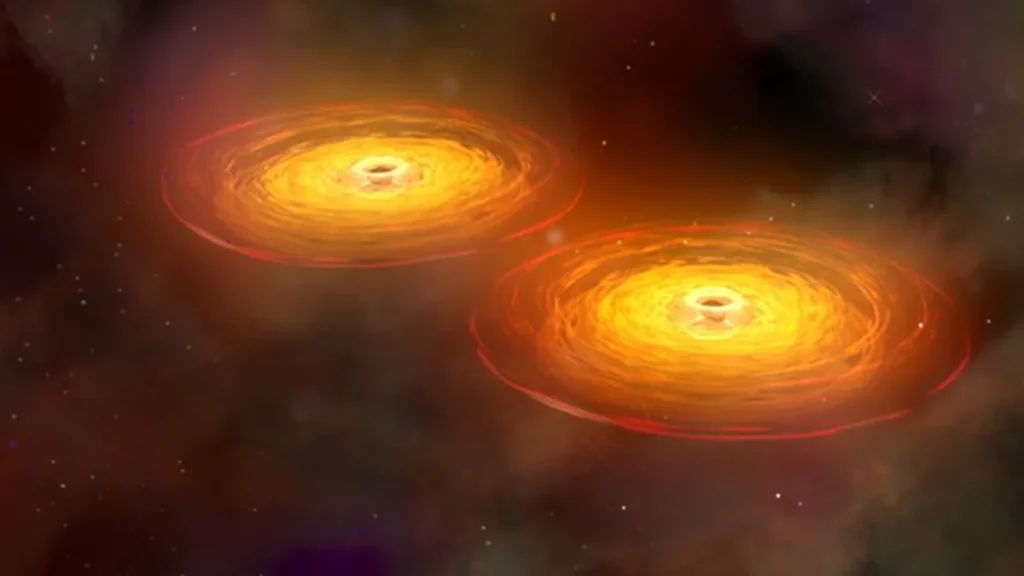
Working out the properties of a newly formed black hole normally demands supercomputers to solve the extremely difficult equations of Einstein’s general relativity. Two orbiting black holes gradually spiral inward and collide to form a single, larger black hole, in the setup the study examines.
The research appeared in Physical Review Letters in 2026 and was selected as an editor’s suggestion. The U.S. National Science Foundation funded the research, which was led by Penn State physicists and also involved scholars from the University of Mississippi and the University of California, Berkeley.
The researchers called the proposal the maximum entropy conjecture for mergers involving black holes, saying it closely follows the thermodynamic rules that govern familiar systems. Eugenio Bianchi, a physics professor at Penn State who helped write the paper, explained that when two hot gases meet, researchers can work out the mixed gas’s end condition using entropy maximization instead of tracking each molecule. He said the same logic could apply to black hole mergers, allowing scientists to predict the outcome without solving every detail of the extraordinarily complex collision. The comparison is like two hot gases brought into contact, where maximizing entropy while accounting for physical laws predicts the final state without tracking every molecular interaction.
Monica Rincon-Ramirez, a postdoctoral scholar in physics in the Penn State Eberly College of Science and the paper’s first author, said the team wondered whether thermodynamic arguments could predict the final state of the merged black hole. To test the idea, the researchers studied a series of hypothetical rotating black holes that could serve as possible merger remnants. They checked whether the evolving mass and spin of the colliding black holes fit possible end states for the remnant, looking for the state with the highest entropy.
“The question we asked is: Can we predict what that final state looks like using arguments from thermodynamics?” Rincon-Ramirez said. She described the remnant as ringing like a struck bell before settling into a stable state defined only by mass and spin, and she said the central finding came from mapping evolving mass and angular momentum onto hypothetical rotating remnants.
The entropy peak for possible rotating remnants matched the mass and spin of the real leftover black hole from numerical relativity simulations within a few percent. Numerical relativity refers to computer simulations that solve Einstein’s equations for the mergers.
B.S. Sathyaprakash, Elsbach Professor of Physics and professor of astronomy and astrophysics at Penn State Eberly College of Science and leader of the research team, said thermodynamic concepts best explain what the remnant remembers about the collision. He said the work goes past the accepted rules of black hole mechanics and the field of thermodynamics. The team asks whether entropy maximization could be a fundamental organizing principle for black hole interactions, and Sathyaprakash calls this a potentially transformative question arising from the results.
Along with Rincon-Ramirez, Prasad, Bianchi and Sathyaprakash, the group included Nathan K. Johnson-McDaniel of the University of Mississippi, who earned his Penn State physics doctorate in 2011, and Ish Gupta of the University of California, Berkeley, who received his Penn State physics doctorate in 2025. The journal reference lists the authors as Monica Rincon-Ramirez, Nathan K. Johnson-McDaniel, Eugenio Bianchi, Ish Gupta, Vaishak Prasad and B. S. Sathyaprakash.
Vaishak Prasad, who does postdoctoral research in astronomy and astrophysics at Penn State and co-wrote the paper, compared high entropy to a messy room with countless arrangements and low entropy to a tidy room with only a few, saying nature drifts toward high-entropy states because more options exist and that black hole mergers appear to follow this pattern. Thermodynamics explains how energy, heat, entropy and related quantities determine the collective behavior of systems made of many interacting particles, covering atmospheric gases, engine operation and cooking food.
“Entropy is essentially a measure of disorder, or more precisely, of how many ways something can be arranged,” Prasad said. Phys.org notes the simpler prediction method may also lead to a deeper understanding of the physics inside the complex equations of general relativity, framing the work as offering both computational simplicity and new insight into the underlying theory. A black hole merger significantly distorts the surrounding universe, the outlet emphasizes, noting the scale of the event explains why the emitted gravitational waves carry usable information.
Before Stephen Hawking showed that black holes can emit radiation and lose energy, scientists generally considered black holes beyond the reach of thermodynamics. Since the 1970s, leading physicists have identified a parallel between black hole properties and gas properties. The researchers sought to extend that analogy between black holes and gases to binary black hole systems. A separate Penn State study repaired a flaw in Hawking’s version of black hole mechanics, making it work for black holes that come together, form and disappear over time.
Thermodynamics applies to systems made of many particles, like gases, and researchers usually aim to predict coarse-grained properties rather than track every molecule. General relativity’s deterministic equations characterize black holes, yet they seem unrelated to gases. Nathan K. Johnson-McDaniel uses this contrast to explain why applying thermodynamic ideas to black holes seemed unusual at first, saying the apparent disconnect was the starting point for extending the black hole-gas analogy to binary systems. He says the historical parallel identified since the 1970s motivated the team to extend the analogy to binary black hole mergers.
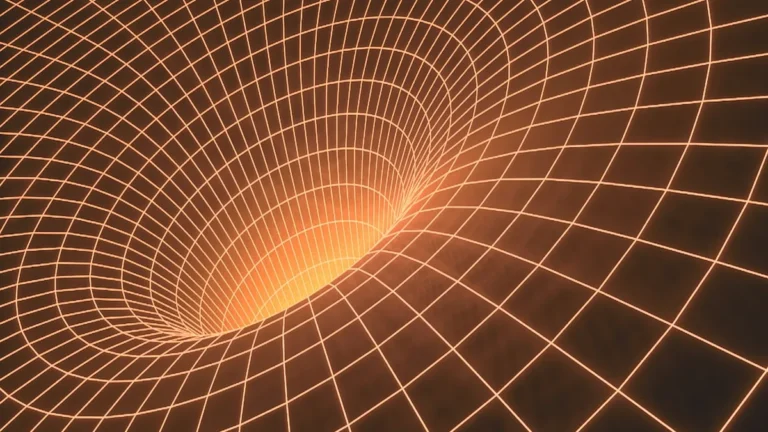
The immense energy released during a black hole merger distorts spacetime and generates ripples known as gravitational waves. Earth-based detectors sensitive enough can pick up gravitational waves from a merger happening billions of light-years away. Researchers study those waves to learn what the freshly created black hole, called a remnant, will be like.
The theory of general relativity describes gravity as curved spacetime and matters greatly for grasping a wide range of cosmic events. Entropy gives a more exact count of the tiny configurations that fit a system’s total condition.
According to the results, maximizing entropy could be central to controlling black hole encounters across the board. Beyond predicting individual remnants, the team sees thermodynamics as potentially shaping black hole interactions more broadly.

Join the discussion