
Key facts
- Spaceflight Now will provide live coverage starting about 30 minutes before liftoff.
- Falcon 9 booster B1082 will make its 27th mission after Transporter-18 and NROL-145, then USSF-62 and OneWeb Launch 20, plus 22 Starlink satellite batches.
- A successful landing would mark the 237th landing on that droneship and the 682nd Falcon booster landing overall.
- The earlier R missions are USSF-366 (R-1, Aug. 16), USSF-153 (R-2, Sept. 10), USSF-385 (R-3, Sept. 26), USSF-432 (R-4, Nov. 6), and USSF-627 (R-5, Nov. 12).
SpaceX will fly the USSF-380 mission aboard a Falcon 9 from Vandenberg Space Force Base in California on Nov. 28, 2026. The four-hour launch window opens at 8:39 p.m. PST from Space Launch Complex 4 East.
The rocket will follow a southeasterly path once it leaves the pad. Spaceflight Now plans live coverage starting about 30 minutes before liftoff.
Public filings show USSF-380 is the seventh Space Force flight to carry an R designation. These missions carry satellites for the Space Data Network backbone, which the Space Force calls a government-owned communication system meant to deliver secure, rapid data movement worldwide for the Joint Force.
SpaceX will deliver these satellites to low Earth orbit under a $2.29 billion contract, with full global capability targeted for the close of 2027. The U.S. Space Force described the effort as a “constellation, advancing a government-owned and controlled communication system that will provide secure, high-speed data transport globally for the Joint Force.”
Booster B1082 will fly its 27th Falcon 9 mission after Transporter-18, NROL-145, USSF-62, OneWeb Launch 20, and 22 Starlink batches. B1082 will try to land on Of Course I Still Love You, the Pacific droneship, about eight and a half minutes after liftoff. Touchdown would mark the 237th landing for that droneship and the 682nd Falcon booster landing overall.
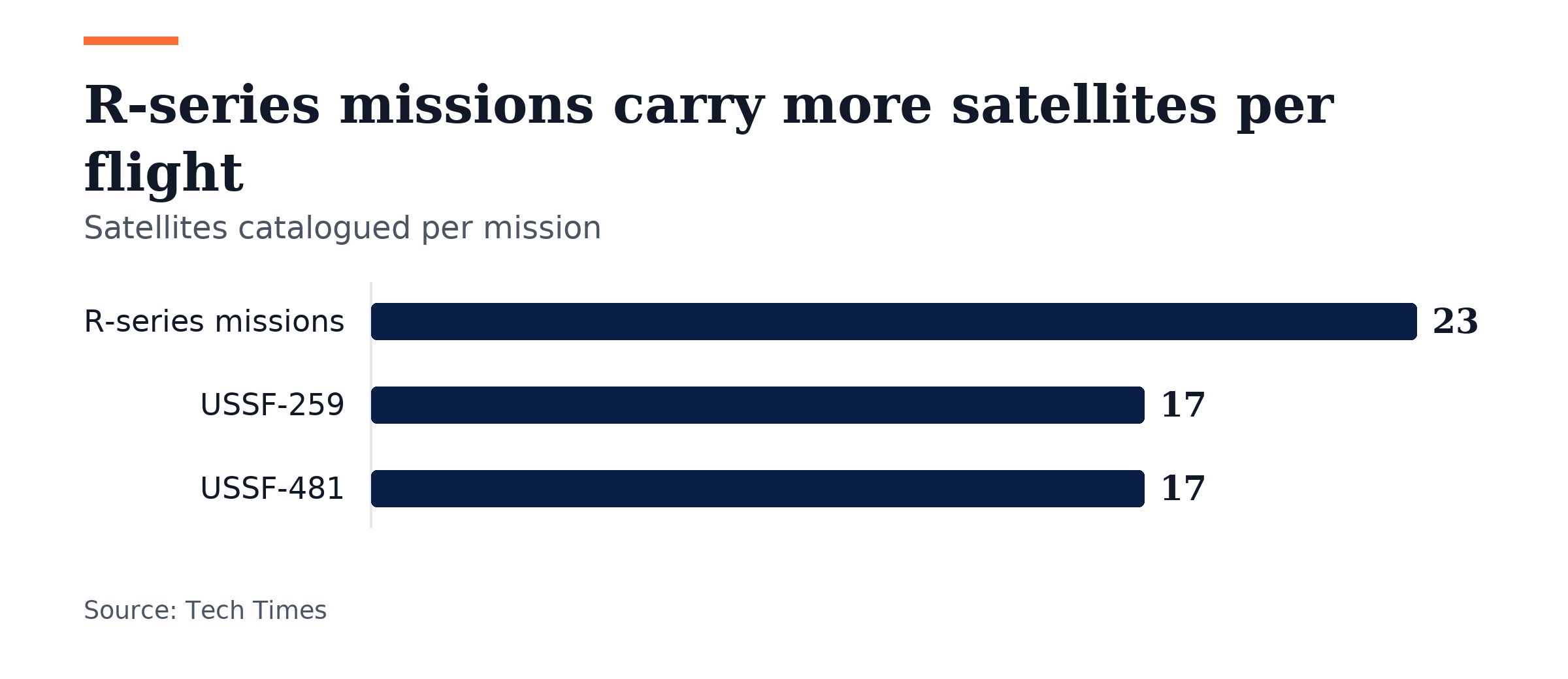
Past R missions include USSF-366 (R-1, Aug. 16), USSF-153 (R-2, Sept. 10), USSF-385 (R-3, Sept. 26), USSF-432 (R-4, Nov. 6), and USSF-627 (R-5, Nov. 12). The service logged 23 satellites following each of those five earlier R missions.
The classified USSF-317 mission lifted off from Vandenberg Space Force Base on Nov. 20, 2026, at 11:20 p.m. EST. SpaceX flew booster B1100 on its 11th flight for that launch. Touchdown came on Of Course I Still Love You roughly eight and a half minutes after liftoff.
Because the mission is classified, SpaceX did not disclose the payload or upper-stage destination and ended its webcast after booster touchdown. The launch marked the 121st Falcon 9 flight of 2026 and stood as the third Space Force flight in November, after USSF-432 on Nov. 6 and USSF-627 on Nov. 12. Some experts believe USSF-317 may carry SpaceX Starshield satellites into low Earth orbit, though the link is unconfirmed.
Starlink missions make up about 70 percent of Falcon 9 flights this year, serving a constellation of more than 11,000 satellites. SpaceX intends to retire Falcon 9 and Falcon Heavy for the fully reusable Starship megarocket.
SpaceX’s schedule holds at least two more Space Force flights before November ends. On July 29, 2026, Space Systems Command said $1.6 billion in task orders fund 18 Falcon 9 launches from the California base before 2028. NPR says the service reserved Falcon 9 flights through 2028.
The Space Based Sensing and Targeting portfolio includes an airborne-object tracking program from orbit along with the Space Data Network. The $2.29 billion firm-fixed-price agreement from Space Systems Command pays for an optically interconnected satellite mesh for the network, with a fully operational prototype due by the end of 2027.
The U.S. Space Surveillance Network follows objects about 10 centimeters across or larger and assigns each confirmed object a catalog number. Classified U.S. military and intelligence satellites get a catalog number, cover name, and launch date, but officials never revise those entries.

Join the discussion