Key facts
- According to the authors, the scenario could help explain why dark matter and ordinary matter are present in such similar amounts in the universe.
- Physicists call the close match between dark and ordinary matter abundances the matter coincidence problem.
- The study led by Pouya Asadi of the University of California, Santa Cruz, posted on arXiv, calls the match the strongest sign that visible and dark sectors connect beyond gravity.
- One possibility holds that dark matter forms a hidden family of particles and forces mirroring ordinary matter.
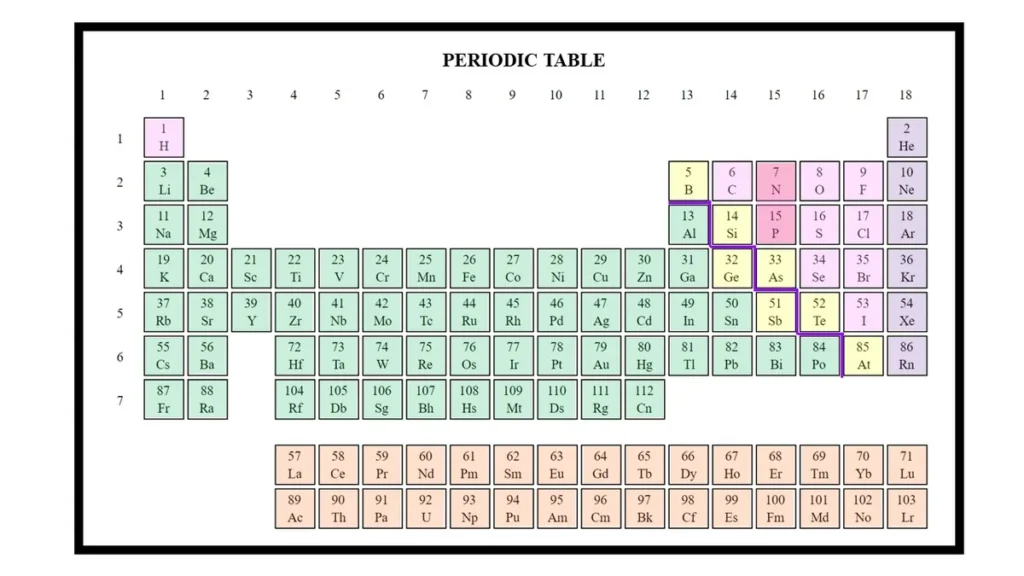
Physicists from the United States and Canada, led by Pouya Asadi of the University of California, Santa Cruz, suggested that dark matter could contain hidden versions of familiar chemical elements, arranged as a hidden periodic table, in a preprint posted on the arXiv server.
Dark matter is detected through gravity, such as galaxies spinning faster than they should, and it outweighs ordinary matter by about five to one, though its identity remains unknown. It makes up roughly 85 percent of all matter in the universe and has never been directly detected. Researchers infer dark matter from its effects on visible matter, and many theories exist about what it could be.
The close match between dark matter and ordinary matter abundances is called the matter coincidence problem by physicists, and the authors say the scenario could help explain why the two are present in such similar amounts. The researchers describe the match as the strongest sign that visible and dark sectors connect beyond gravity.
One possibility holds that dark matter forms a hidden set of particles and forces similar to ordinary matter. The team applied the Mirror Twin Higgs framework, a mathematical symmetry relating particles and forces across the visible and dark sectors and possibly their masses as well.
In the explored scenario, most of the dark matter consists of dark neutrons, and their mass is around five times that of ordinary protons. The mirror world is not a perfect copy: in the researchers’ version, dark neutrons weigh less than dark protons, making neutrons the stable building blocks. That flips the relationship in our universe, where free neutrons decay into protons because their mass is slightly greater than that of protons, while protons remain stable. The scenario rests on a mass relationship between dark neutrons and protons produced by the mirror symmetry.
If equal numbers of dark neutrons and ordinary protons were produced in the early universe, the fivefold mass difference would make dark matter five times as abundant as observed, matching today’s ratio.
Depending on conditions, helium, lithium, beryllium, boron, and carbon might form as dark elements in the mirror universe, and the team calculated that protons and neutrons can still form stable nuclei. Dark carbon could theoretically dominate a dark-atom population if, under some conditions, the heaviest formable element accounts for most dark atoms. Ordinary hydrogen would not survive, since a dark proton could capture an electron and turn into a neutron, while deuterium’s extra neutron changes the energy balance and could let heavy hydrogen persist.
The researchers suggest heavier dark elements might form solids or tiny grains of dark dust interacting with a dark version of light, so conventional telescopes cannot see them. Mirror stars—hypothetical dark-matter objects that might be far smaller and denser than ordinary stars—are also raised as a possibility.
None of these objects has been observed, yet the work offers a concrete way to link dark and visible matter, explain the abundance ratio, and show dark matter may be richer than a single particle. The proposal remains untested by observation. The article presents the proposal as speculative yet valuable because it ties the dark and visible sectors together and addresses a long-standing puzzle.
Axions and weakly interacting massive particles, or WIMPs, are two prevalent theories in which dark matter consists entirely of elementary particles that cannot be broken down further. Neither candidate interacts with radiation or regular matter except through gravity. Physicists have not directly detected either candidate, which has motivated consideration of composite alternatives.
The DarkSide collaboration presented seven-year experiment results to test whether dark matter particles consist of smaller elementary particles known as ultraheavy nuclear dark matter, but found no direct evidence. The research appeared in Physical Review D in 2026 and could lay groundwork for future experiments probing whether dark matter has internal structure.
Jocelyn Monroe of the University of Oxford worked with collaborators about a decade ago to explore dark matter’s own nuclear physics, proposing that particles bound in the early universe into dark nuclei potentially containing billions or more constituents. The effort developed into the international DarkSide collaboration network.
Between 2013 and 2020, the DarkSide collaboration operated DarkSide-50, a detector built around a cylindrical tank of liquid argon at INFN’s Laboratori Nazionali del Gran Sasso in Italy, the world’s largest underground research facility. The detector recorded faint light flashes as particles of dark matter scattered against nuclei in the liquid and knocked a nucleus back. For elementary axions or WIMPs, the result would be a single recoil.
Because composite dark matter has a finite size and form factor—a measure of how an object’s size and shape affect scattering—the analysis treats it as having internal structure, so one object could scatter multiple times while passing through the detector. Researchers exhaustively analyzed DarkSide-50 data and found no evidence that composite dark matter interacts with argon nuclei, though the results rule out many proposed properties of ultraheavy dark matter. Like other dark matter detectors, DarkSide-50 looks for nuclear recoils and energy deposition in its liquid argon target.
Sensitivity depends on the properties of the constituents, called dark nucleons, and Monroe said this shows dark matter’s internal structure can have observable consequences. Detectors that build on DarkSide-50’s capabilities might one day probe ultraheavy composite dark matter’s internal structure much as conventional scattering experiments reveal atomic nuclei structure. Monroe said the result shows that internal structure affects what detectors can observe.
DarkSide-20k, set for launch in 2027 by the DarkSide collaboration, would hold roughly 1,000 times as much liquid argon as its predecessor and could permit observation of dark chemistry signatures. Monroe said the larger detector will open long-term prospects for potentially observing dark chemistry.
Alejandro Ibarra, Merlin Reichard, and Gaurav Tomar examined white dwarf stars, stellar populations, and planetary systems as possible dark matter traps, but found no evidence of dark matter. The work, led by Gaurav Tomar of Sogang University’s Center for Quantum Spacetime, considered Earth, the Sun, Jupiter, and white dwarf stars. Under the title Celestial probes of dark matter electromagnetic interactions, the paper appeared in the Journal of Cosmology and Astroparticle Physics in 2026. The team’s method aims to eliminate some explanations and guide future research.
Tiny electric or magnetic properties in dark matter might allow occasional interaction with ordinary matter, and slow-moving particles could be captured more easily by a planet or star. Particles lose energy through repeated collisions while passing through a celestial body, until gravity traps them near the center to accumulate and annihilate or deposit energy.
The team focused on neutrinos from dark matter annihilation inside Earth and the Sun, which instruments such as IceCube in Antarctica might detect because neutrinos pass through matter without absorption. The absence of expected neutrino signals let researchers place limits on some dark matter models. For Jupiter and white dwarfs, they examined heating because these objects are not fusion-powered like the Sun. If dark matter accumulation produced more heat than observed, the scenario could be rejected.
If accumulated dark matter produces more heat than the object is observed to emit, the scenario can be rejected, and the study ruled out some particle mass ranges and electric-charge or electromagnetic scenarios. Earth was especially useful for constraining minuscule electric-charge scenarios, while white dwarfs provided strong bounds on different hypothetical interactions. Different celestial bodies constrain different dark matter properties in this approach.
The results depend heavily on estimated dark matter density around the objects. The team studied white dwarfs in the M4 globular cluster because density there is not directly measured and must be estimated with models. Tomar said they do not know the dark matter density there and used estimated values, so changing those values could make the limits weaker or stronger.
Promising future targets include extremely cold white dwarfs, regions believed to hold dense dark matter concentrations, and exoplanets outside our solar system, since slight dark-matter heating could stand out against the background temperature there. The study says billions of planets and stars may already serve as enormous dark matter detectors throughout the universe. Colder objects make small heating effects easier to distinguish from background. Planets and stars complement underground detectors, accelerators, and galaxy observations in the search for dark matter.
An underground instrument in South Dakota recorded an odd event possibly triggered by a dark matter particle, although the physicists involved do not claim to have observed dark matter. Sam Eriksen of the University of Bristol in England, a particle physicist, described the event as a possible first hint of observing dark matter at a September 1, 2026, conference in Japan. The group released a non-peer-reviewed study on arXiv and plans to submit it to Physical Review Letters. The result might move toward confirming dark matter’s presence, but it is not a claimed detection.
Using data gathered between March 2023 and April 2024, Eriksen’s group identified the interaction across 220 days after expanding the search to higher-energy WIMP interactions. Should the interaction come from dark matter, the particle’s mass would likely top 200 proton masses, while a background chance of roughly 0.5 percent kept the result below discovery threshold. Additional research could establish whether the event resulted from dark matter or from background noise. Outside physicists reacted with a mix of excitement about the analysis and caution about a single event.
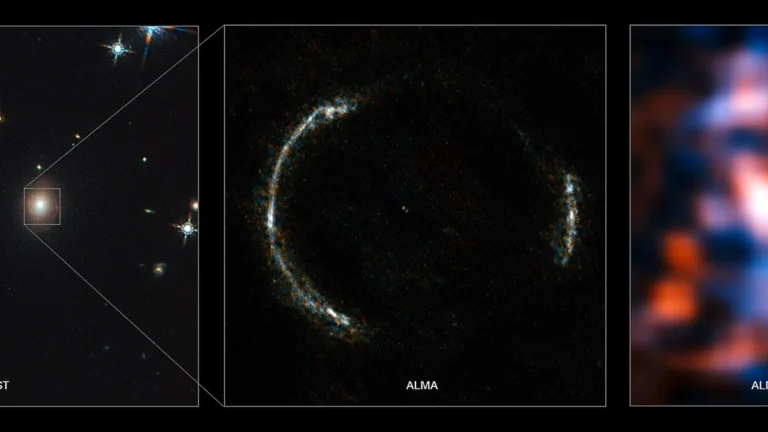
Scientists first suspected dark matter nearly a century ago when Fritz Zwicky, a Swiss-American astronomer, observed Coma cluster galaxies moving too fast to remain bound, and Vera Rubin advanced the idea in the 1970s. Because dark matter reflects, absorbs, or emits no light, researchers infer it from its influence on normal matter, such as galaxy light bending more than detectable mass would predict.
One theory says dark matter consists of WIMPs hunted with detectors including South Dakota’s LUX-ZEPLIN experiment, whose tank holds several tons of liquid xenon almost one mile underground. When a WIMP interacts with xenon, it produces a flash of light and electrons that sensors measure to reveal characteristics such as mass. The tank sits deep underground to block cosmic radiation and other false-positive sources. Sensor readings from xenon interactions can indicate a particle’s mass among other properties.




Join the discussion