Key facts
- A paper in The Planetary Science Journal reports laboratory simulations of Venus surface conditions led by Sara Taeko Port, a postdoctoral researcher at the University of Texas San Antonio.
- The team put slabs and powders of siderite, calcite, and magnesite, plus phlogopite, brucite, and muscovite, into the chamber for sixty days.
- Fluorine atoms from trace hydrogen fluoride gas swapped with water-associated hydroxyl groups in mica minerals, creating fluorophlogopite and fluoromuscovite.
- Magellan spacecraft radar data from NASA showed that a volcanic vent on Maat Mons, Venus's tallest volcano, changed shape over eight months during 1991.
A paper in The Planetary Science Journal reports laboratory simulations of Venus’s surface conditions led by Sara Taeko Port, a postdoctoral researcher at the University of Texas San Antonio, to assess whether Venus may once have hosted water.
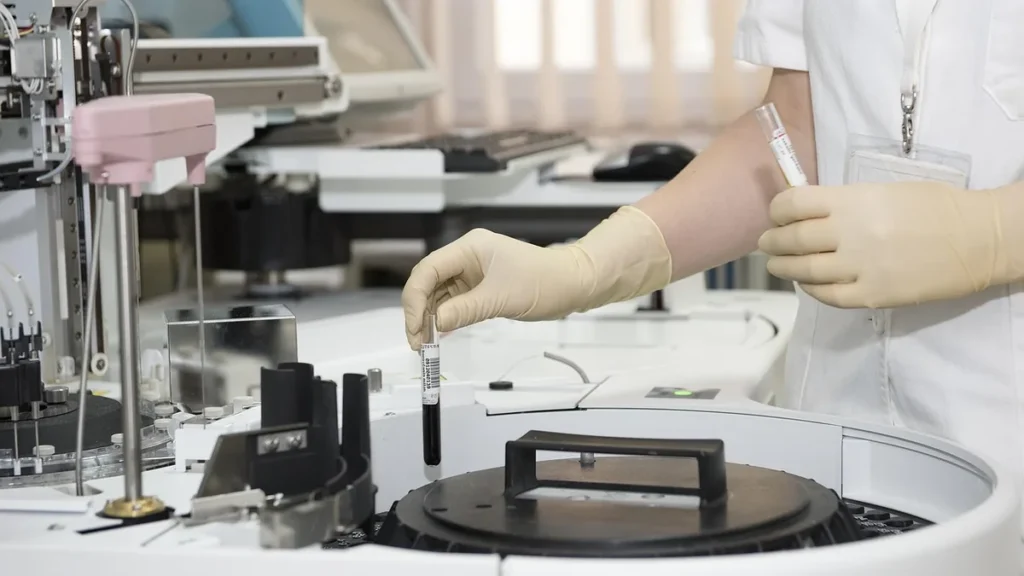
Port and colleagues from the University of Texas at San Antonio worked with NASA and Arizona State University, Knowridge Science Report says, inside the Glenn Extreme Environment Rig, an 811-liter stainless steel pressure vessel, or sealed chamber, at NASA’s Glenn Research Center in Cleveland. They placed slabs and powders of six minerals—siderite, calcite, magnesite, phlogopite, brucite and muscovite—into the chamber for sixty days in an atmosphere containing nine gases meant to copy Venus’s lower air, Knowridge Science Report says. Siderite, calcite and magnesite are carbonate minerals, while phlogopite, brucite and muscovite contain water.
The chamber recreated Venus’s lower atmosphere, where surface heat averages about 460 degrees Celsius, hot enough to melt lead, and pressure reaches roughly 93 times Earth’s ocean-level pressure, equal to diving about a kilometer down. The air is mostly carbon dioxide beneath clouds of sulfuric acid, adding to the extreme surface environment. NASA’s Glenn center is one of only a few places in the world able to reproduce those conditions.
Brucite, a magnesium-rich mineral formed in liquid water on Earth, dried out, cracked and turned into magnesite, a tough carbonate that then changed little during the two months. Knowridge Science Report says brucite might also combine with carbon dioxide to produce magnesite, hinting at past exchanges among water, rock and atmosphere. Trace hydrogen fluoride gas swapped fluorine for water-linked hydroxyl groups in mica minerals, creating fluorophlogopite and fluoromuscovite. The swap makes the micas more heat-resistant, so they could survive on Venus’s surface for billions of years despite the planet’s heat and sulfur dioxide.
Nearly every sample absorbed sulfur or fluorine, growing outer crusts of sulfates, sulfides and fluorides. Sulfur-containing minerals appeared on numerous samples, showing that rock at the surface can extract sulfur dioxide and additional gases from the air as reactions occur. Paper calculations show those gases would vanish from Venus’s atmosphere over 500 million years without continuous replenishment. The paper suggests volcanism must currently replace them, with the last major resurfacing event 500 million years ago, though the experiments alone do not show that volcanoes are active today.
Earlier radar data from NASA’s Magellan spacecraft showed that a volcanic vent on Maat Mons, Venus’s tallest volcano, changed shape over eight months during 1991. That observation supports the idea that volcanoes continue to release gases into the atmosphere today. Planetary scientists think Venus’s atmosphere and active volcanoes could have drastically changed any water-formed minerals over the last few billion years.
Scientists theorize that Venus was once nearly Earth-like until a runaway greenhouse effect eliminated its oceans, and the atmosphere’s high deuterium/hydrogen ratio, a measure of heavy hydrogen compared with ordinary hydrogen, indicates the planet lost enormous amounts of water over time. If Venus once had surface water, researchers would expect geological evidence of it, though they question whether water-related minerals survived the planet’s transformation.
Knowridge Science Report says the new research does not confirm ancient oceans on Venus, though it indicates some mineral traces could last long enough to find if wet rocks once existed. Magnesite can also form without water, so magnesite on a Venusian plain would signal past water only if the surrounding geology supports that reading. Knowridge Science Report says scientists must determine whether the same minerals could form through dry chemical routes, because a mineral is a stronger clue to past water only if non-water explanations are ruled out.
No spacecraft has survived on Venus’s surface for more than a few hours, and the last such landings were in the 1970s and 1980s. Upcoming missions should provide scientists with a clearer view of what exists on the Venusian surface. Those missions, including NASA’s DAVINCI and VERITAS and ESA’s EnVision, could use the study’s mineral roadmap to look for signs of where Earth’s and Venus’s geological paths diverged. The flights may apply the chemical clues when reading their observations.
The work addresses the broader question of why Earth and Venus developed different environments despite similar starting ingredients, with implications for studying rocky planets orbiting distant stars. Scientists hope the results will guide spacecraft in looking for evidence of an ancient watery past. The study is listed as S. T. Port et al., New Insights into Venus’s Volatile Cycles Revealed by the Formation of Magnesite and Fluoro–Micas, in The Planetary Science Journal.

Join the discussion