Key facts
- ScienceAlert reports that new research cites unusual orbital behavior in the outer Solar System as possible evidence of a second undiscovered planetary body beyond Neptune, distinct from the long-speculated Planet Nine.
- The proposed Planet X2 would have a mass around 1 to 2 times that of Earth, a semimajor axis of 350 to 500 astronomical units, and a closest approach to the Sun of no less than 200 astronomical units.
- The orbital clues involve one population of objects on extremely tilted orbits and another whose closest approaches to the Sun lie far beyond Pluto's orbit.
- Jonti Horner said the fit is not perfect, that he would be more worried if it were, and called it a very good and compelling start.
ScienceAlert reported on Nov. 23, 2026, that new research cites unusual orbital behavior in the outer Solar System as possible evidence of a second undiscovered planetary body beyond Neptune, distinct from the long-speculated Planet Nine. The research frames the object as a separate hypothesis rather than a replacement for Planet Nine. It rests on computer modeling of the distant Solar System conducted by a team of three scientists.
The team behind the work includes Patryk Sofia Lykawka of the University of Southern Queensland and Kindai University in Japan, Pedro Bernardinelli of the University of Washington in the United States, and Jonti Horner of the University of Southern Queensland, ScienceAlert reported. The group set out to test whether adding an extra distant planet could reproduce unexplained populations of icy objects in the outer Solar System. Their research has been published in Monthly Notices of the Royal Astronomical Society.
The researchers ran detailed computer simulations spanning 4.5 billion years, tracing outer Solar System evolution as the giant planets migrated into their present positions. Models including an extra distant planet produced populations of objects on highly tilted and detached orbits that more closely matched unexplained orbits astronomers have actually observed. Simulations with only the known giant planets could not reproduce these two unusual populations.
The orbital clues involve one population of objects on extremely tilted orbits and another whose closest approaches to the Sun lie far beyond Pluto’s orbit. Neptune and the other known giant planets alone cannot explain these distributions in the outer Solar System. These distributions are among the niggling persistent signals that challenge the conventional picture of the outer Solar System.
Some hard-to-explain orbital signals pointed researchers toward the Planet Nine hypothesis, while a separate pattern in distant-object orbits now suggests another possible hidden world, ScienceAlert reported. The conventional view of the region beyond Neptune is a broad belt of small icy bodies following an orderly path around the Sun, according to ScienceAlert. Telescopes have grown more powerful and sensitive over the decades, and enough outer Solar System objects have been identified in recent years to begin mapping their orbital distributions.
The models reproduce several features of distant objects detected by the Dark Energy Survey, but the distribution of their semimajor axes (half the longest diameter of an object’s elliptical orbit) does not quite match. Jonti Horner said the fit is not perfect, that he would be more worried if it were, and called it a very good and compelling start. He made the remark when discussing the limitations of the computer models used to test the Planet X2 hypothesis.
Planet X2 would have a mass around 1 to 2 times that of Earth, a semimajor axis of 350 to 500 astronomical units, and a closest approach to the Sun of no less than 200 astronomical units, ScienceAlert said. Those parameters come from the closest match in the team’s computer simulations, which produced distant objects resembling the unexplained orbits actually observed.
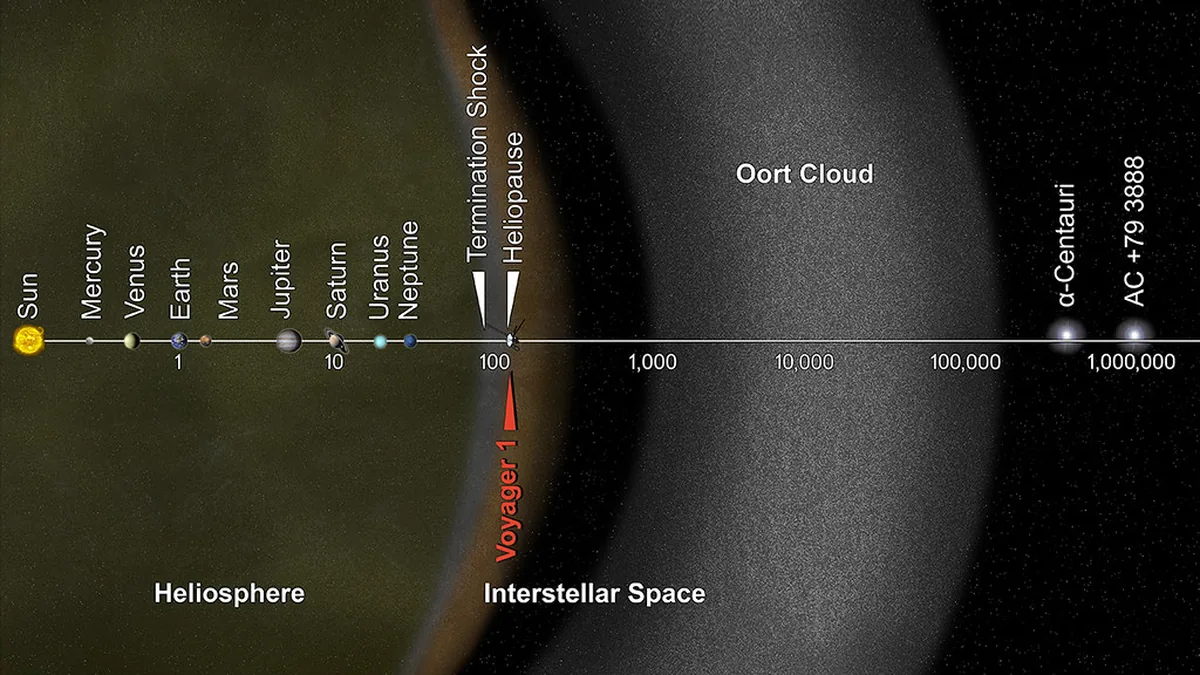
Neptune averages 30.1 astronomical units from the Sun, and at that distance sunlight is 900 times weaker than at Earth. Much of what is known about the Solar System relies on sunlight, which becomes much weaker by Neptune’s distance. Telescopes have grown more powerful and sensitive over the decades, and enough outer Solar System objects have been identified in recent years to begin mapping their orbital distributions.
A 2025 analysis estimates Planet Nine at about 4.4 Earth masses with a semimajor axis of around 290 astronomical units, and the two hypotheses target different orbital patterns, ScienceAlert reported. Because the hypotheses explain different anomalies, the article says the Solar System could potentially accommodate both Planet Nine and Planet X2. Planet Nine remains a separate, long-speculated idea that the new research does not replace.
ScienceAlert said one possibility is that Planet X2 formed closer to the Sun before encounters with the giant planets moved it to the Solar System’s distant edge. The article notes planets do not necessarily stay where they are born and that significant reshuffling has occurred throughout the Solar System. If the planet exists, Patryk Sofia Lykawka said, it could change how scientists understand Solar System history and the unusual orbits of its most distant objects. This appears in a statement accompanying the research on Planet X2.
Horner said it is possible there could be neither Planet Nine nor Planet X2, both, or one or the other. He noted this is entirely in keeping with what is being learned about planetary systems around other stars. Astronomers have found planetary systems with architectures very different from our own, suggesting the orderly arrangement of the eight known planets is far from the only possible outcome.
The Planet X2 hypothesis will face scrutiny from other scientists searching for alternative explanations for the orbital weirdness. Horner encouraged other scientists to think of alternative explanations, test them, and make predictions if the hypothesis is true. The Vera C. Rubin Observatory in Chile is beginning to transform the view of the outer Solar System by discovering vast numbers of previously unseen trans-Neptunian objects. There is a chance Rubin could spot Planet X2 itself, though Jonti Horner cautions that its enormous distance and faintness would make that a much tougher proposition.
Join the discussion