Key facts
- Because globular clusters are ancient, they can give clues about how the Milky Way developed long ago.
- Hubble's ACS viewed many globular clusters again as part of program #16298, led by PI Libralato, examining how different star populations moved over 15 years since Hubble first observed them.
- Text credit for the image is ESA/Hubble.
- Media contact for the image is Claire Andreoli at NASA's Goddard Space Flight Center in Greenbelt, Maryland.
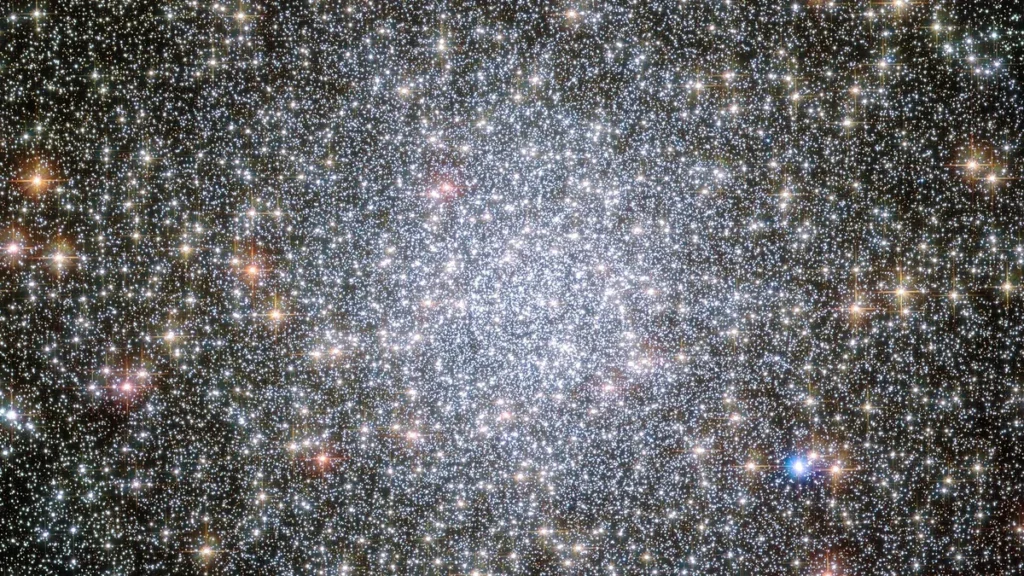
The Hubble Space Telescope, operated by NASA and ESA, imaged Messier 30 in Capricornus and presented it as a lesson in galactic history for a cluster about 27,500 light-years away.
The new image brings together data from three Hubble observing programs and uses ultraviolet, visible, and near-infrared wavelengths. The view merges information from programs #10775, #13297, and #16298 into a single multi-wavelength picture of M30. Every wavelength helps us understand how these groups of stars formed and evolved, with ultraviolet, visible, and near-infrared light each revealing different parts of how clusters form and change over time.
Messier 30 belongs to a class called globular clusters, roughly spherical groupings made up of anywhere from tens of thousands of stars to millions of stars. Our galaxy contains at least 150 globular clusters, and the closest one sits roughly 6,000 light-years away, putting Messier 30 at a greater distance than the nearest examples. These clusters generally sit on the edges of galaxies, moving through a spread-out region called the halo, a swarm of moths around a lightbulb, which puts them in the outer regions instead of the central disk.
Astronomers put the ages of globular clusters at between 11.5 and 13.5 billion years, which makes some of them almost as old as the universe itself. Because they are ancient, these clusters can serve as records of conditions in the early galaxy. They offer clues about the way the Milky Way developed long ago, and clusters that formed inside our galaxy can act as time capsules, keeping the original chemistry from when the galaxy was young by retaining chemical signatures from the early Milky Way.
Researchers found that M30 and many other globular clusters move in the opposite direction from the Milky Way’s spin. The opposite orbit may mean these clusters did not form inside our galaxy, and the Milky Way may have captured them in the distant past, since researchers say some of the globular clusters orbiting the Milky Way today may have formed elsewhere.
French astronomer Charles Messier placed M30 and other fuzzy objects on his list because they could be mistaken for comets when viewed through early telescopes.
More than a century ago, astronomer Harlow Shapley studied variable stars, stars whose brightness changes, to measure where dozens of globular clusters in our galaxy are and how far away they are. Shapley’s work showed that our galaxy’s center lies toward Sagittarius and that the Sun does not sit at the center, which moved the Sun away from the galactic center. His study marked an early use of globular clusters for mapping the Milky Way’s structure.
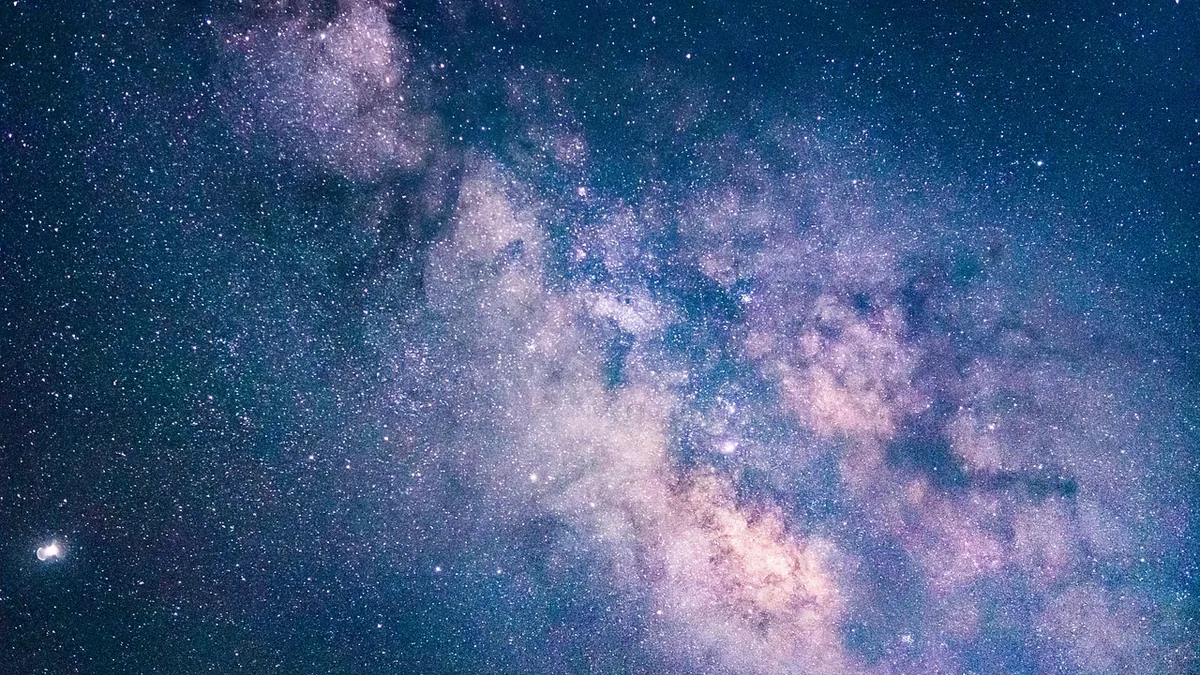
Shapley’s distance calculations were wrong, which led him to estimate the galaxy at about twice its actual size.
An earlier image of M30 used data from Hubble’s Advanced Camera for Surveys as part of observing program #10775, led by PI Sarajedini, which examined dozens of Milky Way globular clusters using red and near-infrared light. The ACS survey focused on red and near-infrared wavelengths to look at globular clusters across the Milky Way. Program #10775 found stars as small as 20% of the Sun’s mass, extending Hubble’s ability to detect low-mass stars inside these clusters.
Program #13297, led by PI Piotto, went back to M30 and other globular clusters using Hubble’s Wide Field Camera 3 and three filters that gather bluer light. Piotto’s program used filters that capture bluer light than the earlier ACS survey. Program #13297 gathered information vital for researching exotic objects such as blue straggler stars and for studying multiple populations of stars within one cluster. The Wide Field Camera 3 information backed studies of unusual stars and mixed groups of stars.
Hubble’s ACS looked at many globular clusters again through program #16298, led by PI Libralato, to study how different star populations moved over 15 years since the first observations. Libralato’s program followed stellar movements across a 15-year stretch made possible by Hubble’s long life. The 15-year movement study happened because Hubble has operated for a long time and can see extremely fine details in faraway objects. That long life lets Hubble observe the same clusters again and again.
ESA/Hubble provided the text credit for the image. Claire Andreoli works at NASA’s Goddard Space Flight Center in Greenbelt, Maryland, and serves as the media contact for the image.



Join the discussion