Key facts
- Queen’s University Belfast-led researchers confirmed Neptune’s trailing Trojan asteroids in 2026, resolving a decades-old gap in the solar system’s known Trojan populations.
- The Vera C. Rubin Observatory, operational since June 2025, uses an 8.4-meter Simonyi Survey Telescope and the world’s largest digital camera to survey the sky faster than any ground-based telescope.
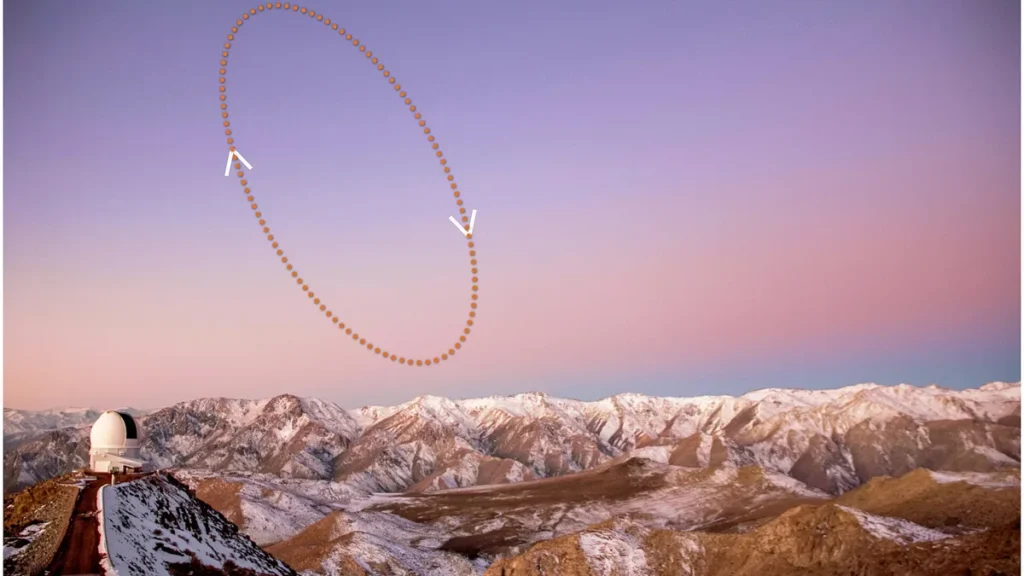
- Neptune’s trailing Trojans were undetectable for over a decade because they were positioned in front of the Milky Way’s dense, bright core, obscuring faint moving objects in Earth-based observations.
- Images from the Vera C. Rubin Observatory using different filters revealed that Neptune’s leading and trailing Trojans share similar surface compositions.
Queen’s University Belfast-led researchers confirmed Neptune’s trailing Trojan asteroids in 2026, identifying two asteroids and one candidate in the planet’s trailing Lagrange point after decades of failed attempts to locate the population. }, {
The team published its findings in The Astrophysical Journal Letters on Nov. 3, 2026. The publication marks the first peer-reviewed confirmation of Neptune’s trailing Trojan population, resolving a decades-long gap in solar system observations. The paper describes two new long-term stable Trojans in Neptune’s trailing cloud and details the team’s analysis of Vera C. Rubin Observatory data and the implications for solar system migration models. }, {,
Neptune’s trailing Trojans had been undetectable for over a decade because they sat in front of the Milky Way’s dense, bright core. The location obscured faint moving objects in Earth-based observations, making the asteroids nearly impossible to distinguish from the dense stellar background. The obstruction delayed their discovery until the Trojans began moving out of this region. }, {,
The Vera C. Rubin Observatory, operational since June 2025, uses an 8.4-meter Simonyi Survey Telescope and the world’s largest digital camera to survey the sky faster than any ground-based telescope. The observatory’s Legacy Survey of Space and Time will map the southern and northern skies for a decade, creating an ultra-wide time-lapse record of the cosmos. }, {,
The LSST Camera can image a sky area 45 times the size of the full Moon. Its wide field makes the observatory uniquely suited for detecting faint, distant objects like Neptune Trojans. }, {,
The Queen’s University Belfast-led team analyzed early test observations from the observatory conducted in 2025. The early test data, collected before the full Legacy Survey of Space and Time began, provided the critical dataset for this discovery. The analysis revealed the objects’ presence despite their faintness and distance. }, {,
Images from the observatory using different filters revealed that Neptune’s leading and trailing Trojans share similar surface compositions.
Trojan asteroids are small bodies locked in stable gravitational orbits at a planet’s Lagrange points, sharing its orbital path without collision. Jupiter, Saturn, and Uranus each host confirmed Trojan populations, but Neptune’s had remained undetected until now. }, {,
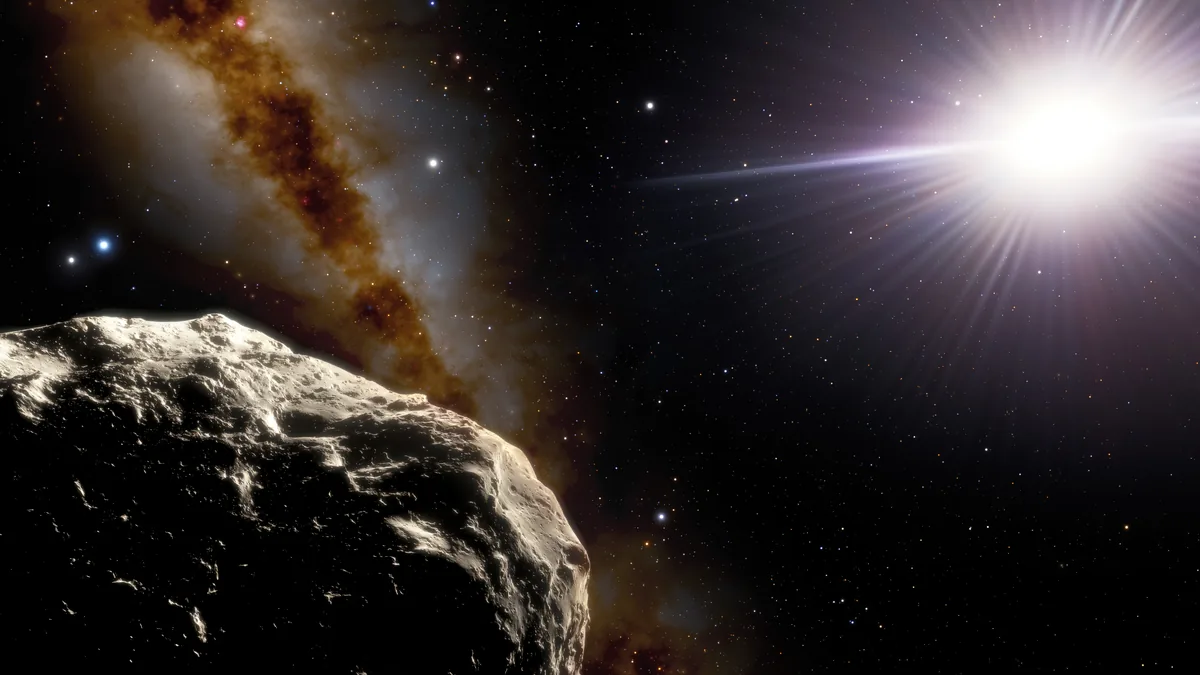
Neptune’s Trojans occupy stable points 60 degrees ahead of and behind the planet, known as L4 and L5.
The discovery provides new insights into early solar system migration models, as the presence of Neptune Trojans supports theories about the dynamic interactions that shaped planetary orbits. Trojan populations are relics of the solar system’s formation.
The Vera C. Rubin Observatory’s Legacy Survey of Space and Time is expected to discover tens to hundreds of additional Neptune Trojans in both leading and trailing populations over the next nine years. The survey is also expected to discover tens of thousands of icy bodies in the trans-Neptunian region and Kuiper Belt over the same period.
Dr. Meg Schwamb of Queen’s University Belfast said early data from the Vera C. Rubin Observatory is already expanding knowledge of the solar system’s small bodies, including asteroids, comets, and minor planets. She noted the data will enable even more discoveries in the years ahead, with Neptune Trojans representing just the beginning. Schwamb highlighted the observatory’s role in uncovering previously hidden populations of solar system objects. }, {,
The discovery team included Dr. Schwamb alongside researchers from the Instituto de Astronomia, Geofísica e Ciências Atmosféricas, the Planetary Science Institute, the DiRAC Institute, the Michigan Institute for Data and AI in Society, JHUAPL, and NOIRLab.
The Legacy Survey of Space and Time will map the Milky Way, detect transient phenomena, and create an inventory of solar system objects over a decade. It will also support dark matter and dark energy studies. The survey’s multi-faceted objectives extend beyond solar system objects to include cosmological studies.


Join the discussion