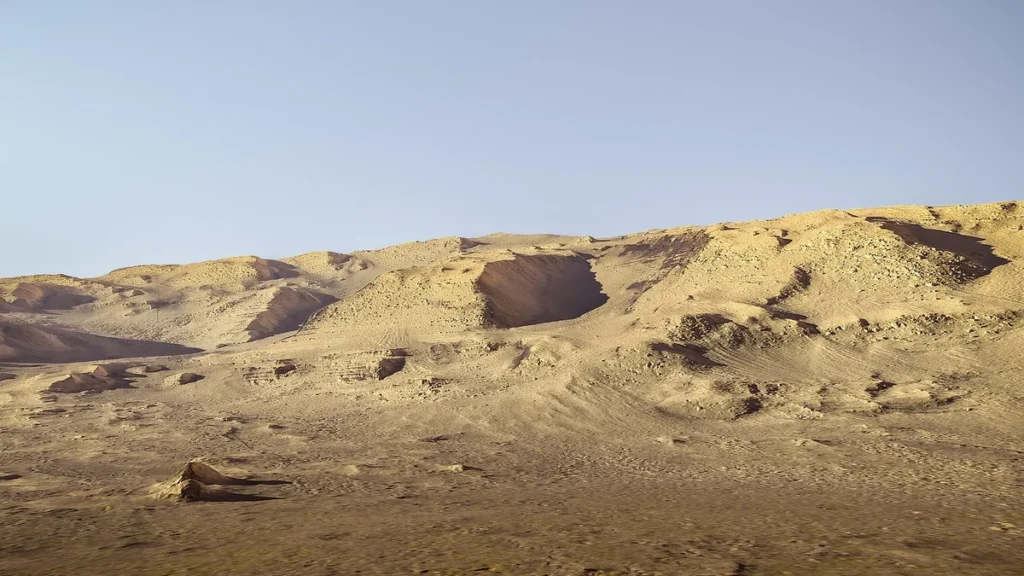
A HiRISE observation acquired Apr. 25, 2026 reveals light-toned layered material inside a roughly 2-kilometer crater sitting within a larger infilled crater in Mars’ Terra Sirenum region.
The image carries the identifier ESP_092552_1420 on the University of Arizona’s HiRISE page. HiRISE captured it from an altitude of 251 kilometers (155.62 miles). The credit line reads NASA/JPL-Caltech/University of Arizona.
North points downward in the close-up view, with the rim at the top, placing the smaller crater inside the larger infilled crater. Thin pinkish and bluish layers lie above more extensive yellow-hued layers in the frame. The layering is visible because the smaller crater cut into the floor of the larger infilled crater.
Terra Sirenum lies in Mars‘ ancient Southern Highlands at middle latitudes. The region’s heavily cratered character makes it likely that one impact can occur inside another. Ancient bedrock across these middle latitudes usually lies beneath a blanket of dust that may be ice-cemented. Steep walls carved by impacts can expose buried materials.
The layer colors probably indicate different compositions resulting from changing sediment sources or differential weathering of deposited materials. The source offers two possible explanations for the color differences without selecting one.
Craters serve as geological treasure troves, which is one reason so many Mars rovers have been sent into them. Craters are described as places where varied geology can be examined up close.
The exposed layers in Terra Sirenum fit this pattern, giving researchers access to a stratified record that dust and possible ice cement would otherwise keep buried.

Join the discussion