Key facts
- The US Space Force predicted Swift could reenter around Friday, with the descent closely monitored.
- Scientists warned that most of the 1.5-tonne observatory should burn up during reentry, though a small number of components might survive the heat and reach Earth's surface.
- NASA mission chief scientist Brad Cenko said surviving parts include tungsten components, which are denser than lead, and fragments of the telescope's mirrors.
- Ocean impact is the most probable outcome, though the potential reentry zone covers parts of Africa, Australia, India, Southeast Asia, Central America and South America.
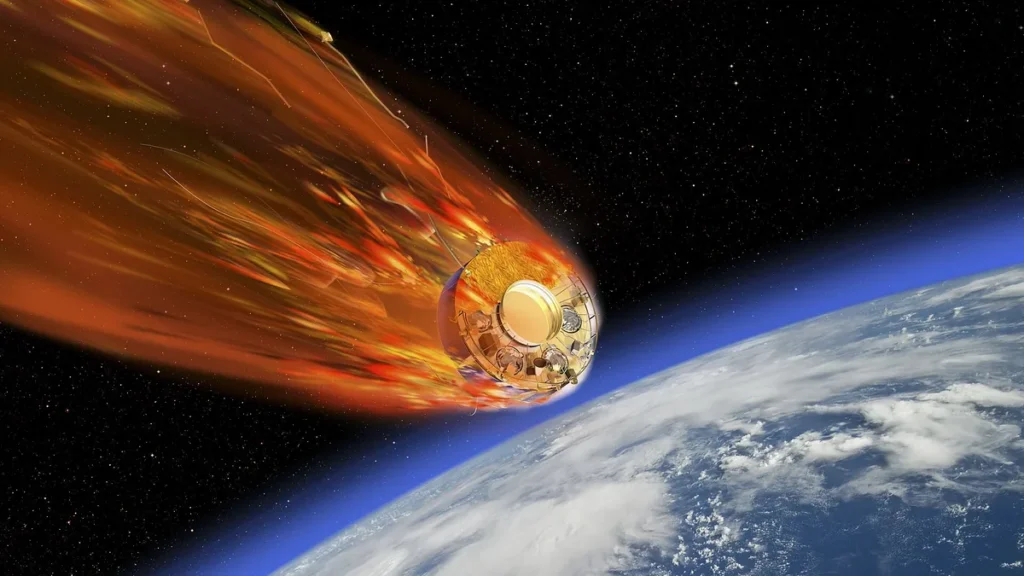
NASA’s Swift Observatory will reenter the atmosphere on or around Friday, Mathrubhumi English reported, its orbit decaying after an unsuccessful rescue attempt. The US Space Force forecast a reentry around Friday and described the descent as closely monitored.
The article reported that recent years of rising solar activity expanded Earth’s upper atmosphere, increasing drag on Swift and accelerating its orbital decay. NASA contracted Katalyst Space about a year before the expected reentry to attempt a rescue, the report said. The company launched a spacecraft called Link in July, built with three robotic arms for an approach to Swift, but after launch it could not get closer than about 12 to 15 kilometers of the observatory. With the rescue abandoned, Link reentered the atmosphere in September, leaving Swift with no way to restore its altitude.
The report says most of the 1.5-tonne observatory is expected to burn up during reentry, though scientists warned that some pieces could survive the heat and reach the ground. Brad Cenko, NASA’s mission chief scientist, said the parts likely to survive include dense tungsten components and fragments of the telescope’s mirrors.
The report says an ocean impact is the most likely outcome, though the potential reentry zone covers Africa and Australia, and includes parts of India and Southeast Asia, as well as Central America and South America. It remains unclear exactly where any surviving pieces might land.
Swift returned to science operations after the rescue failed, continuing to detect gamma-ray bursts and other energetic cosmic events, the article noted. By late October, however, orbital decay had removed the stability the observatory needed to observe, and mission controllers powered down its systems, closing a scientific mission that had run for more than twenty years.
The report says scientists now face the challenge of finding replacements for Swift’s rapid-response abilities, and researchers are studying how future missions might fill the observational gap. John Nousek, an astronomer at Pennsylvania State University who led the control team, described the outcome as catastrophic. “At least in low-Earth orbit, what goes up must come down,” he said.





Join the discussion