Key facts
- New research published in Scientific Reports concludes that comets were unlikely to have delivered the organic compounds needed for the origins of life to early Earth.
- The authors report that delivering material by comet works much better on Mars than on Earth even though fewer comets hit it, and the number of comets surviving to reach Mars is five times the number reaching Earth.
- Anslow said scientists cannot completely dismiss the possibility that cometary delivery occurred on Earth, though he described it as a very unusual event, at most a one-time fluke.
- The study concludes comets were unable to deliver enough HCN to early Earth for prebiotic chemistry on a global scale, matching earlier work by Todd & Öberg.
A study published in Scientific Reports concludes that early Earth was unlikely to have received organic compounds for life’s origins via comet delivery. Dr. Richard Anslow of Cambridge‘s Institute of Astronomy is the paper’s lead author, and the work appeared in 2026 under the title Cometary impacts an unlikely pathway towards the origins of life on Earth.
The researchers focused on hydrogen cyanide (HCN), an important prebiotic molecule regularly found on solar system comets and a key feedstock molecule for prebiotic chemistry. “Our study focused on whether comets were able to deliver a sufficient concentration of these key feedstock molecules on their own,” Anslow told ZME Science.
Cometary bombardment of Earth declined rapidly during the planet’s first 500 million years, leaving only a handful of opportunities in Earth’s early history for HCN delivery by comet. Using optimistic assumptions about the early Solar System to give comets their best shot, the simulations yielded an average of zero impacts that delivered sufficient HCN for later prebiotic chemistry. The researchers used Monte Carlo simulation of Earth’s cometary bombardment to show that comets were, on the whole, unable to deliver fragile organic molecules intact to Earth’s surface.
The team chose short-period comets for the study because these objects move more slowly than long-period comets, which improves the chance that chemicals survive an Earth impact. Earth’s atmosphere serves as a screen that preferentially removes small and oblique comets, since their low density, high porosity and weak mechanical strength leave them vulnerable during passage. Big comets that make it through the air hit the surface fast enough to subject their contents to severe shock and heat, which destroys most feedstock molecules apart from rare low-velocity impacts.
Smaller comets are likely to be torn apart as they enter the inner Solar System because torque from their off-gassing creates rotational instability, reducing the number of comets that struck ancient Earth. Small comets disintegrate during atmospheric entry in a destructive airburst, spreading molecules over a huge area of Earth and making it difficult to achieve the local concentrations required for subsequent prebiotic chemistry.
If HCN reached the surface, groundwater flowing quickly into the new crater-lake would water down surviving comet-delivered HCN to levels too low for prebiotic chemistry. The authors discount the idea that impacts could create subterranean hydrothermal systems conducive to abiogenesis because the rapid flow of water into the environment prevents concentration buildup. Previous research suggests scientists have overestimated HCN survivability, since only impacts with a low angle, low speed and small size can avoid heat levels that break down HCN.
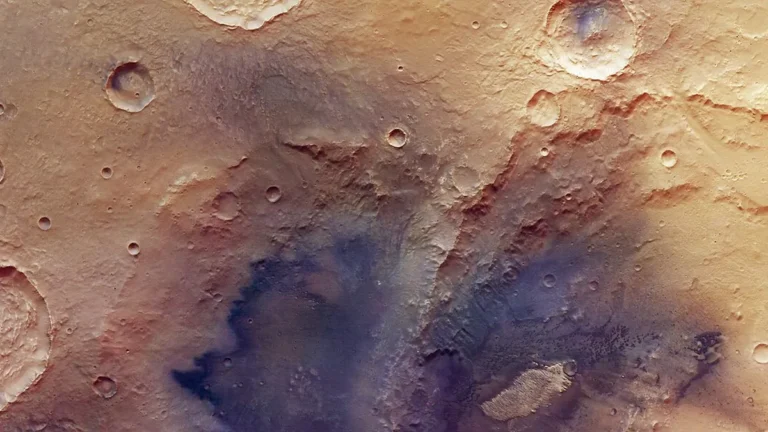
Delivering material by comet works much better on Mars than on Earth even though fewer comets hit it, and the number of comets surviving to reach Mars is five times the number reaching Earth. Mars’s lower escape velocity and larger semi-major axis produce lower cometary impact velocities, and its tenuous atmosphere allows more comets to reach the ground intact. The team also ran Mars simulations with an Earth-like, 1-bar atmosphere, and Mars still produced many more successful impacts than Earth, though today’s thin atmosphere may not reflect conditions billions of years ago, so uncertainties remain. Anslow highlighted that there are huge uncertainties in understanding of early Mars surface environments.
In earlier work, Anslow and colleagues proposed that comets in systems with closely spaced planets could slow down through repeated gravitational encounters, potentially delivering organic molecules at gentler speeds. The idea that comets might slow down by bouncing between closely spaced planets has been around for close to a century.
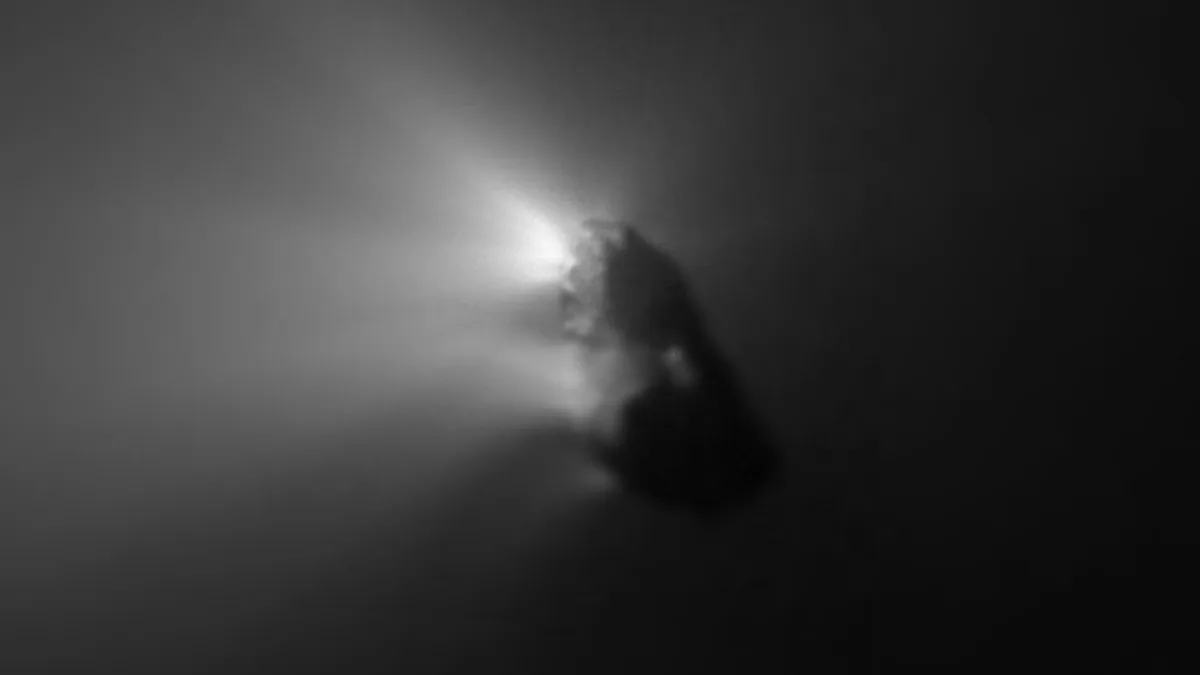
ESA’s Rosetta mission, which included the Philae Lander, visited comet 67P/Churyumov–Gerasimenko in 2014 and detected glycine, an amino acid, and phosphorous, an organic chemical. Instruments aboard the Philae lander, named COSAC and Ptolemy, found sixteen organic compounds on the surface of comet 67P in 2015, among them HCN and glycine.
Other possible origins for Earth’s ingredients include chemistry created by asteroid impacts, which struck Earth much more often than comets, or processes that happened locally on the planet. The findings may help the search for life elsewhere, particularly using future telescopes that follow the James Webb Space Telescope, such as the proposed Habitable Worlds Observatory. The study’s DOI is 10.1038/s41598-026-74214-y. “We can’t rule out for certain that it happened that way,” Anslow said.
The hypothesis that comets seeded Earth with prebiotic chemistry is not widely accepted but has not been conclusively disproven, and research remains in early stages. The authors say scientists have long speculated that early comet bombardment could supply key prebiotic molecules for life’s origins on Earth. Comets contain a rich diversity of volatile organic molecules, many thought to be limiting for prebiotic chemistry.
Scientists have considered comets possible suppliers of carbon- and nitrogen-bearing molecules that could have fed the chemistry that came before biology. If life’s raw ingredients had arrived ready-made from space, early Earth would not have had to make them all locally. A list of chemicals detected in a comet is not enough to establish that cometary delivery happened. Molecules must reach the surface intact, build up sufficient concentrations, and meet conditions allowing further reactions until simple RNA forms.
Lab-relevant concentrations of HCN exist in comets, and its strong carbon-nitrogen triple bond means it should withstand impact destruction well. Other feedstock molecules fare even worse than HCN because they are generally less abundant in comets and more vulnerable to impact. Life only needed to get started once, so the researchers acknowledged the possibility that a single lucky comet could have delivered enough material. The study shifts the focus from what comets carried to what cargo could do once it arrived; the ingredients were there, but bringing them together where chemistry could become biology was the hard part.
The research concluded comets were unable to deliver enough HCN to early Earth for prebiotic chemistry on a global scale, matching earlier work by Todd & Öberg. Anslow said scientists cannot dismiss the possibility that cometary delivery occurred on Earth, though he described it as an unusual event, at most a one-time fluke. “It’s kind of a romantic idea, but our results suggest it’s highly unlikely,” Anslow said.



Join the discussion