Key facts
- A peer-reviewed study published in Astronomy & Astrophysics on October 19, 2026 reports that Uranus and Neptune have different formation origins within the solar system's protoplanetary disk.
- Mousis said the results matter beyond our solar system because planets of similar size are common around other stars, so Uranus and Neptune serve as benchmarks for planet formation across the galaxy.
- Mousis said the analysis indicated Neptune's building blocks originated nearer the young Sun than Uranus and subsequently moved outward.
- Scientists studied the planets' atmospheres using observations from ALMA, the Atacama Large Millimeter/Submillimeter Array located in Chile's Atacama Desert.
An international research team reported Oct. 19, 2026 in the journal Astronomy & Astrophysics that Uranus and Neptune formed in different parts of the solar system’s protoplanetary disk, a disk of dust and gas around the young Sun. The team said the finding undercuts the idea that the two ice giants share a common birth story, and the results affect models of early solar-system formation and migration.
Scientists have long described Uranus and Neptune as twins because the two planets match in size and color, both appearing blue or greenish-blue, with atmospheres rich in methane, ammonia and water and no solid surface beneath. According to the study, the resemblance may be a coincidence instead of proof of a shared origin.:
Researchers said on Oct. 19, 2026 that the material making up Neptune originated much nearer to the Sun than the material making up Uranus, while Uranus took shape where it now sits. That means Neptune’s building blocks traveled a long way before the planet could gather them.:
Neptune’s building blocks started out close to the young Sun and moved outward over time until they reached the part of the solar system where Neptune orbits now. The models indicate Neptune could not have taken shape where it is now from the same pool of cosmic materials as Uranus. Mousis said the analysis showed Neptune’s building blocks started closer to the young Sun than Uranus’s and later shifted outward. He added that Neptune’s chemistry does not easily fit formation where it now sits from the same reservoir as Uranus.:
The study found that Neptune’s air holds more oxygen than Uranus’s air, giving the two ice giants different carbon-to-oxygen ratios. That gap points to the planets forming from separate chemical reservoirs in the disk.:
The team’s models show that volatiles—materials that evaporate readily—hardened at different distances from the young Sun, creating separate chemical reservoirs at different points in the disk. That is why material from different parts of the disk went into building Uranus versus Neptune.:
Researchers looked at the planets’ atmospheres with data from ALMA, the Atacama Large Millimeter/Submillimeter Array in Chile’s Atacama Desert. They compared those observations to simulations of the dust and gas disk encircling the young Sun where the planets formed.:
With carbon monoxide data, the researchers worked out possible oxygen, hydrogen and carbon ratios in the deep atmospheres and simulated how disk volatiles turned into the observed planets. The researchers picked carbon monoxide since it appears widely in the upper atmospheres of many planets.:
“Uranus and Neptune may resemble twins today, but their chemistry is telling us that they are more like cousins with very different histories,” Mousis said.:
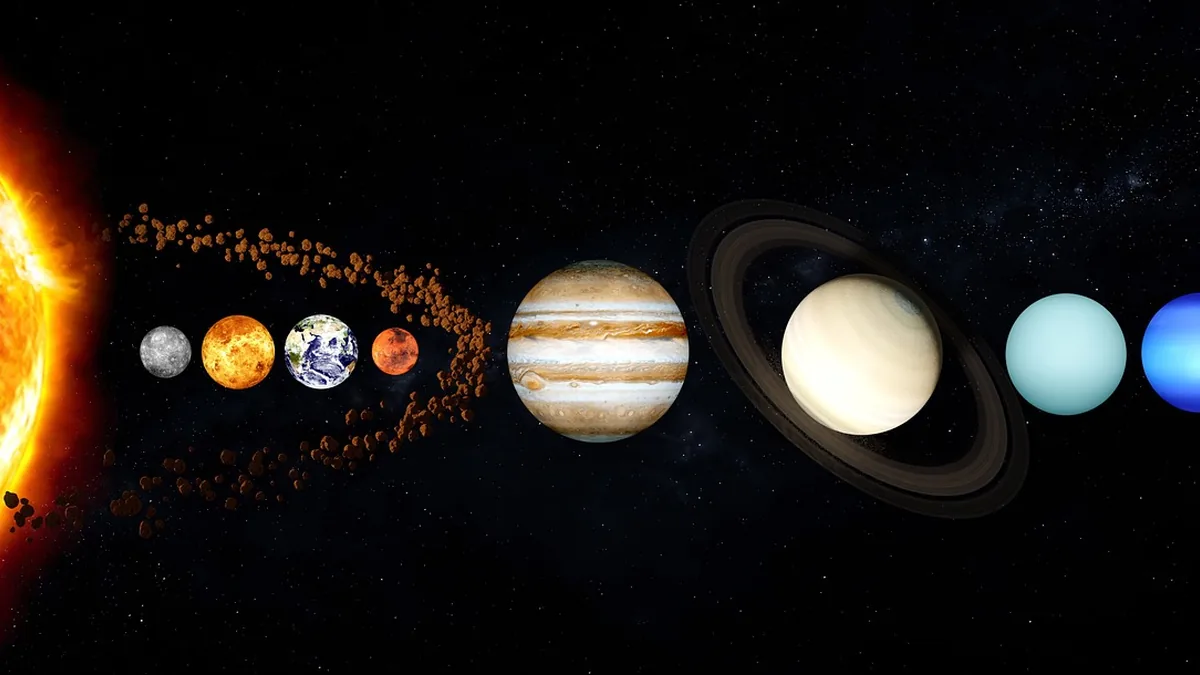
Mousis said Uranus and Neptune look like twins today but are more like cousins with different pasts, calling their likeness a meaningful coincidence tied to separate parts of the disk where they formed. He said the chemistry of the planets may connect to separate areas of the disk where they formed.:
Mousis said the results matter outside our solar system. He said similarly sized planets are common around other stars, so Uranus and Neptune serve as benchmarks for planet formation across the galaxy. He said that is why missions such as NASA’s planned Uranus Orbiter and Probe matter.:
The researchers pointed out that worlds of similar size are common around other stars, and that most known exoplanets resemble Uranus and Neptune, making the pair a local reference for studying faraway planetary systems.:
The team acknowledged that the findings are limited because no spacecraft can study the planets’ atmospheres in situ, or through direct measurements at the planet. Real samples would be needed before the results could be known for sure.:
The researchers said the lack of direct atmospheric measurements is the study’s main limitation. They said dense clouds and gases around the ice giants prevent even top radio telescopes from seeing through.:
The study notes that the pair’s great distance from the Sun and cold temperatures make them hard to study, while thick clouds and gases stop even leading radio telescopes from seeing through. That is why the team relied on chemical tracers and computer models rather than direct sampling.:
Mousis said the planned NASA Uranus Orbiter and Probe mission, which aims to launch within the next decade, matters given the results because it would return direct measurements that current remote observations cannot.:


Join the discussion