Key facts
- Portal Space Systems' Starburst-1 spacecraft reached orbit on Tuesday after launching aboard SpaceX's Bandwagon-5 rideshare mission from Cape Canaveral Space Force Station in Florida.
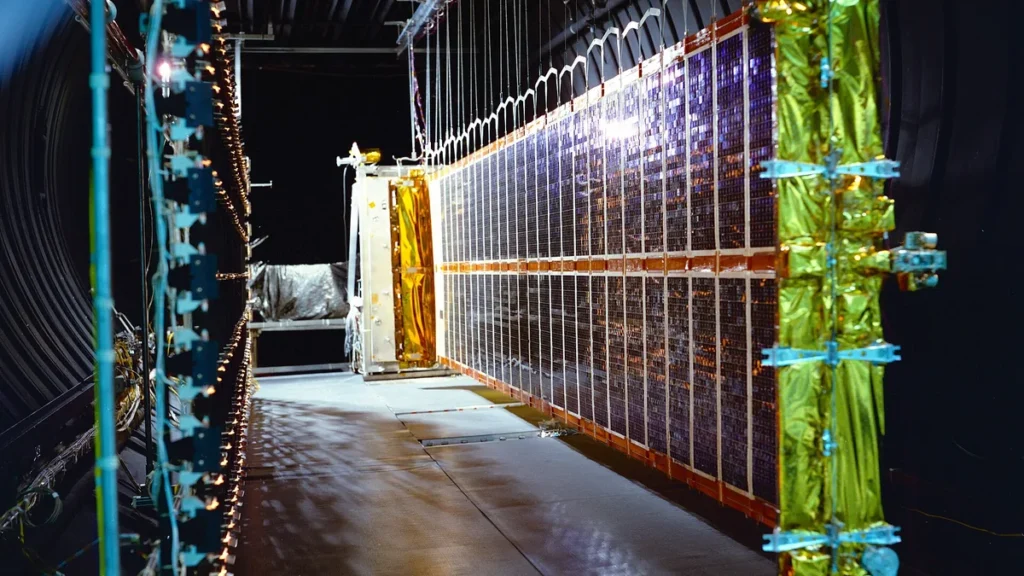
- Shortly after reaching orbit, Starburst-1 separated from its rocket, established communications with the ground, and deployed its solar arrays to charge its batteries.
- Starburst-1 carries three payloads: Zenno Astronautics' magnetic attitude-control system, a TRL11 camera for live video and edge processing, and Atomic-6's Space Armor debris-protection tiles.
- Starburst-1 is a 600-pound ESPA-class rapid-maneuverability spacecraft designed for a one-year primary mission and sharing core systems with Portal's Supernova vehicle.
Starburst-1 reached orbit Tuesday after launching from Florida aboard SpaceX’s Bandwagon-5 rideshare mission, Portal Space Systems said.
Jeff Thornburg, the chief executive, called the first flight about 80% successful. He said the other 20% hinges on turning on the ammonia-propulsion system. “I feel like 80% success now,” he said.
Thornburg said he feels complete control and confidence in the system after surviving launch and early checkouts. Full success will come when thrusters fire and propulsive maneuvers finish. He expects the thrusters to fire for the first time within the coming days. A series of propulsive maneuvers will follow.
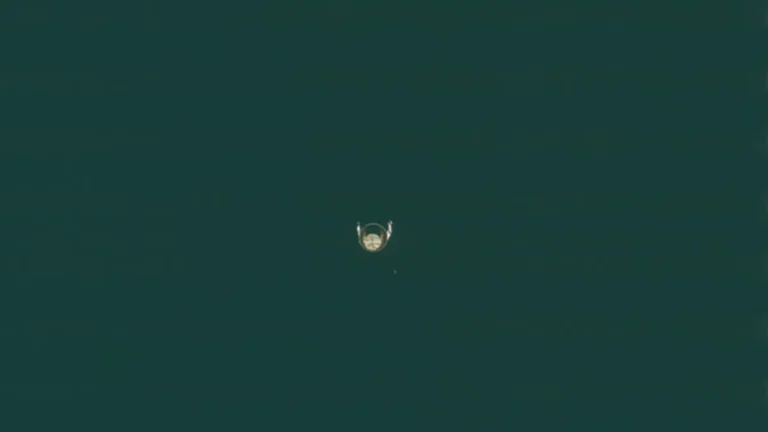
After reaching orbit, the spacecraft separated from its rocket, made contact with the ground, and unfolded its solar arrays to charge its batteries. Thornburg said relief came in stages. The last big moment arrived a couple of hours after launch, when controllers found Starburst in the expected location and confirmed communication.
“Starburst-1 is in orbit, communicating with the ground, stable, and power positive with its solar array deployed,” he posted. The Bandwagon-5 rideshare carried 32 payloads, including cubesats, microsats, and reentry vehicles.
Starburst-1 weighs 600 pounds and belongs to the ESPA class of rapid-maneuverability spacecraft. Its primary mission will last one year. It shares core systems with Portal’s Supernova vehicle.
ESPA-class refers to smaller spacecraft that fly as secondary payloads. The craft is desk-sized, with solar arrays stacked on top, and carries star trackers and communications equipment.
Three payloads ride aboard Starburst-1: Zenno Astronautics’ magnetic attitude-control system, a camera rated TRL11 for live video and edge processing, and Atomic-6’s Space Armor debris-protection tiles. TRL11 is a technology readiness rating. Atomic-6’s Space Armor is flying in space for the first time, and the camera will provide live video of the spacecraft and its surroundings. Atomic-6 Chief Executive Trevor Smith said the company will not know how well its Space Armor performed until debris strikes the tiles and the camera records the impact.
Portal paid for Starburst-1 itself and flew the spacecraft less than a year after unveiling the Starburst design in November 2025. The goal was to show customers what the vehicle can do. Thornburg said flight-proven hardware is the way to win customer confidence, and Portal used its own money for the mission.
The main goal is to test the engineering design for a year or longer. After that, rendezvous proximity operations and refueling practice become residual capability. Thornburg said anything beyond the first year counts as residual capability, and Portal might refuel other spacecraft in the future.
Portal opened a 65,000-square-foot manufacturing plant in Bothell, Washington, in August, taking the place of its old 6,000-square-foot site. Portal says the former mega-church will build 28 spacecraft annually, including 16 Starbursts and 12 Supernovas, and it houses mission control for tracking Starburst.
Construction continues at the site. The building includes Star Trek-themed rooms named Captain’s Quarters and the Holodeck, plus an orange tube slide left over from the nursery. Thornburg said the building has room for in-house testing capability and a clean room for customer integration, though parts remain under construction.
Portal employs 60 or more people and plans to expand to 100 staff as it moves into the new Bothell plant. Jeff Thornburg started the company in a garage five years ago with the goal of pushing humanity farther into the solar system.
Portal emerged from stealth in 2024, raised $75 million, won SBIR and STRATFI backing, and landed on Via Satellite’s Top 10 Startup to Watch list. The company sent the Mini-Nova payload to space on March 30 aboard a Momentus Vigoride vehicle to test electronics and control systems for Starburst and Supernova. Mini-Nova remains attached to an orbiting space vehicle, and Portal said it progressed from that hosted demonstration to a free-flying spacecraft in fewer than seven months.
Supernova weighs 1,100 pounds and uses Portal’s Flare propulsion system to heat ammonia propellant. Portal plans to launch it in 2028 on a SpaceX Falcon 9 rocket, and the vehicle enables rapid travel between orbital regimes. A thermal battery will retain heat for up to an hour, so maneuvers can occur without sunlight.
Maverick Space Systems, based in California, will handle payload accommodation, integration, and manifest enhancement for Portal’s 2028 Supernova mission on a SpaceX Falcon 9 rocket. The rocket will have room for third-party rideshare payloads.
Jeff Thornburg, Portal’s chief, holds one of 23 seats on the new Washington Space Council. Space Northwest also named Portal Emerging Space Company of the Year. The Washington Space Council is a new statewide body focused on strengthening the state’s position in the commercial space economy.
Space Northwest’s preliminary research says Washington’s space sector directly accounts for about 12,340 jobs and $8.1 billion in economic output, plus $2.3 billion in labor income. Including indirect and induced effects, the numbers rise to roughly 34,200 jobs, $12.4 billion in statewide output, and $3.9 billion in labor income. Every direct job brings 1.8 additional positions to the state. Space Northwest shared the preliminary figures last month as part of research on Washington’s growing space economy.



Join the discussion