Key facts
- Gatehouse Satcom agreed to acquire Satlab, an Aalborg, Denmark-based designer and manufacturer of small-satellite radios, in a deal announced Thursday, November 12, 2026.
- Both Gatehouse Satcom and Satlab are based in Denmark.
- Gatehouse Satcom said the deal combines satellite network technology with radios that have flown in space under one company.
- Gatehouse Satcom did not disclose the financial terms of the deal.
Gatehouse Satcom agreed to acquire Satlab, a designer and manufacturer of small-satellite radios based in Aalborg, Denmark, in a deal announced Thursday, Nov. 12, 2026. Both companies operate from Denmark. The Satlab team will join Gatehouse Satcom after the transaction closes, and Satlab radios will keep the Satlab brand name for the product line even as the team becomes part of Gatehouse Satcom. Gatehouse Satcom did not disclose financial terms, and both companies expect the deal to finish before the end of 2026.
Satlab develops S-band and X-band radios for small satellites and has delivered radios to more than 100 customers. Satlab operates from Aalborg, Denmark. Gatehouse Satcom said the deal unites its satellite network technology with Satlab’s space-proven radios under a single company. The acquisition combines Gatehouse Satcom’s satellite network technology with radios that have flown in space under one company.
After closing, Gatehouse Satcom and Satlab intend to build a Satlab radio running Gatehouse Satcom’s 5G non-terrestrial network software, beginning with narrowband IoT. Satlab will continue selling radios for customers’ software, while Gatehouse Satcom keeps selling its 5G NTN software for use on any radios. Gatehouse Satcom CEO Kenney Schmidt Christiansen said devices should connect to satellites as easily as to cell towers anywhere.
“We see a future where a device connects through a satellite as easily as through a cell tower, wherever it is,” Christiansen said. He added that Satlab expands the company’s responsibility from network to satellite radios and that more acquisitions are planned. Gatehouse Satcom said it will keep building toward that future, including through further acquisitions that strengthen what it can offer customers.
Gatehouse Satcom and Rohde & Schwarz formalized a partnership on Monday, April 27, 2026, to strengthen validation and testing for 5G IoT-NTN and NR-NTN. The arrangement came as the market shifted from 3GPP specifications toward large-scale orbital deployment. It followed Rohde & Schwarz Satellite Industry Days held in mid-April 2026, where the industry prioritized scalable end-to-end testing. The partnership aims to build more realistic and repeatable laboratory settings for modeling non-terrestrial network problems including severe Doppler shifts and signal delay in low Earth orbit.
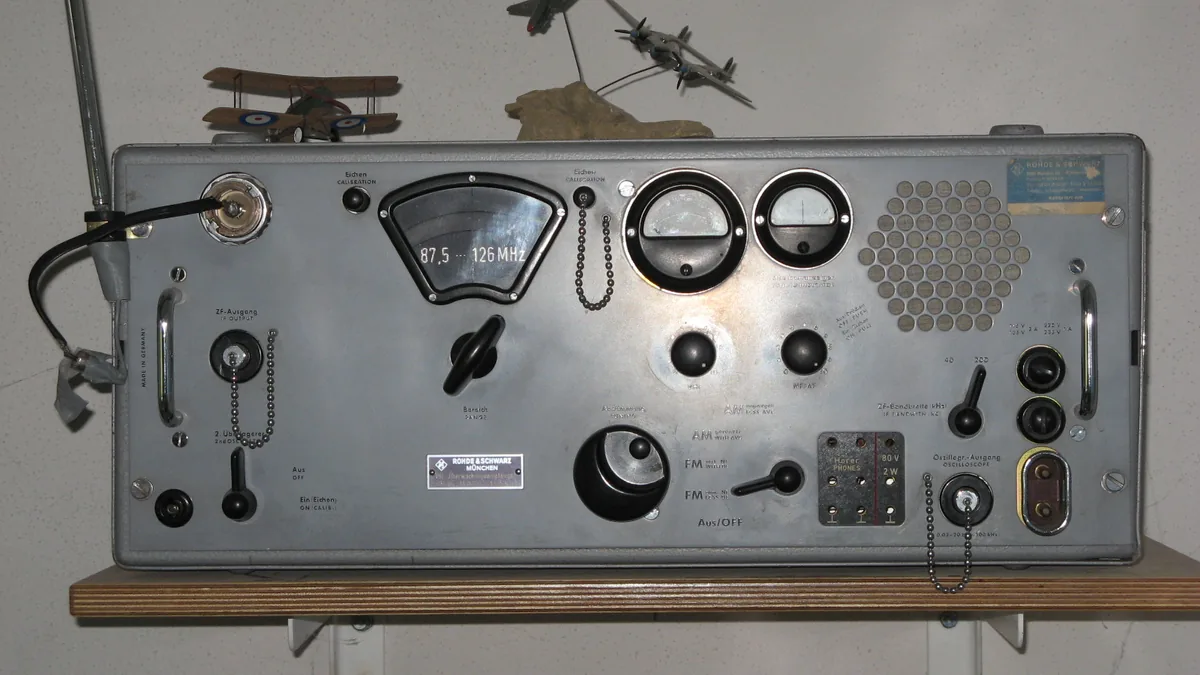
Gatehouse Satcom will employ the CMX500 radio communication tester from Rohde & Schwarz for advanced orbit and channel emulation work. Gatehouse Satcom will use the tester alongside its own 5G NTN software. The aim is to cut technical uncertainty and speed up market entry for satellite operators and terminal makers.
The collaboration will develop more accurate satellite radio channel models that reflect multi-orbit dynamics across GEO, MEO, and LEO orbits. It will also test 5G NTN behavior across different network situations to confirm smooth handovers and stable links. Other elements include interoperability testing across different network scenarios. A feedback loop will see Gatehouse Satcom provide test results and engineering feedback to refine Rohde & Schwarz’s future NTN-focused instrumentation.
Gatehouse Satcom will provide end-to-end NTN test outcomes and engineering comments to help refine Rohde & Schwarz’s future NTN-focused instrumentation through the feedback loop. The collaboration should speed up validation cycles by catching system-level problems sooner in the development process. “Our collaboration with Rohde & Schwarz marks an important step toward more standardized and repeatable 5G NTN validation,” said Peter Mariager, vice president of 5G technology at Gatehouse Satcom. The feedback loop is part of the collaboration alongside channel emulation and interoperability testing across disparate network scenarios.
Christian Dobmeier, director of product group CMX500 at Rohde & Schwarz, said teamwork between software makers and gear specialists is essential as the satellite industry converges on standardized, 3GPP-based systems. He said the deal improves the tools and insights for current 5G NTN deployment. He added that the collaboration creates a basis for future 6G NTN testing and validation.





Join the discussion