Key facts
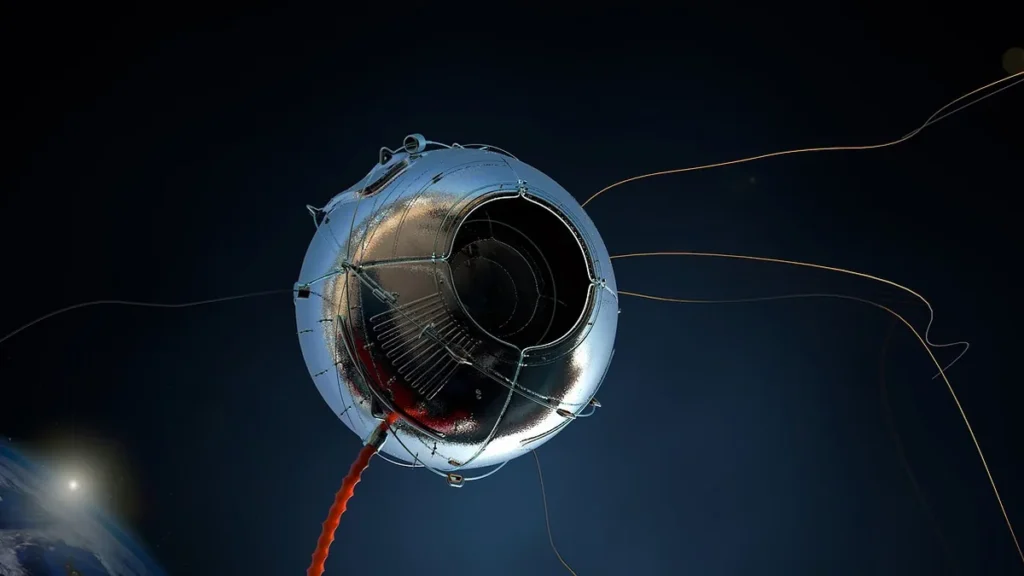
- The IRIS system is made up of two satellites with ultra-high-resolution capability plus a ground segment for control and image processing.
- The multinational MUSIS military observation program will see France's three CSO satellites progressively replaced by two IRIS optical Earth observation satellites.
- Continuous intelligence collection will be maintained by the first IRIS satellite as it succeeds CSO-1 and CSO-2 in France's space-based IMINT operational capability.
- The second IRIS satellite will deliver significantly enhanced image resolution performance once the last CSO satellite ends its operational lifetime, addressing the armed forces' evolving requirements.
France’s Defence Procurement Agency awarded Thales Alenia Space a contract on Nov. 9, 2026, to develop the IRIS military optical observation system in Cannes, France, under joint prime contractorship with Airbus Defence and Space. Both sources published the announcement on the same day from Cannes, describing IRIS as a next-generation military optical observation system for French national defense.
IRIS stands for Instruments de Renseignement et d’Imagerie Spatiale, also rendered as Intelligence and Space Imaging Instruments. The system comprises two ultra-high-resolution optical Earth observation satellites plus a ground segment for control and image processing.
Under the multinational MUSIS framework, France’s three CSO satellites will be progressively replaced by two IRIS optical Earth observation satellites. MUSIS is the framework for the existing Optical Space Component that IRIS is designed to succeed over time.
The first IRIS satellite will succeed CSO-1 and CSO-2 in France’s space-based IMINT operational capability, maintaining continuous intelligence collection. The succession is intended to guarantee continuity as the older CSO satellites complete their service lives.
Airbus built CSO-1, deployed in 2018, CSO-2, deployed in 2020, and CSO-3, which was launched for France’s military in 2025. One source lists these operational deployments to establish the timeline that IRIS is meant to continue for French IMINT operations.
Once the last CSO satellite ends its operational lifetime, the second IRIS satellite will deliver significantly enhanced image resolution performance, addressing the armed forces’ evolving requirements. One source ties the advanced imaging performance to the retirement of CSO-3, while the other connects it to changing armed-forces needs.
Thales Alenia Space will build the primary optical imaging instruments for both satellites, with Europe’s most advanced observation instrument planned for the second spacecraft. The company says it will draw on expertise from previous surveillance programs such as Hélios, Pléiades and CSO.
Six partners LYNRED, PYXALIS, SODERN, REOSC, ALAT and Thales SESO form the industrial consortium backing the optical instruments. The company says the partners’ capabilities will support top-tier performance for European optical Earth observation satellites.

Chief Executive Officer Hervé Derrey said teams will “rely on their world-renowned expertise gained through landmark surveillance programs such as Hélios, Pléiades and CSO”. The executive linked the contract to the company’s prior surveillance programs and its position among European leaders in high-resolution space imaging, with teams drawing on that expertise for Europe’s most advanced optical instrument.
Hervé Derrey said, “This contract further strengthens our position as the European leader in Very High and Extremely High-Resolution space imaging.” Thales Alenia Space describes IRIS as a key asset of France’s defense policy, ensuring independent assessment capabilities and operational cooperation while underpinning sovereign decision-making through intelligence collected from space and linking the program to French and European operational superiority.
The optical instruments combine next-generation active optics with a hyper-stable telescope and ultra-sensitive high-speed digital sensors. One source describes the telescope as part of a hyper-stable optical suite paired with digital focal plane sensors, while the other emphasizes its scale.
High-speed infrared channels will enable imagery acquisition under low-light and nighttime conditions, allowing ultra-high-resolution imagery anywhere on Earth. Onboard artificial intelligence algorithms will perform real-time image filtering, supported by secure high-throughput downlinks and strategic systems ensuring security, confidentiality and rapid dissemination of collected intelligence under processing and security. High-quality production of acquired imagery and this thermal and day/night imaging capability sit among the advanced technologies developed for the IRIS satellites.
Manufacturing, payload integration and environmental testing for the satellites will occur at French industrial facilities, with operations and support continuing through the late 2030s. France’s defense policy treats independent space-based intelligence as a foundation for sovereign decision-making and operational cooperation, and one source places this industrial footprint and operational horizon after the payload technologies described in the announcement.
Thales Alenia Space reported consolidated revenues of €2.36 billion in 2025 and employs more than 8,000 people across seven countries and 14 European sites. The company points to 50 years of experience and its Space for Life purpose as part of this background. The Space Alliance brings together Thales Alenia Space and Telespazio to provide a full range of solutions and services, a relationship described in the company’s about section as one of its organizational partnerships.




Join the discussion