Key facts
- The Canadian Space Agency gave Quebec City-based ABB Inc. roughly $1.5 million under a contract to advance an instrument able to detect trace methane directly in Mars's atmosphere.
- MAGE-ICOS stands for Martian Atmospheric Gas Evolution Experiment – Inter-Cavity Optical Spectroscopy, and optical spectroscopy identifies gases by how they absorb light.
- Signals indicating methane exists in the Martian atmosphere have been detected, yet researchers still do not fully grasp where the methane originates or which processes create it.
- The award came through the CSA's Space Technology Development Program (STDP).
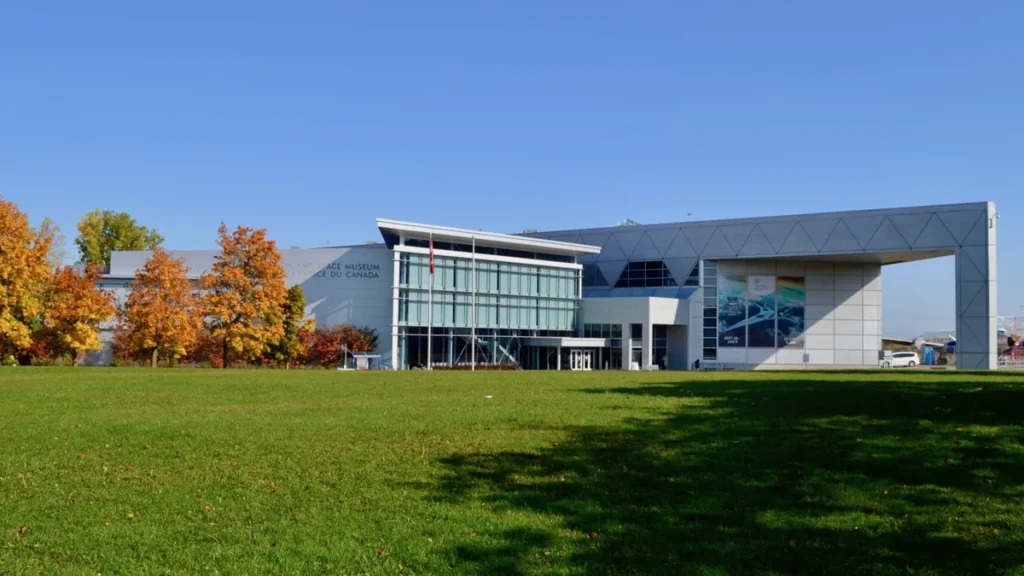
On Oct. 29, 2026, the Canadian Space Agency awarded roughly $1.5 million to Quebec City-based ABB Inc. under a contract to develop an instrument designed to detect trace methane directly in Mars’s atmosphere.
The instrument is called MAGE-ICOS, short for Martian Atmospheric Gas Evolution Experiment – Inter-Cavity Optical Spectroscopy, which identifies gases by the way they absorb light. It would sample Martian air directly, bouncing laser light between mirrors so the beam passes through the gas many times to catch faint traces. In Quebec City, ABB builds methane sensors for GHGSat’s satellites based in Montreal; those spacecraft gauge Earth emissions from orbit. ABB’s Swiss parent, ABB Ltd, also uses the technique in Earth-based methane analyzers, a capability from its purchase of Los Gatos Research.
According to the CSA, Martian methane could shed light on the planet’s history and present conditions, including whether life may once have existed there. Signals show methane in the Martian atmosphere, yet researchers do not fully grasp where the gas comes from or what processes create it. The agency says more frequent measurements close to the Martian surface could help answer questions about where the gas comes from and what produces it. Scientists hope studying methane and other gases will reveal how Mars has changed and what processes are active there.
Research found that methane in Mars’s atmosphere is unstable over geological timescales, pointing to an active present-day source. Ideas range from ancient subsurface reservoirs like methane hydrate clathrates to hot water-rock reactions, exogenous organic material, or biological activity. Measurements of near-surface methane happen only a few times per year, which makes theories about its origin difficult to test. Since most methane on Earth comes from biology, the Martian methane cycle draws strong astrobiological interest.
The research proposed the MAGE experiment to gather data that could separate competing explanations for where Martian methane comes from and how it changes over time. The system relies on ABB Integrated Cavity-enhanced Optical Spectroscopy and could sample methane in the Martian atmosphere every hour. The prototype holds two lasers: one at 1659 nm measures 12CH4 and 13CH4, while the other at 1650 nm measures 12CH4 and CO2.
The research also reported that background methane on Mars varies seasonally from 0.2 to 0.7 ppbv, or parts per billion by volume, with occasional spikes reaching 45 ppbv. The prototype took about 16 hours to reach 95 percent confidence, with 13CH4 concentrations within 1 ppb of actual concentrations. Future work includes testing under Mars-like conditions with analogue gas mixtures and pressure changes to check detection limits. A rover or rotorcraft carrying the instrument could help narrow down possible methane sinks and sources on Mars.
CSA FAST program grant No, 19FAYORA13 funded the earlier laboratory work, carried out with ABB Inc. ABB’s follow-on contract extends earlier CSA-funded methane-detection work. ABB will refine and test the technology under the agreement, working to reduce measurement noise and increase sensitivity under Mars-like conditions.

ABB will construct and test a prototype to show the instrument’s performance. The prototype work comes after refinement and testing and aims to show performance under Mars-like conditions. The CSA said the work should build Canadian planetary-science capability and position the device for a possible role on future international Mars missions.
ABB has also received other support through the CSA program. In October 2026, the company received a contribution of almost $1 million through the program for a very-high-resolution optical imaging instrument. In December 2025, it was chosen to develop an infrared spectrometer for Canada’s Lunar Utility Rover.
The Canadian Space Agency says the Space Technology Development Program drives innovation and strengthens Canadian space companies, so they can chase commercial opportunities and meet national priorities. Government figures show the program has spent more than $130 million since 2012 on pre-commercial development of 266 space-related technologies.
On Oct. 14, 2026, Industry Minister Mélanie Joly announced $11.1 million across 16 innovative space projects with backing from 15 Canadian organizations while speaking in Longueuil, Quebec. “Canada’s future in space depends on our ability to develop and sustain world-class capabilities,” said Joly, Minister of Industry and Minister responsible for Canada Economic Development for Quebec Regions. The country’s space sector supports more than 28,000 jobs and generates $5 billion in annual revenue. Its companies devote close to $1 billion a year to research and development, at 17 times the manufacturing average.




Join the discussion