Key facts
- AT&T and AST SpaceMobile completed an industry-first handoff between cellular and satellite networks on October 21, 2026, outside Granite Falls, Washington, at 8:15 a.m. PT, using an ordinary smartphone.
- During the demonstration, a phone call on AT&T's wireless network moved to AST SpaceMobile's satellite network as the device left cellular coverage, without requiring the user to manage the transition.
- AT&T supplied its terrestrial wireless network infrastructure while AST SpaceMobile provided its direct-to-device satellite network for the demonstration on October 21, 2026.
- Ericsson provided AT&T with combined radio and core technology plus intelligent network automation to improve handoffs between ground and satellite networks during the October 21, 2026 test.
AT&T and AST SpaceMobile completed an industry-first handoff between cellular and satellite networks on October 21, 2026, at 8:15 a.m. PT, outside Granite Falls, Washington, using an ordinary smartphone.
The test occurred early on the morning of October 21, 2026, at a remote Washington site, and it involved moving an active phone call from AT&T’s terrestrial network to AST SpaceMobile’s satellite network as the device left cellular coverage, without requiring the user to manage the transition. AT&T supplied its terrestrial wireless network infrastructure while AST SpaceMobile provided its direct-to-device satellite network, which links satellites straight to ordinary handsets. Ericsson provided AT&T with combined radio and core technology plus intelligent network automation to improve handoffs between ground and satellite networks, while Nokia’s technology supports seamless handover and service continuity for AST SpaceMobile’s space-based network as devices move between terrestrial and satellite coverage.
The integrated system reduces transition times from seconds to milliseconds when devices move between terrestrial and satellite coverage. Moving between ground and satellite coverage currently can mean a dropped call or interrupted connection, so the companies are engineering a seamless experience where the network handles the transition behind the scenes. The aim is to make the boundary between ground and satellite invisible to end users, including consumers in rural valleys and first responders in crisis zones, erasing the seam between networks for anyone moving through a coverage gap.
Earlier AST SpaceMobile tests carried voice calls, text messages, and video calls through BlueBird satellites using ordinary smartphones. Earlier demonstrations served as proof that ordinary smartphones can connect directly to BlueBird satellites. The satellite network is built to work with ordinary smartphones so users do not need specialized hardware. The October 21 test built on earlier voice, text and video demonstrations, but solving the handoff is a more complex layer of network integration.
The satellite service is intended to add to AT&T’s current ground network instead of replacing it, reaching remote and hard-to-reach areas where building terrestrial infrastructure is not economically viable. It is meant to fill geographic gaps in AT&T’s footprint for consumers in rural valleys and first responders in crisis zones. AT&T reaches more than 100 million U.S. households and almost 2.5 million businesses. AST SpaceMobile aims at a worldwide market of nearly 6 billion mobile subscribers.
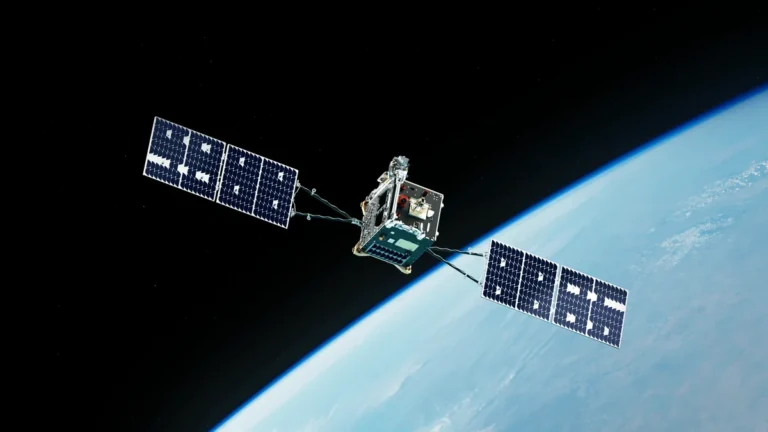
AST SpaceMobile’s BlueBird satellites carry what the company describes as the largest communication arrays ever placed in low Earth orbit, the region of space close to Earth, and the satellites connect directly with unmodified consumer handsets. The company is building what it calls the first and only global cellular broadband network in space for standard, unmodified mobile devices, based on its IP and patent portfolio, for commercial and government applications. The network enables 4G and 5G space-based cellular broadband to every device, everywhere.
Robert Walters, senior vice president of Network for AT&T, described the handoff as an important milestone rather than the end point, said real-world beta services will begin next to refine performance, and identified commercial service as the goal. The next phase involves real-world beta testing intended to assess network performance and improve the handoff process ahead of eventual commercial service. The service requires more testing before commercial launch.
Wayne Thorsen, Chief Commercial Officer of AST SpaceMobile, said the system provides more resilience for first responders who rely on dependable communications in critical moments. “It also adds a new layer of resilience for first responders who depend on reliable communications when it matters most.”
Brian Walsh, principal product development engineering for AT&T, likened the cellular-to-satellite handoff to moving from a highway to a moving plane. He said the connection worked perfectly, as shown in engineering logs, during the late October 2026 demonstration.
AT&T and AST SpaceMobile have a commercial agreement under which AST SpaceMobile will deliver space-based cellular broadband to AT&T customers using a revenue share arrangement through 2030, separate from the technical demonstration milestone. AST SpaceMobile anticipates launching initial commercial service with roughly 45 satellites in orbit and expects to reach that level around early 2027, following the handoff demonstration and planned beta services.
AT&T describes its wireless network as America’s strongest nationwide wireless network, a characterization it made while announcing the satellite handoff milestone.
AST SpaceMobile stock fell 10.53% to $36.65, a drop of $4.32, during trading on November 2, 2026. The decline occurred despite the company achieving the satellite network milestone with AT&T.



Join the discussion